Our Design Philosophy: Invisible Technology
The best technology is technology you do not notice. Our AI should feel like talking to a knowledgeable friend, not operating a booking engine.
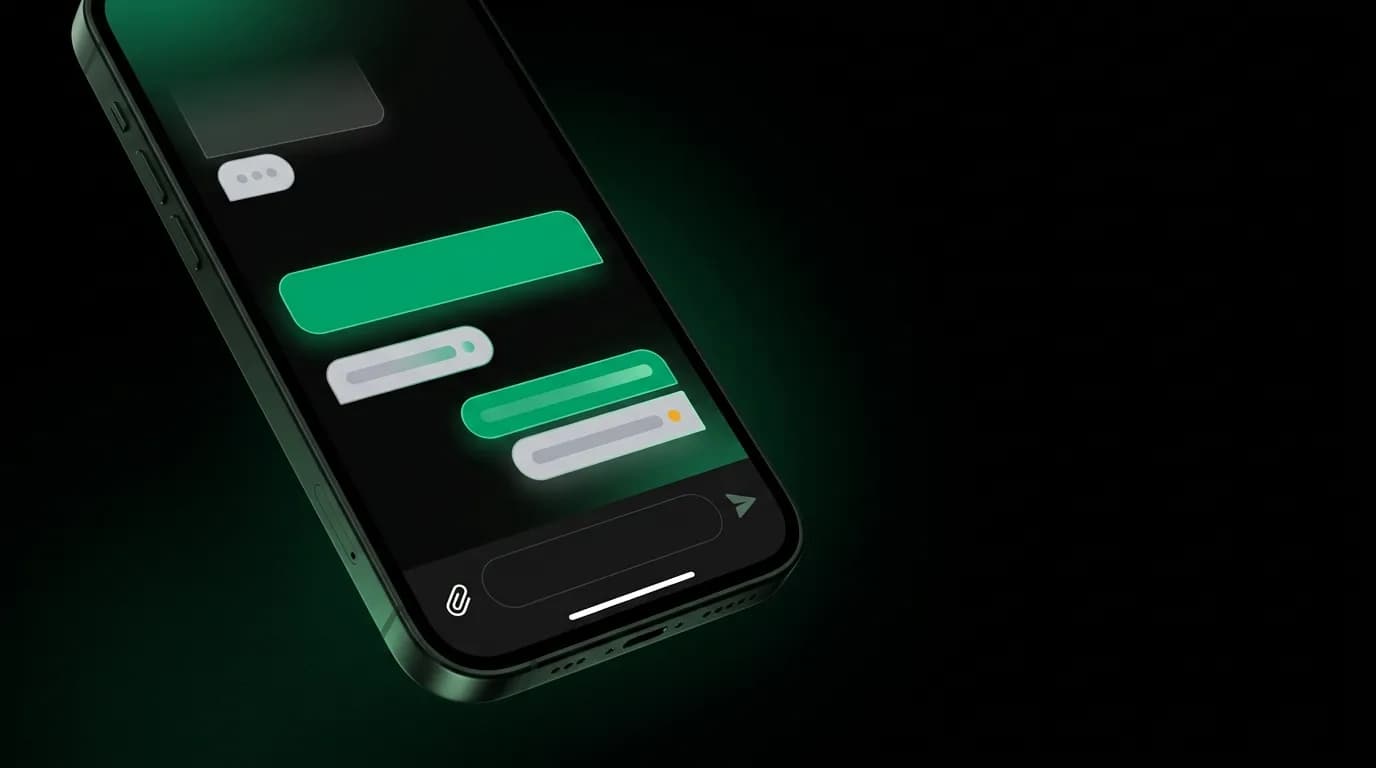
The best technology is the technology you do not notice. You notice the result, the booked trip, the organized itinerary, the helpful recommendation. You do not notice the technology that produced it.
This is our design philosophy. The AI should feel like talking to a knowledgeable friend, not operating a booking engine.
Removing chrome
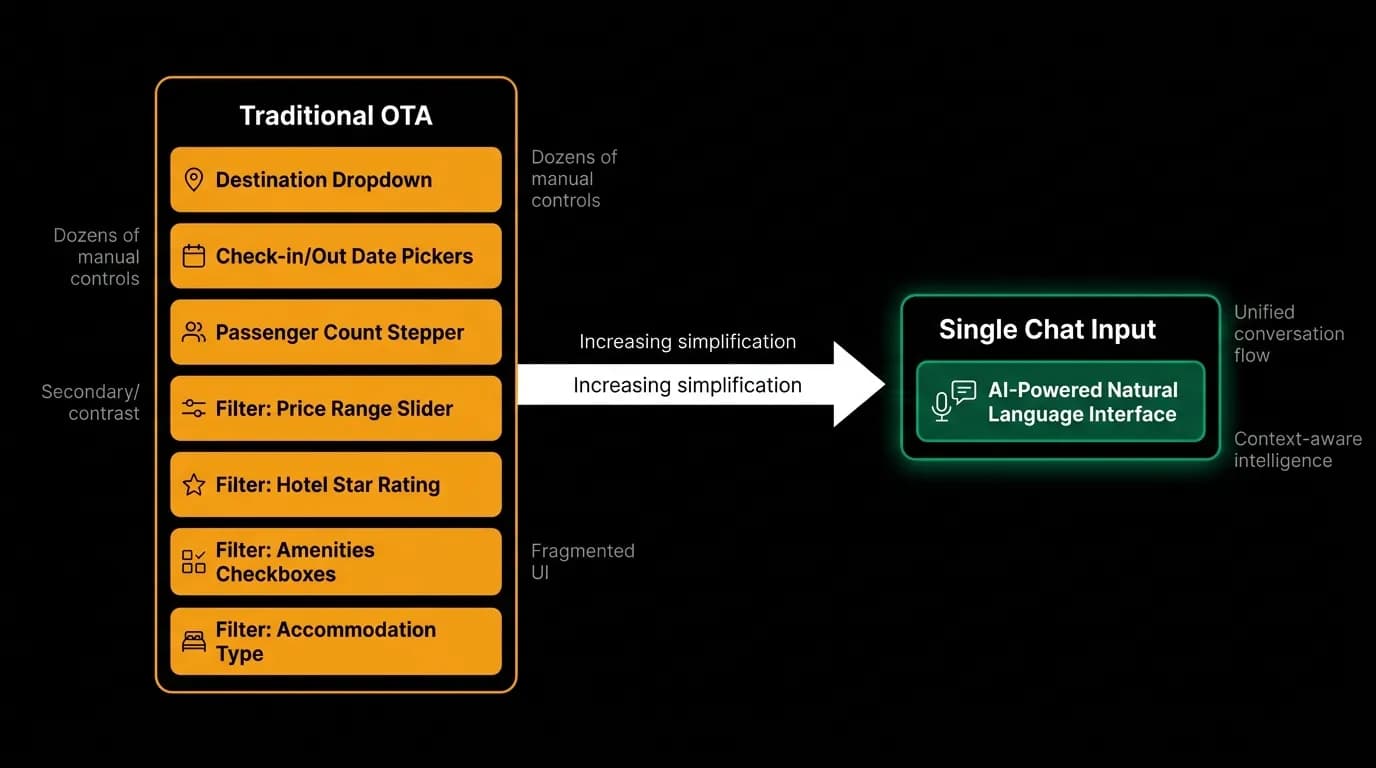
Traditional travel apps are covered in chrome: navigation bars, filter panels, sort dropdowns, sidebar widgets, promotional banners, and settings menus. Every element demands attention and adds cognitive load.
We removed almost all of it. The primary interface is a conversation. A text input. Message bubbles. Cards that appear when the agent has something to show you. There is no settings page for the AI. It learns from conversation, not from configuration menus.
This was a difficult design decision because the instinct is always to add more. More options. More controls. More information on screen. Every feature request pulls toward complexity. The discipline is in resisting.
The messaging app paradigm
Our design influence is not other travel apps. It is messaging apps. iMessage. WhatsApp. The most used apps on every phone share a design principle: content first, chrome minimal, interaction natural.
People already know how to use a messaging interface. They do not need a tutorial. They do not need to learn navigation patterns. They type or speak. They read responses. They tap options. The paradigm is so familiar it becomes invisible.
When you book a trip through Nowah, the interaction feels like texting a friend who happens to be great at travel planning. The technology behind it, the AI agent, the tool orchestration, the streaming architecture, the booking pipeline, is invisible. As it should be.
Measuring simplicity
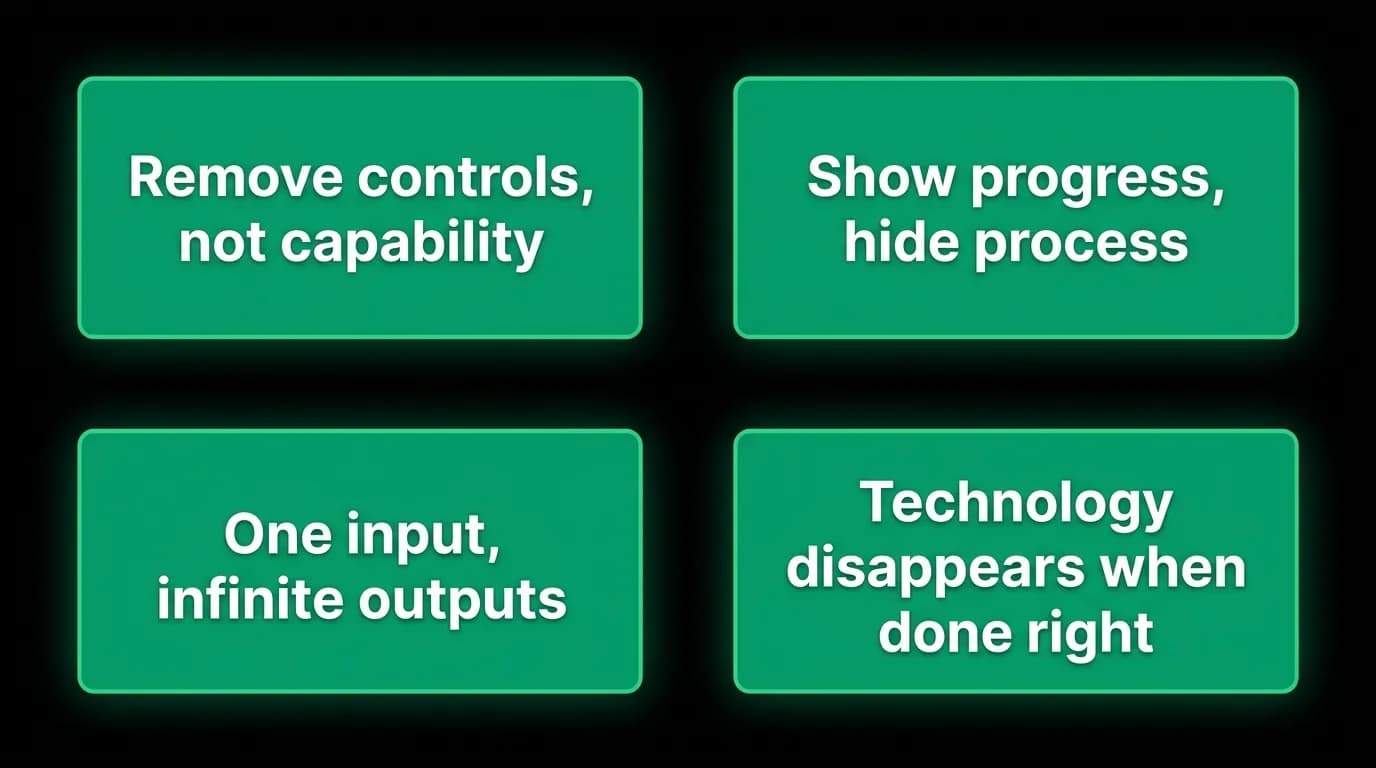
We measure simplicity concretely. Three to five messages from conversation start to booking confirmation versus fifteen to twenty-five clicks in traditional OTAs. The fewer interactions required, the better the design.
Satisfaction correlates with fewer decision points, not more options. This is counterintuitive for a travel product, where the instinct is to show as many options as possible. But our data consistently shows that users prefer the agent's curated recommendations over browsing large result sets.
Pure black background. Green accent for primary actions. Minimal visual noise. Every element on screen earns its place by serving the user, not by filling space.
The test
For every design decision, we apply one question: does the user notice the technology or the result?
If they notice the technology, the design has failed. If they notice that their trip was planned faster, organized better, and booked more easily than ever before, the design has succeeded.
The best compliment we receive is when a user says: "It just felt easy." That ease is not the absence of technology. It is the presence of technology that is so well-designed it disappears.
Nowah is an AI travel agent that searches and books real flights and hotels through conversation — no filters, no thirty open tabs. Plan your next trip.