Building Agent Memory: How Our AI Remembers Your Travel Preferences
The agentic memory launch — preference storage architecture, memory accuracy challenges, and how personalization transforms generic search into personal service.
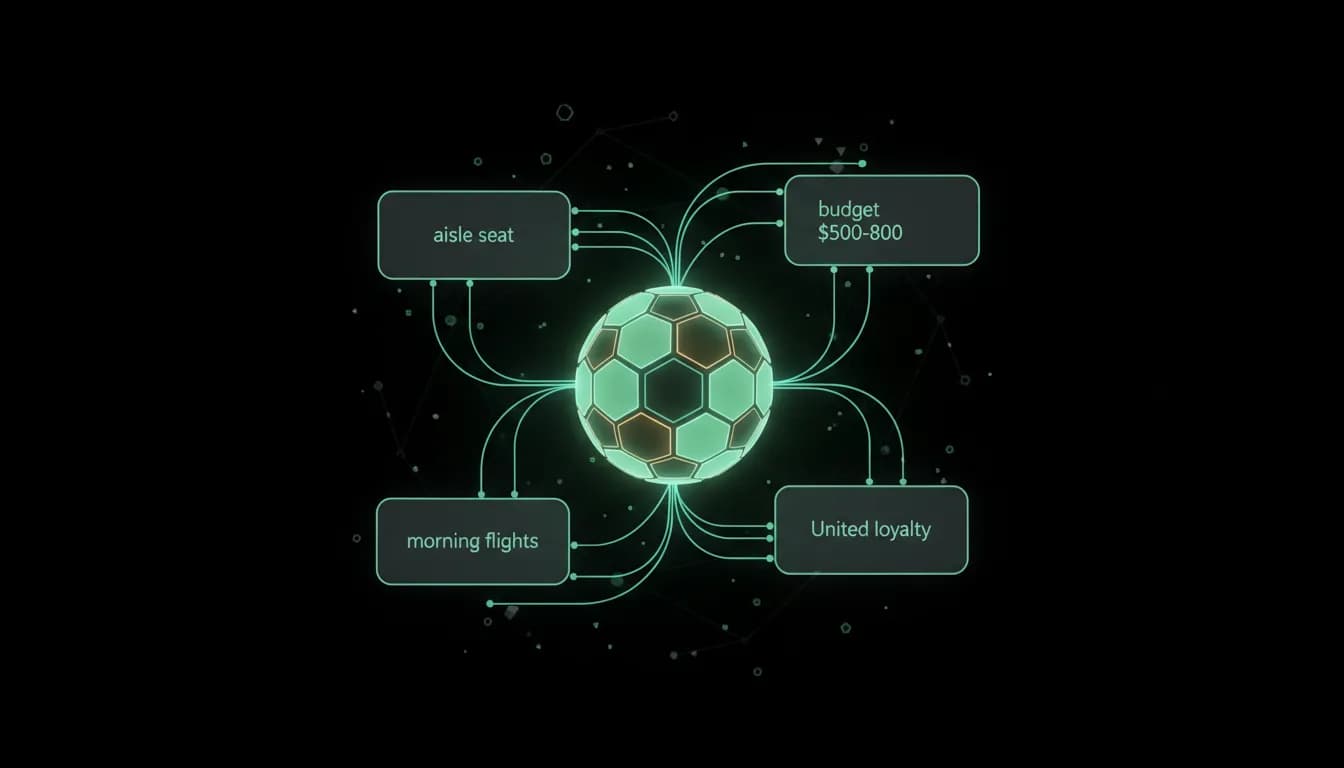
A returning traveler said "you know I hate layovers" and the agent did not remember. She had told us three conversations ago. She had explicitly stated her preference. And the agent treated her like a first-time user, cheerfully presenting connecting flight options alongside directs.
That interaction was the catalyst for our memory system launch. An AI travel agent that forgets you between sessions is not an agent. It is a search engine with a chat interface.
Memory architecture
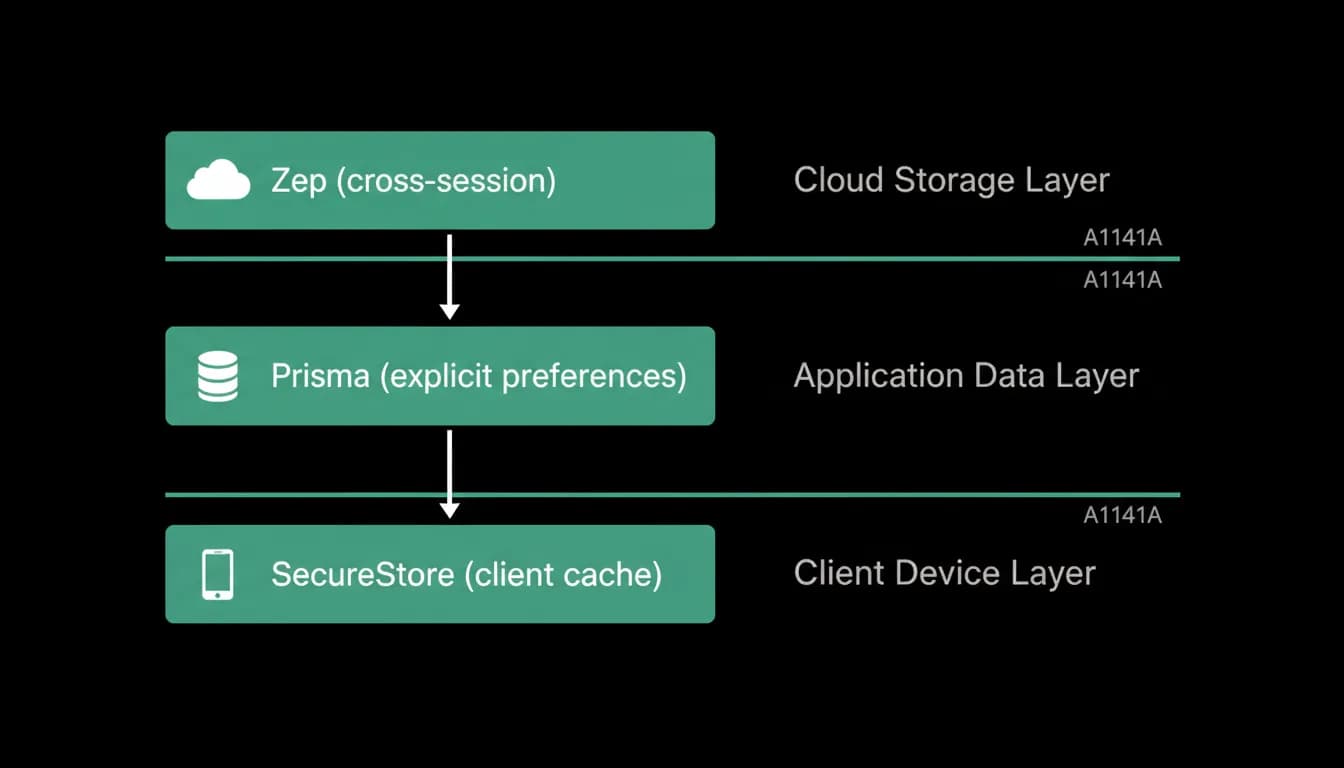
Our memory system operates on three layers. The cross-session memory layer stores conversation context and inferred preferences that persist across sessions and trips. When a traveler mentions they always want aisle seats, that preference exists in memory the next time they search, whether it is tomorrow or three months from now.
The explicit preference layer stores structured data that the traveler has directly stated or confirmed: seat preference, airline loyalty program, typical budget range, home airport. These are not inferences. They are facts the traveler has provided, stored in their profile with clear provenance.
The client-side cache stores authentication tokens and frequently accessed profile data for fast local access. This layer exists for performance, not persistence. If the cache is lost, the server-side layers provide the authoritative state.
What the agent remembers
The agent's memory spans several categories of traveler information. Seat preferences: aisle, window, or no preference. Airline loyalty: frequent flyer programs and preferred carriers. Budget ranges: typical spending patterns for flights and hotels. Travel patterns: business travel frequency, leisure travel destinations, group travel history. Time preferences: morning flights, evening flights, or flexible. Explicit statements: anything the traveler has directly told the agent, like "I get anxious during long layovers" or "I always check a bag."
The agent retrieves relevant memory at the start of each conversation. Before it even reads the traveler's first message, it knows their preferences and history. This context primes the agent to provide personalized responses from the first interaction.
The accuracy problem
Memory makes the agent smarter, but incorrect memory makes it worse than no memory at all. If the agent remembers that a traveler prefers window seats but that inference was wrong, every flight search includes an unwanted constraint that degrades the results.
False memories in AI are a real problem. The agent might infer a preference from limited data. A traveler booked morning flights twice, so the agent infers a morning preference. But both bookings were for meetings that required early arrival, not because the traveler actually prefers mornings. When the constraint changes and the traveler wants an evening leisure flight, the agent's recommendation feels wrong.
We address this with a verification mechanism. Inferred preferences are distinguished from stated preferences in the memory system. When the agent uses an inferred preference to filter or rank results, it can mention the inference: "I noticed you usually book morning flights. Want me to focus on morning options or show all times?" This gives the traveler the opportunity to correct a wrong inference without the friction of navigating a preference settings page.
Privacy by design
Memory creates a responsibility. The traveler's preferences, travel history, and behavioral patterns are personal data that we must protect and manage ethically.
Travelers can view everything the agent remembers about them. Transparency about stored data is not optional. They can delete specific preferences or their entire memory. Deletion is immediate and permanent, propagating through all memory layers.
We do not use traveler memory data for any purpose beyond improving that specific traveler's experience. Preferences are not shared, sold, or used to train models. This is not just a policy. It is architecture. The memory system is designed so that traveler data is isolated and accessible only in the context of that traveler's conversations.
Memory as personalization
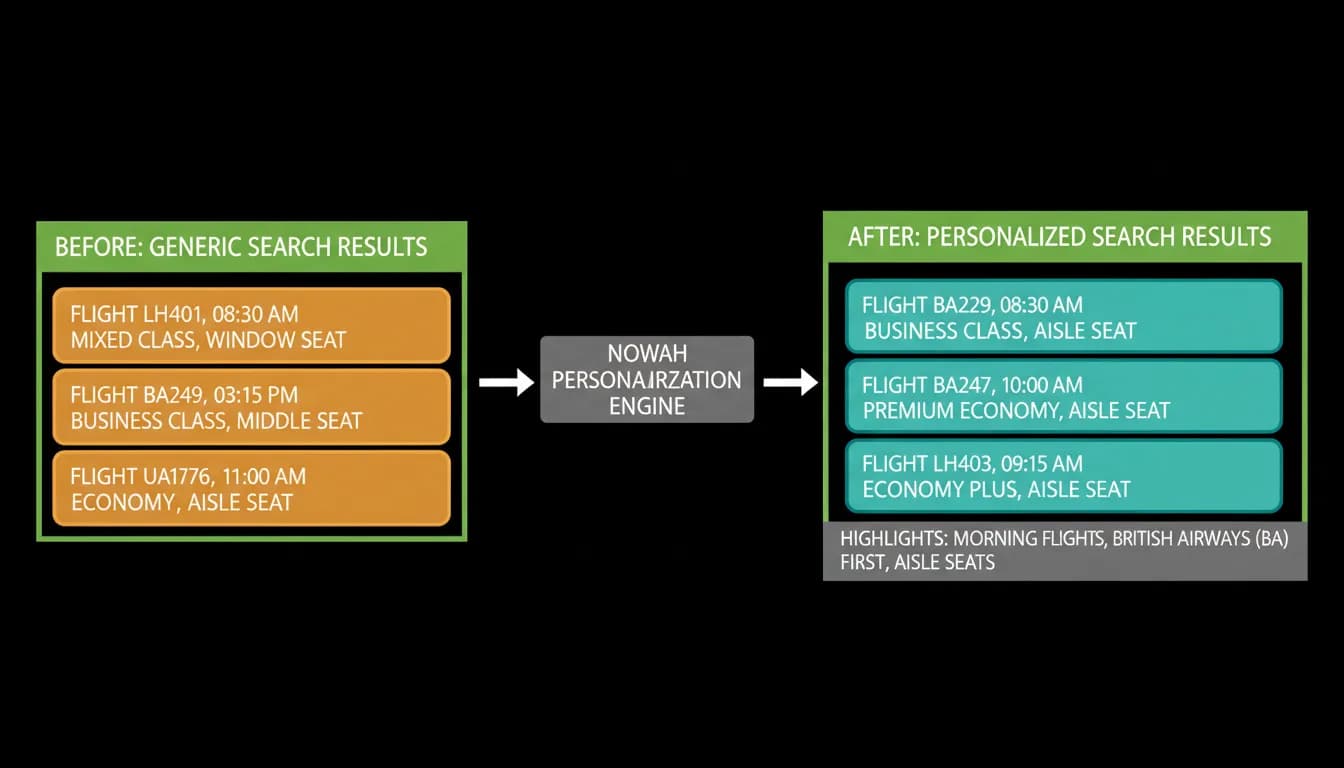
The real impact of memory is in how it transforms search results. A generic flight search returns options ranked by a combination of price, duration, and stops. A personalized flight search returns options ranked by how well they match this specific traveler's preferences.
The traveler who hates layovers sees direct flights first, even if they are slightly more expensive. The traveler who is loyal to a specific airline sees that carrier's flights highlighted. The budget-conscious traveler sees the best-value options prominently. The tall traveler who mentioned needing legroom sees aircraft types with better pitch.
Each of these personalization touches is small individually. Together, they create an experience that feels like having a travel agent who knows you. And that feeling, of being understood and served personally, is what transforms a utility into a relationship.
Nowah is an AI travel agent that searches and books real flights and hotels through conversation — no filters, no thirty open tabs. Plan your next trip.