The Loyalty Program Data Layer
When Nowah knows your frequent flyer numbers, hotel tiers, and credit card perks, the ranking engine adjusts to maximize your existing benefits.

You have 80,000 miles on one airline alliance and status at a hotel chain. Your credit card gives you lounge access and travel credits. These are real assets with real dollar value. And yet most travel search engines have no idea they exist when they show you results.
When you search for flights on a traditional platform, it shows you options sorted by price or departure time. It does not know you have status on a particular alliance. It does not know that booking with an alliance partner would earn you double miles toward your next tier. It does not know that your credit card gives you a free checked bag on a specific airline.
The AI knows all of this, and it changes the ranking math significantly.
What loyalty data the AI integrates
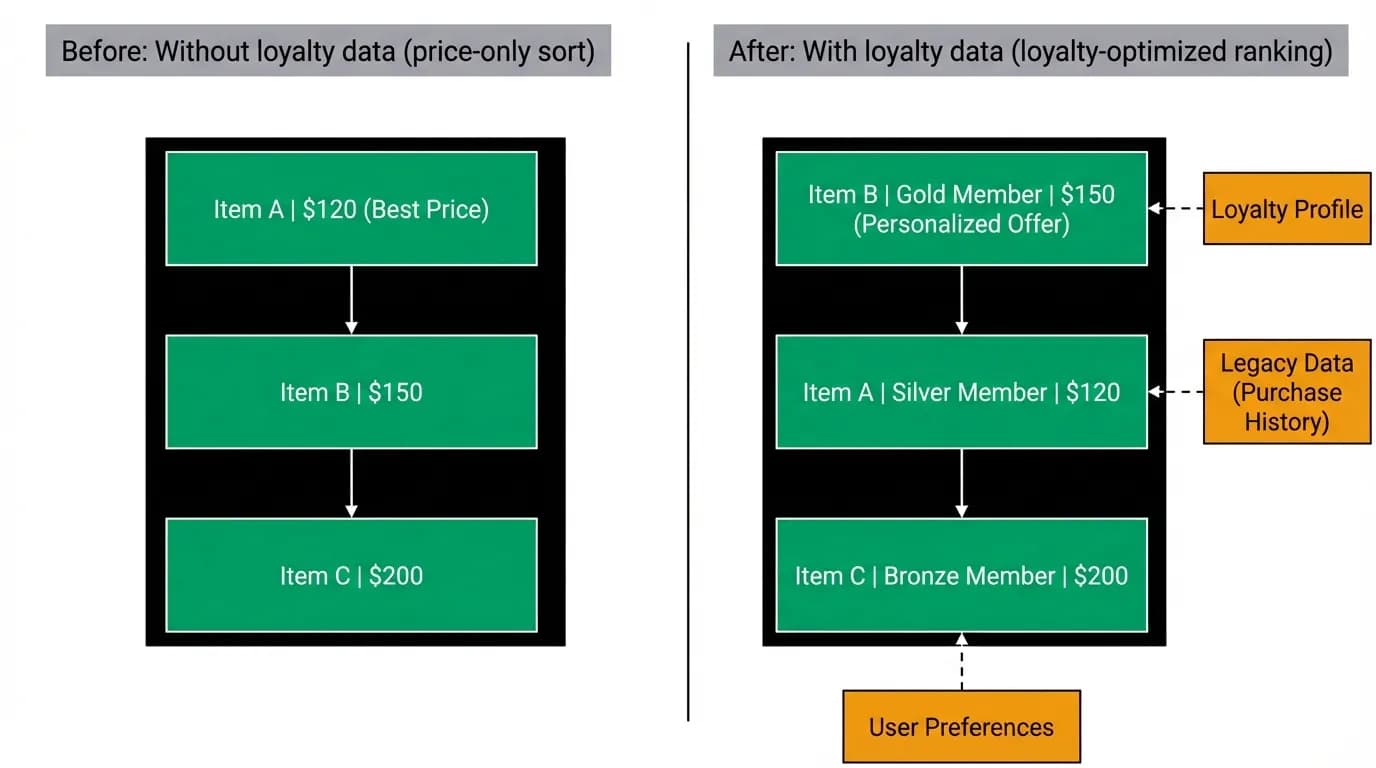
The memory system stores your frequent flyer numbers, airline alliance memberships, hotel loyalty tiers, and relevant credit card travel benefits. This data is persistent across sessions, so you share it once and the AI uses it for every subsequent search.
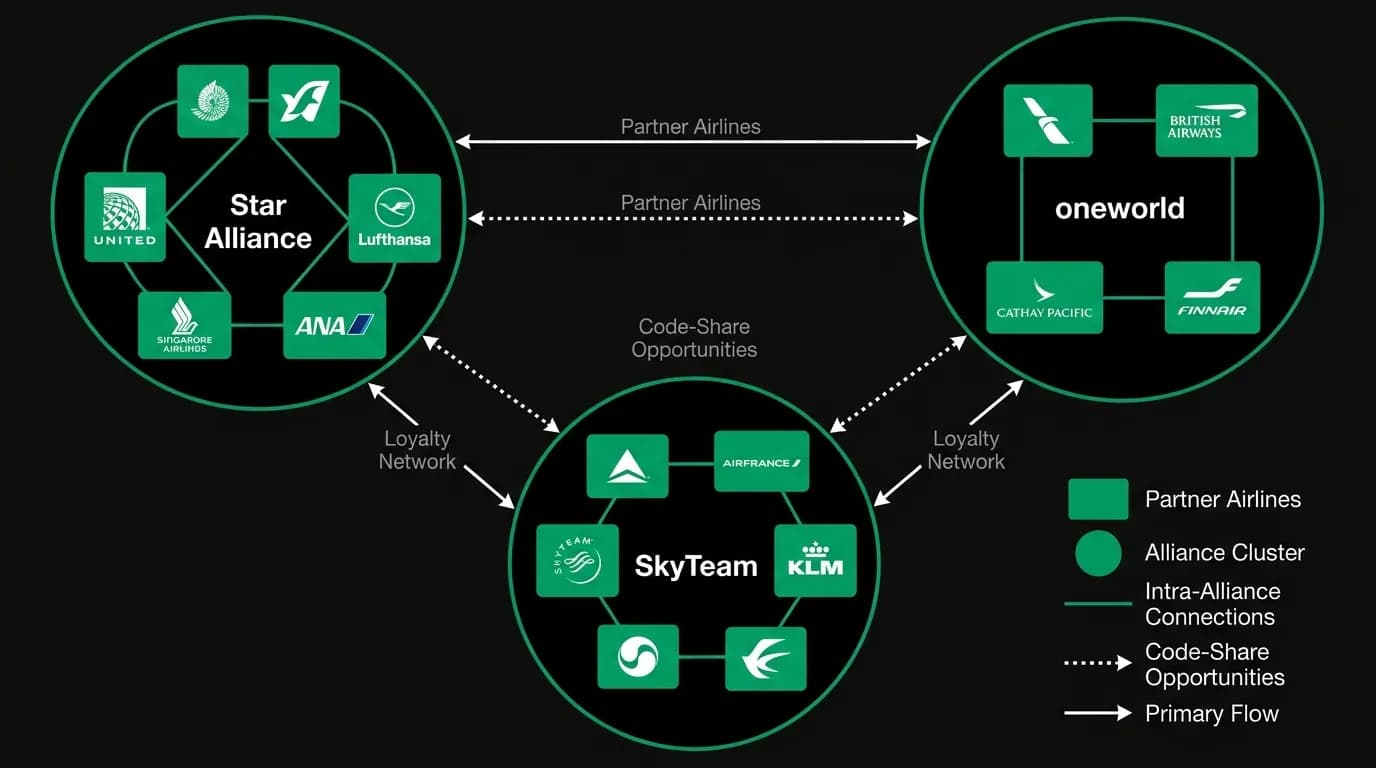
Airlines operate in three major alliances, and membership in one alliance gives you benefits across all partner airlines. If you have status with one carrier, you get priority boarding, lounge access, and mileage earning on any alliance partner. That is a real perk that should factor into which flight the AI recommends.
Hotel loyalty data works similarly. Your tier status at a hotel chain might give you free breakfast, room upgrades, late checkout, and bonus points. A $200 per night hotel where you get $50 worth of free perks has different value than a $200 hotel where you get nothing.
How loyalty changes the ranking math
The multi-factor scoring system includes a personal fit dimension that accounts for roughly 10% of the total weight. Loyalty data is a major component of that dimension.
In practice, this means the AI might recommend an alliance partner flight that costs $50 more than the cheapest option because the mileage earning, lounge access, and priority boarding represent more than $50 in value. The explanation makes this trade-off explicit: "This flight costs $50 more but earns double miles on your alliance and includes lounge access through your status."
For hotels, loyalty status can unlock upgrades, free breakfast, and late checkout that transform the value proposition. The AI estimates the dollar value of these perks and factors them into the price-value calculation.
Credit card benefits as a hidden optimization layer
Many premium travel credit cards offer benefits that most cardholders underutilize: airline fee credits, hotel credits, lounge access, travel insurance, and bonus earning rates on specific booking categories.
When the AI knows your card benefits, it can optimize for them. Maybe your card gives you 5x points on airline purchases booked directly. Maybe it offers a statement credit for a specific hotel brand. Maybe it includes travel delay insurance that makes cheaper, riskier itineraries a smarter bet.
These are optimizations that require knowing both your loyalty profile and the specific benefits of your financial products. A human travel agent would ask about this. A search engine ignores it entirely. The AI agent integrates it into every recommendation.
Maximizing what you already have
There is a subtle but important distinction between maximizing the perks you already have and accumulating new ones. The AI defaults to maximizing existing benefits because the return is immediate and certain.
If you have 70,000 miles and need 80,000 for a redemption, the AI might prioritize earning opportunities on alliance partners to get you over the threshold. If you have hotel elite status expiring in three months, it might suggest booking with that chain to re-qualify.
This kind of optimization requires seeing the full picture of your loyalty ecosystem, which is exactly what the agentic memory system provides. Business travelers who prioritize loyalty points alongside schedule and convenience benefit enormously from this intelligence layer.
The interaction with other preference signals
Loyalty data does not override everything. It interacts with your other preferences. If you hate a particular airline despite having status on their alliance, the AI respects that. If the loyalty option has a terrible layover that violates your connection time preferences, it gets penalized on that dimension even though it scores well on loyalty.
The ranking engine balances all six scoring dimensions, and loyalty is one input among many. But for travelers who have invested time and money into loyalty programs, having an AI that actually knows about those investments makes every search smarter.
Add your loyalty programs to Nowah and watch your recommendations shift to reflect the benefits you have already earned.
Nowah is an AI travel agent that searches and books real flights and hotels through conversation — no filters, no thirty open tabs. Plan your next trip.