Building Itinerary Generation: When the AI Plans Your Entire Trip
Building the itinerary generation feature — prompt engineering for useful day-by-day plans, integrating real location data, and iterative refinement with travelers.
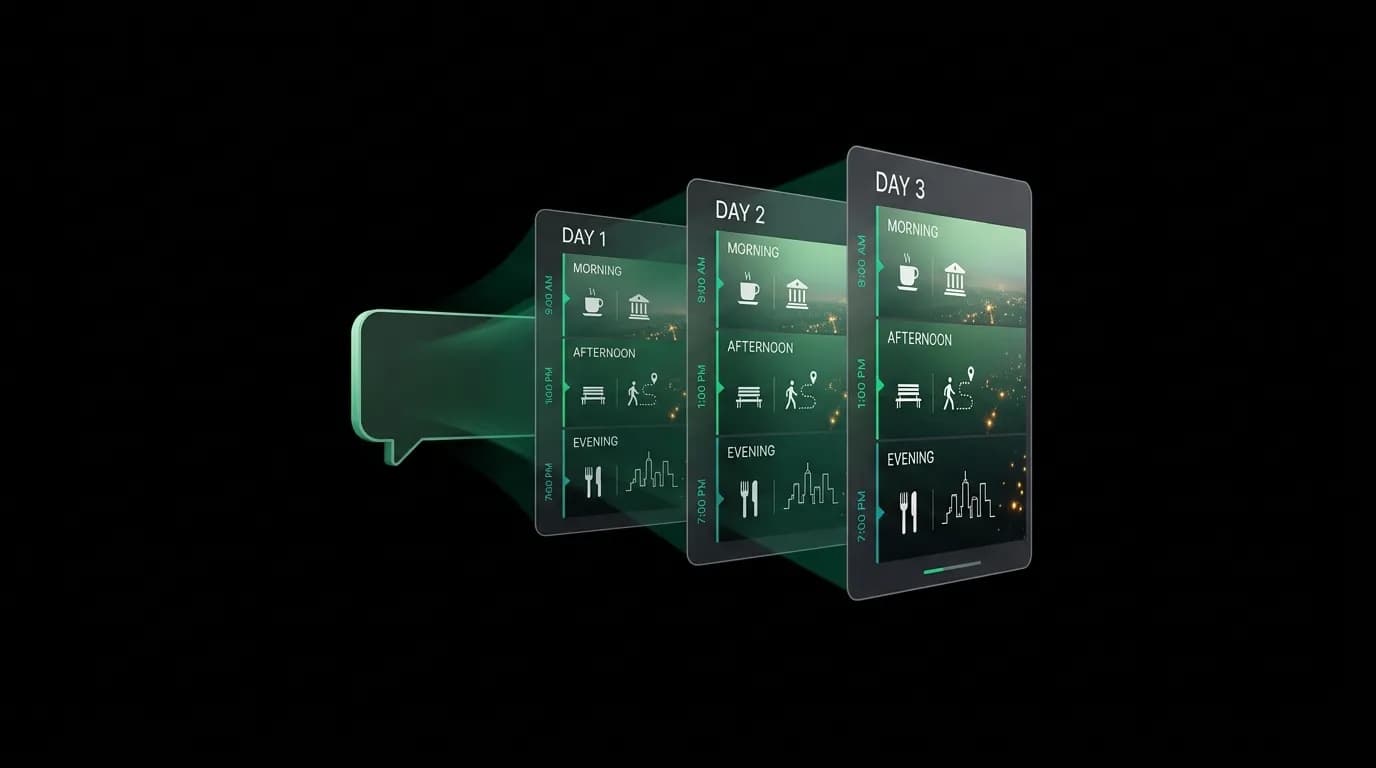
A traveler said "plan my 5 days in Tokyo" and expected magic. The thing is, we delivered it. Not because the AI is magical, but because we invested enormous effort in making generated itineraries practical, realistic, and personal rather than generic listicle content.
The difference between a good AI-generated itinerary and a bad one is the difference between "Visit Sensoji Temple" and "Visit Sensoji Temple in the morning when crowds are smaller, walk 10 minutes to Nakamise shopping street for snacks, then take the Ginza line 3 stops to Tsukiji for lunch at the outer market." The first is a search result. The second is a plan.
Prompt engineering for itineraries
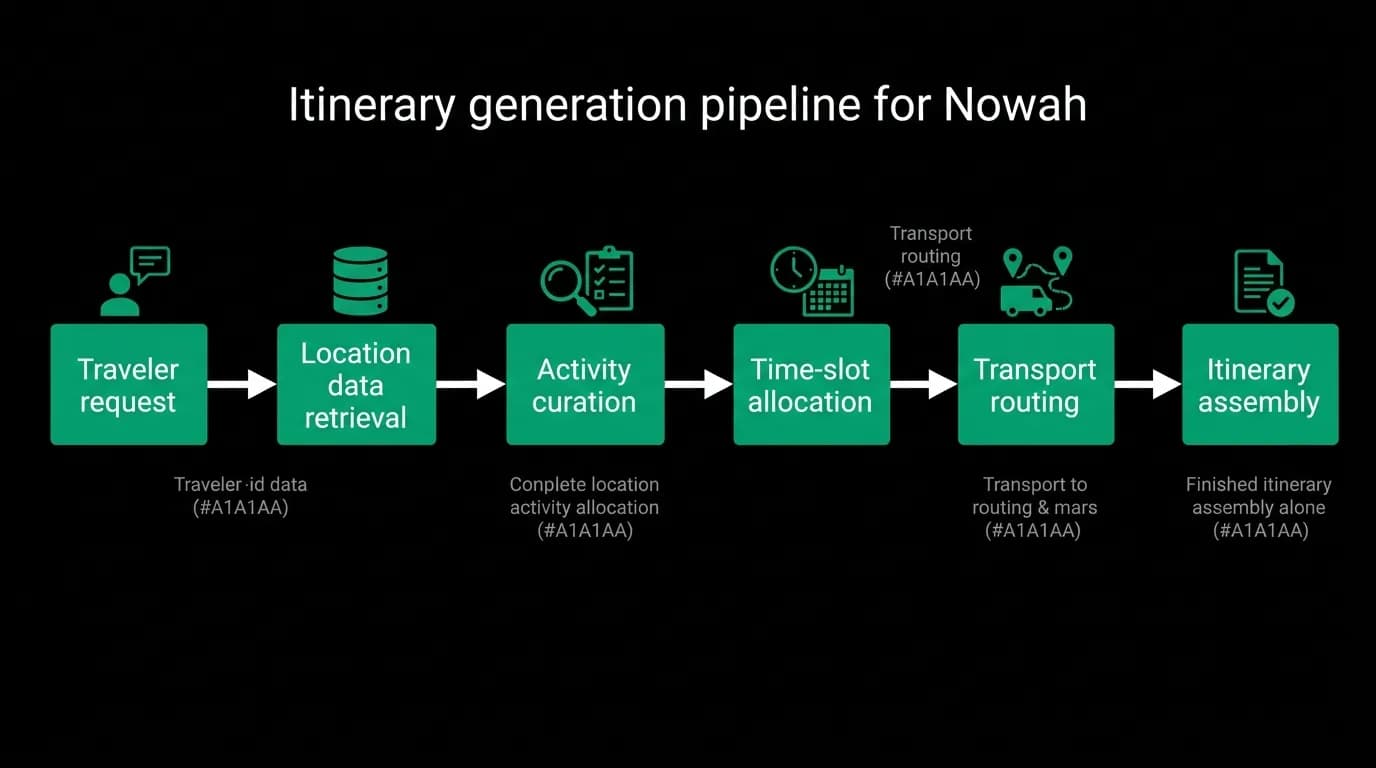
Building useful itineraries required careful prompt engineering across several dimensions. The agent needs to generate plans that are time-realistic, meaning the travel time between activities is accurate and the total daily schedule is achievable without exhausting the traveler. It needs to account for opening hours, seasonal availability, and day-of-week closures. And it needs to balance popular attractions with local discoveries that make the trip feel personal rather than touristy.
We structure itineraries into morning, afternoon, and evening blocks with transportation, meals, and rest built into the schedule. A day that runs from 8 AM to 10 PM with no breaks is not a plan. It is a forced march. The agent builds in downtime because real travel includes wandering, getting lost, and sitting in a cafe watching the world go by.
Integrating real data
The critical upgrade from generic itinerary generation to useful trip planning is real data. The agent pulls actual travel times between locations, real weather forecasts for the travel dates, visa requirement checks for the destination, and verified points of interest with current information.
This integration means the itinerary accounts for realities that a generic AI generation would miss. A walking tour that sounds lovely on paper becomes impractical when it is 38 degrees and the stops are two kilometers apart. A restaurant recommendation is useless if it is closed on Mondays and the traveler is there on a Monday.
Iterative refinement
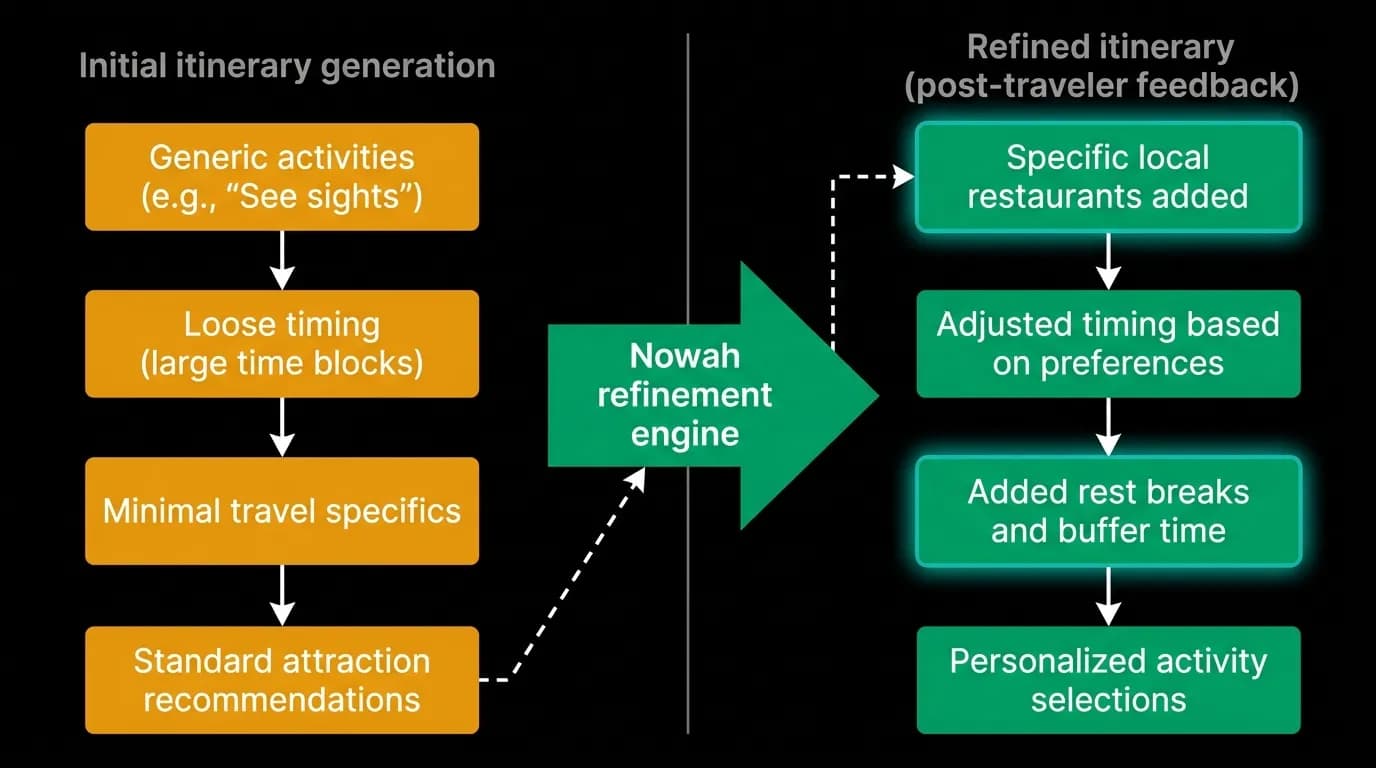
Itinerary generation is not a one-shot process. The average traveler makes two to three adjustments before finalizing their plan. "Can you swap the museum to the afternoon?" "Add a sushi restaurant for dinner on day three." "I do not want to do anything on the last morning because I need to pack."
The agent handles these modifications conversationally, adjusting the itinerary while maintaining overall coherence. Swapping an activity from morning to afternoon might cascade into transportation changes, meal timing shifts, and availability conflicts. The agent manages these cascading effects rather than requiring the traveler to manually reconstruct the schedule.
Both the mobile trip detail screen and the web trip page display the generated itinerary in the Overview tab. The itinerary is a living document that the traveler can continue refining through conversation with the agent, even after the initial generation.
Itinerary generation transformed the agent from a booking tool into a planning partner. The booking gets you there. The itinerary tells you what to do when you arrive. Together, they create a trip that is not just logistics but experience.
Nowah is an AI travel agent that searches and books real flights and hotels through conversation — no filters, no thirty open tabs. Plan your next trip.