Partnership Path: Integrating with Airlines and Hotel Chains
How partnership launches differ from product launches — co-marketing, technical integration timelines, data sharing, and launching on third-party readiness.

A partnership launch was ready on our side for three weeks while the partner's API was still in testing. Our code was deployed, tested, and waiting. Their endpoint was returning intermittent 500 errors. The launch date slipped twice. Our marketing materials were drafted, reviewed, and aging.
Partnership launches are fundamentally different from product launches because your launch date depends on someone else's readiness. This introduces dependencies, coordination overhead, and patience requirements that product launches do not have.
Partnership launch anatomy
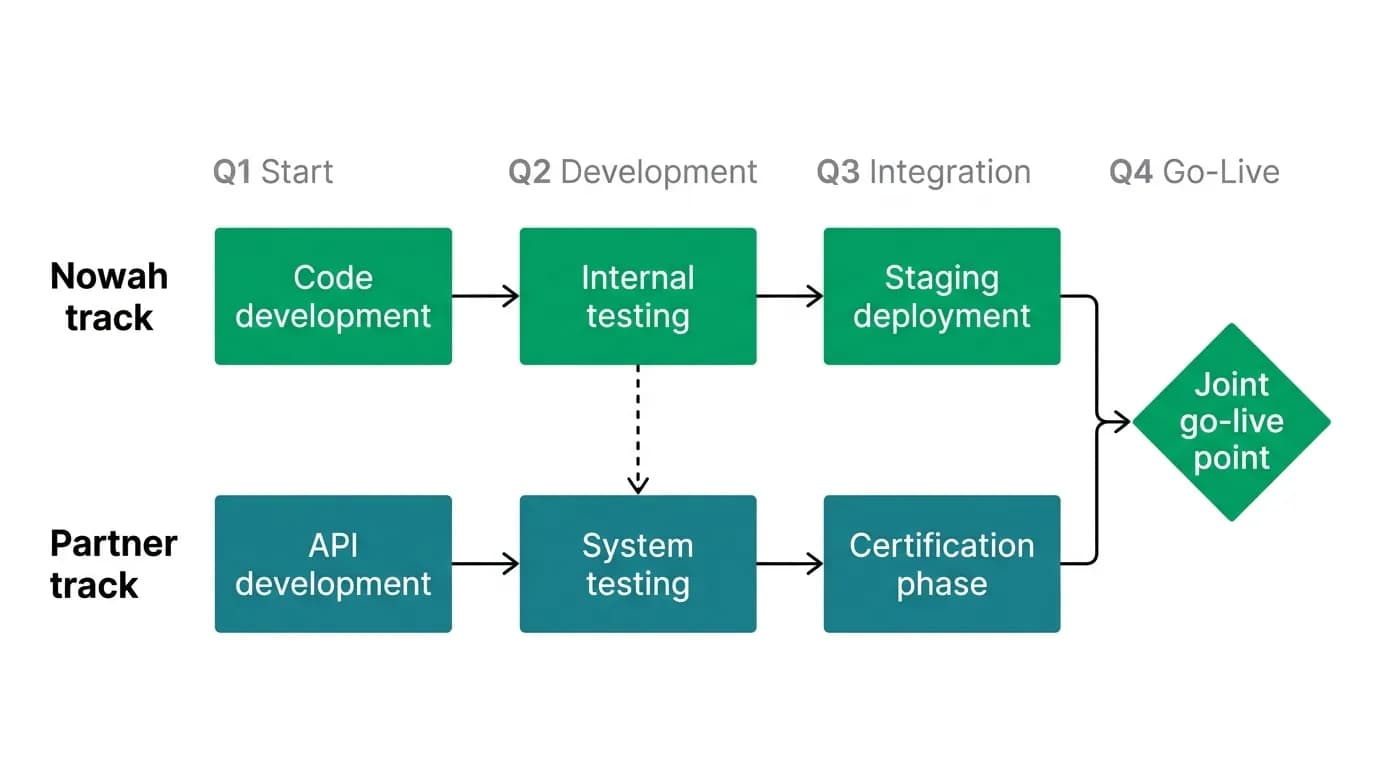
A partnership launch has four parallel tracks: technical integration, data sharing agreement, co-marketing plan, and go-live coordination. Each track can independently block the launch, and they often progress at different speeds.
Technical integration is the most unpredictable track. Partner APIs have different reliability characteristics, different versioning strategies, and different support response times from our own infrastructure. An integration that takes two weeks in our test environment might take two months against the partner's staging environment because their staging environment behaves differently from production.
Data sharing agreements cover what data flows between organizations and how traveler information is protected. These agreements involve legal review on both sides and can take longer than the technical integration.
Co-marketing
Co-marketing with a partner requires aligning incentives without giving up positioning. The partner wants to promote their inventory. We want to promote the AI booking experience. A joint announcement that serves both requires careful messaging that acknowledges the partner's brand while maintaining our identity as the AI travel platform.
The most effective co-marketing format is a joint case study: "Travelers can now book [Partner] flights through Nowah's AI agent. Here is what the first month looked like." Concrete results shared by both parties are more credible than either party's solo announcement.
Launch dependency management
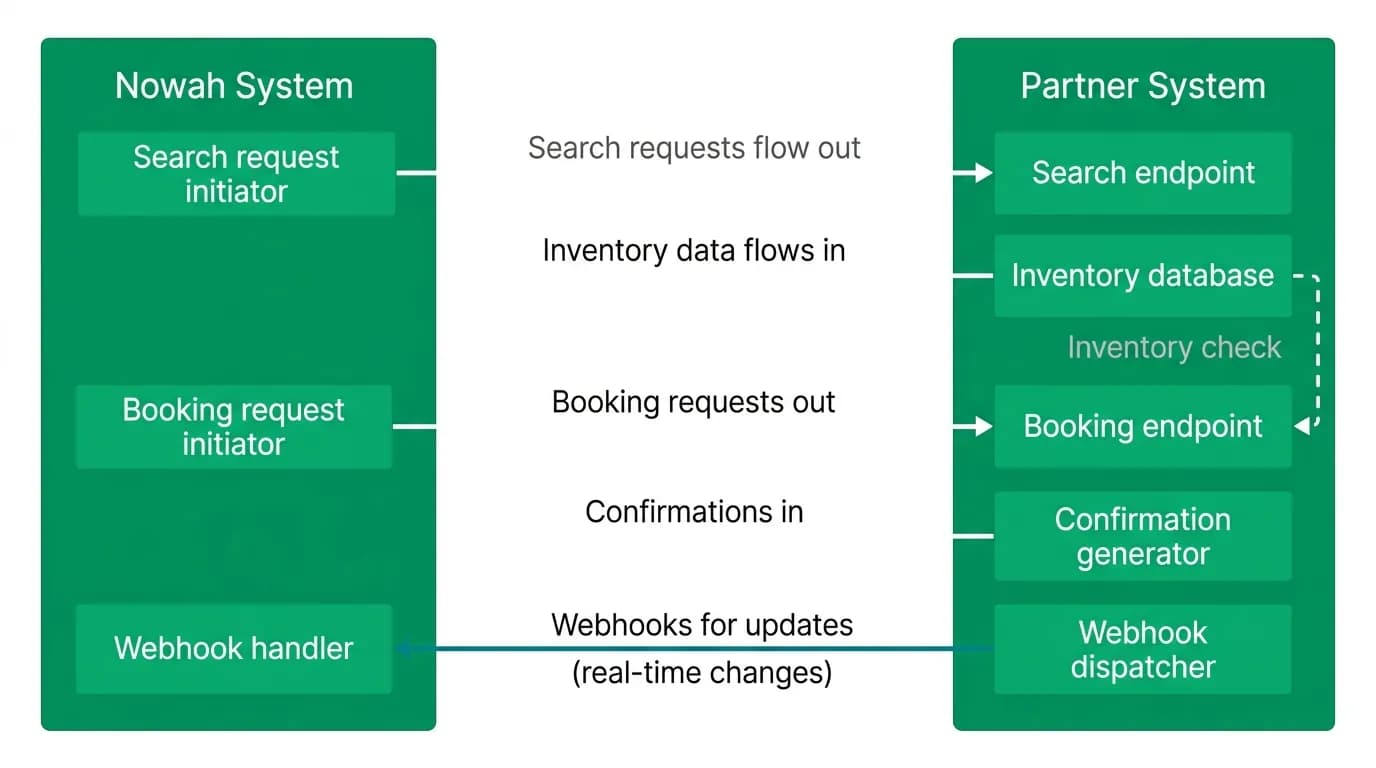
The hardest part of partnership launches is managing the dependency on the partner's timeline. We mitigate this by building integrations that can be tested independently of the partner's readiness using recorded responses and test fixtures. This lets our team stay productive while the partner resolves their issues.
We also maintain dual rollback plans: one for our side and one for the partner's side. If the partner's API degrades after public launch, we can gracefully disable the integration without affecting the rest of our platform. The traveler sees "flights from [Partner] are temporarily unavailable" rather than a broken experience.
Partnership launches require patience, flexibility, and clear communication. They are worth the complexity because each partnership expands the inventory and reach of the platform in ways that internal development cannot replicate.
Nowah is an AI travel agent that searches and books real flights and hotels through conversation — no filters, no thirty open tabs. Plan your next trip.