The Data Pipeline Behind Real-Time Travel Prices
How pricing data flows from airlines and hotels through data providers to the AI ranking engine. Caching vs. live lookups and the freshness tradeoff.

Between the airline's pricing system and your screen, data passes through at least five layers. Each layer adds latency. Each layer introduces the possibility that the price you see is not quite the price that exists right now. Understanding this pipeline does not just satisfy technical curiosity — it explains a frustration that nearly every traveler has experienced: the price changed between when I searched and when I tried to book.
The travel data supply chain
Airline pricing starts in revenue management systems where analysts and algorithms set fares across 12 to 26 fare classes per route. These fares are filed with global distribution systems — the backbone infrastructure that connects airlines to the rest of the travel ecosystem. From there, the data flows to aggregators and data providers who normalize it, cache it, and serve it to travel platforms. Finally, the platform processes the data and presents it to you.
Each handoff in this chain introduces a delay. The airline files a fare change. The distribution system propagates it — usually within minutes, but sometimes longer. The aggregator picks it up in its next data refresh, which might happen in real time or might be batched. The platform caches it for performance. By the time you see a price, it might be seconds old or it might be minutes old.
Hotels follow a similar but slightly slower pipeline. Hotel inventory and pricing systems update less frequently than airline systems because hotel pricing changes happen on a daily or hourly basis rather than the multiple-times-daily adjustments common in airline pricing. The data flows through property management systems, channel managers, and distribution networks before reaching the booking platform.
Caching vs. live lookup
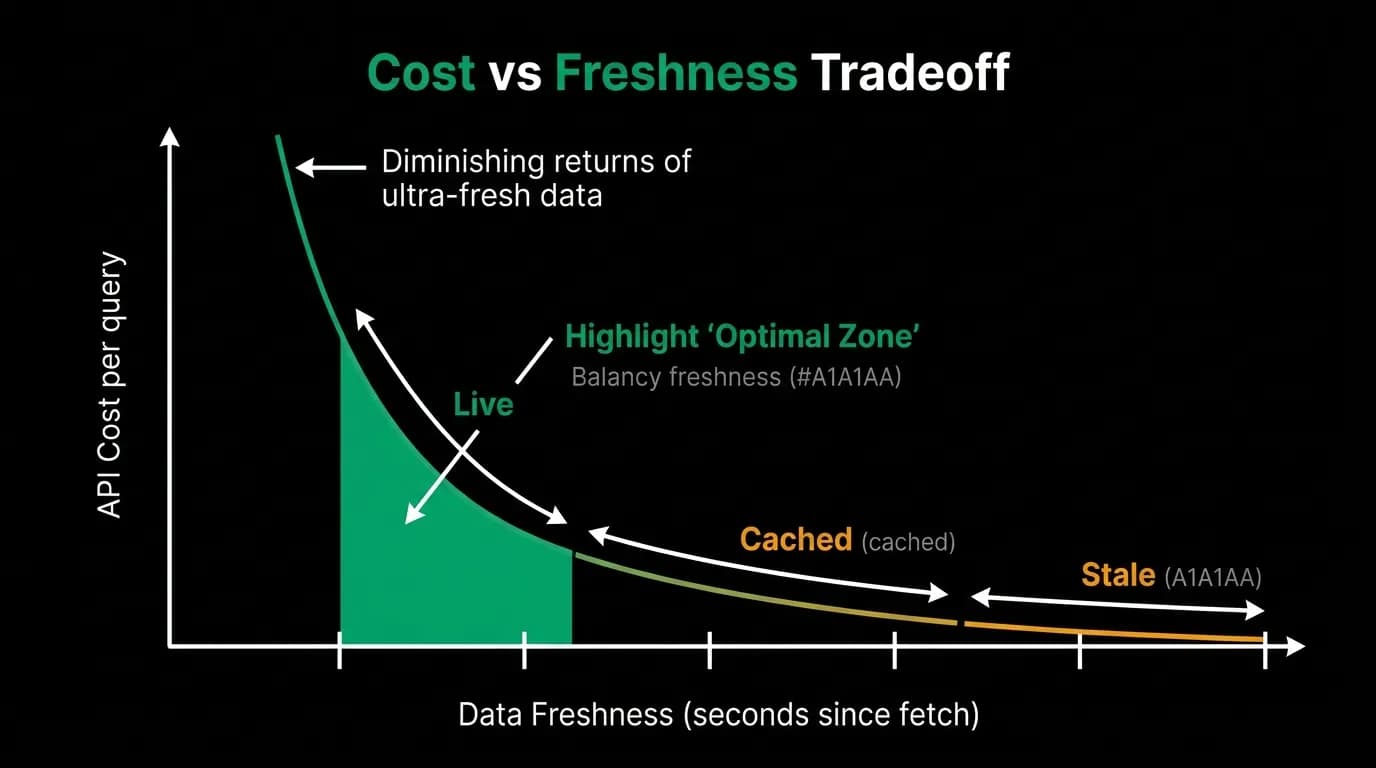
This is the fundamental engineering tradeoff in travel pricing. Live lookups query the source system in real time, returning the freshest possible data. Cached lookups serve data from a recently stored copy, which is faster and cheaper but potentially stale.
Live lookups cost five to ten times more per query than cached results. For a platform processing millions of searches, this cost difference is significant. More importantly, live lookups take longer — sometimes several seconds per query — which degrades the user experience. Nobody wants to wait 10 seconds for search results.
Cached data is fast and cheap but carries a risk: the price or availability might have changed since the cache was last updated. On competitive routes where airlines adjust prices three to five times daily, a cache that is even 30 minutes old might show prices that are no longer available. This is the source of the "price changed at checkout" experience that frustrates travelers.
The AI manages this tradeoff with a tiered freshness strategy. Broad discovery searches can tolerate slightly cached data because the goal is to identify candidate options, not to commit to exact prices. Shortlist comparisons use fresher data with tighter refresh windows. And the final booking confirmation always validates against live pricing to ensure the traveler books at an accurate price.
The "ghost availability" problem
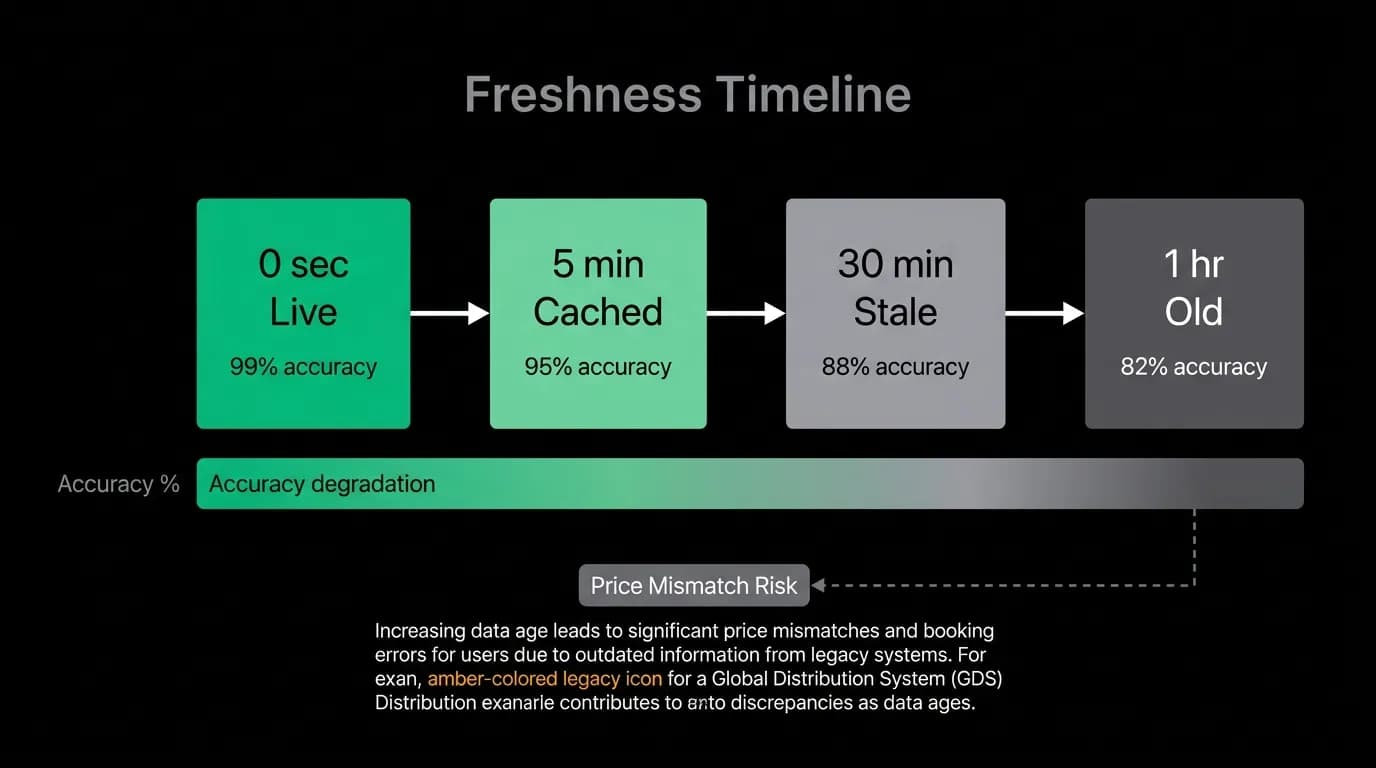
One of the most frustrating artifacts of the data pipeline is ghost availability: inventory that appears available in the search results but is gone by the time you try to book. This happens because the cached data showed a seat or room as available, but between the cache timestamp and your booking attempt, someone else purchased it.
Ghost availability causes an estimated 5 to 10% of booking failures industry-wide. It is most common on high-demand inventory (last few seats on a popular flight, last room at a hotel during an event) and on platforms that cache aggressively for performance.
The AI reduces ghost availability by prioritizing data freshness on high-demand inventory and flagging options where availability is likely to be volatile. When inventory on a flight is low, the system uses live queries rather than cache to ensure what it shows is actually bookable.
Why the price you see is always a snapshot
Even with the best data pipeline, every price displayed on a screen is a point-in-time snapshot. The airline's revenue management system is continuously adjusting fares based on demand signals, competitive intelligence, and inventory depletion. A price that is valid at 2:00 PM might not be valid at 2:15 PM.
This is not a flaw in any specific platform — it is a structural characteristic of how airline pricing works. The most any system can do is minimize the gap between the snapshot and the current reality. Live data reduces the gap to seconds. Cached data leaves it at minutes or hours. No system eliminates it entirely.
The practical implication for travelers is straightforward: when you see a price you are happy with, booking promptly reduces the risk of it changing. Extended comparison shopping across multiple tabs over multiple hours increases the probability that at least one of your saved options will have shifted by the time you return to it.
Freshness where it matters, speed where it does not
The AI's approach is pragmatic. Data freshness is an investment, and like any investment, it should be allocated where it produces the most return. Fresh data matters most at the moment of decision — when you are comparing your shortlist and deciding what to book. It matters least during early exploration, when you are still figuring out where to go and when.
By matching freshness investment to the decision stage, the AI delivers fast initial searches (because slightly cached data is fine for exploration), accurate shortlist comparisons (because you are now evaluating specific options), and reliable booking confirmation (because the price you click "book" on needs to be the price you actually pay).
Nowah's approach: live pricing where it matters, smart caching where it does not. The result is a search experience that is both fast and accurate when accuracy counts most.
Nowah is an AI travel agent that searches and books real flights and hotels through conversation — no filters, no thirty open tabs. Plan your next trip.