Social Media Strategy for AI Travel Before and After Launch
Platform-specific campaigns around feature launches — Twitter/X for developers, Instagram for travelers, LinkedIn for industry, and why demo videos win.
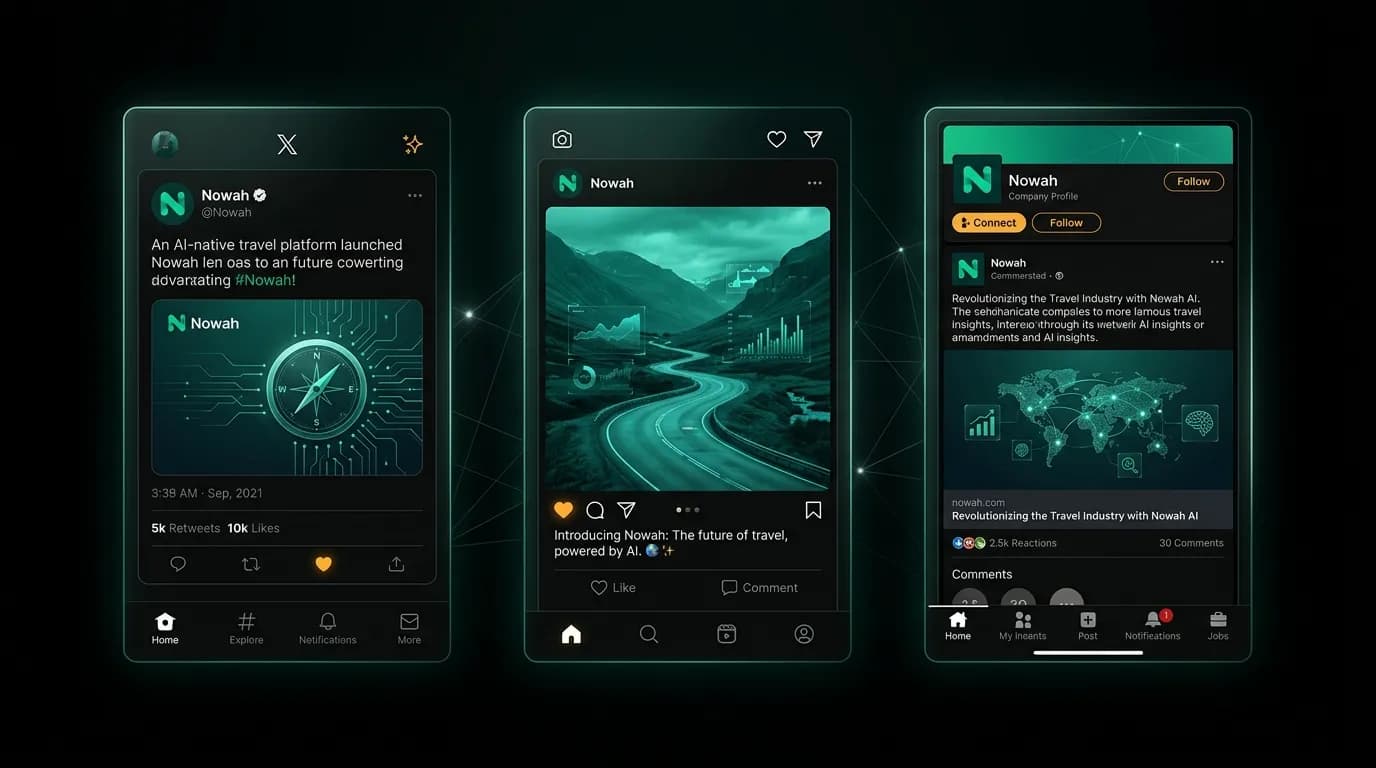
A tweet went viral not because we told people the agent could book flights, but because we showed it. A 30-second screen recording of the agent searching real inventory, presenting options, and completing a booking in a single conversation. The video was unscripted, unpolished, and undeniably real. It outperformed every crafted marketing post we had ever published.
The lesson was clear: for AI products, showing beats telling by a massive margin.
Platform strategy
Different platforms serve different audiences, and the content must adapt to each.
Twitter/X reaches our technical audience and the developer community. Posts are short, direct, and capability-focused. The format that works: "[Feature] is live. [What it does in one sentence.] Try it: [link]." Technical threads that explain how we built something perform well. Marketing language performs poorly. This audience detects and penalizes inauthenticity immediately.
Instagram reaches travelers with visual content. Behind-the-scenes looks at the team, beautiful travel imagery connected to product capabilities, and short-form video of the app in use. The content is aspirational but grounded: not "imagine traveling with AI" but "here is someone actually traveling with AI."
LinkedIn reaches industry observers and potential partners. Posts here are longer, more analytical, and focused on what we are learning rather than what we are shipping. The behind-the-scenes insight that would feel out of place on Twitter is exactly right for LinkedIn.
Content calendar
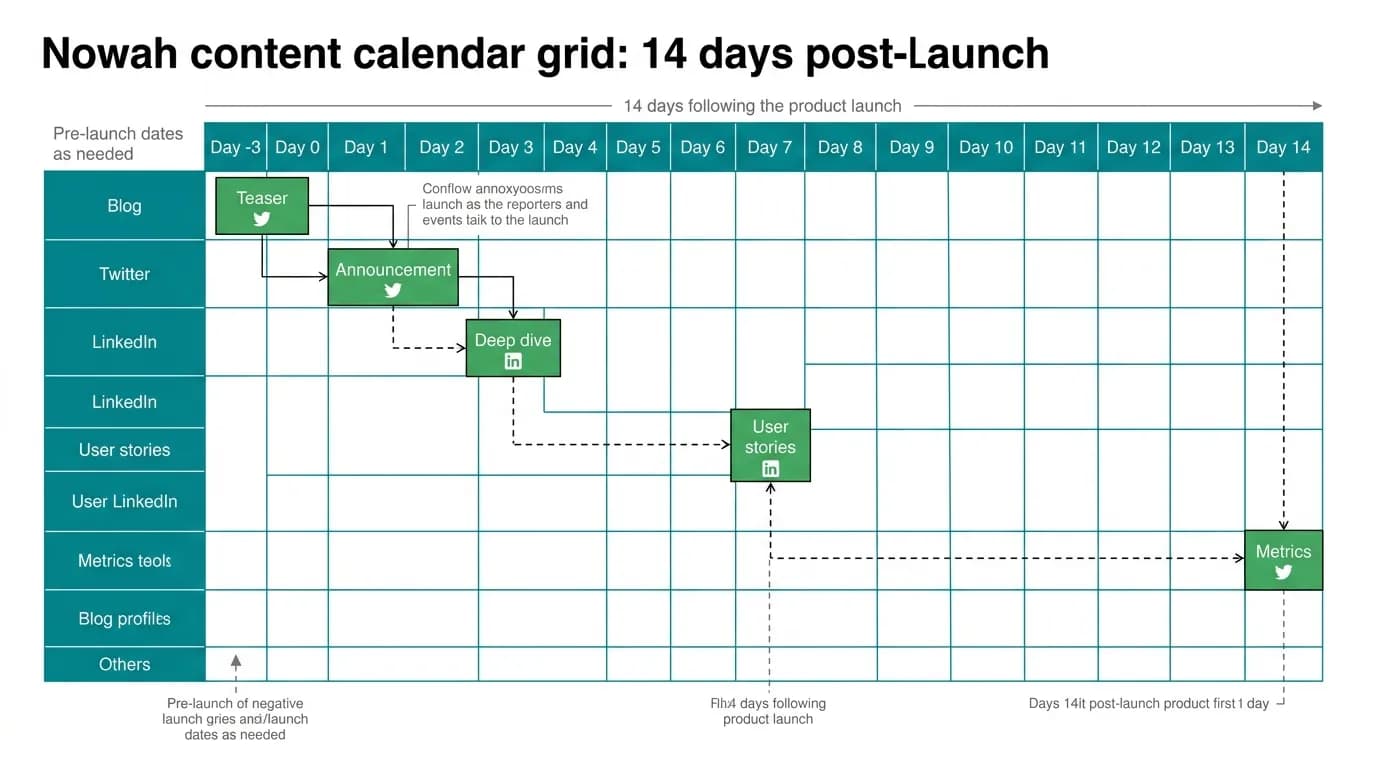
We stagger content over two weeks rather than dumping everything on launch day. The sequence: teaser content three days before launch to build anticipation. Launch announcement on day zero across all platforms. Technical deep dive on day three for the developer audience. User stories and testimonials around day seven. Metrics and learnings at day fourteen.
This cadence keeps the launch in the conversation for two weeks. It also lets us adapt based on early reception: if the developer community is more interested than expected, we accelerate technical content. If travelers are engaging more on Instagram, we create more visual content for that platform.
Demo videos as the winning format
Demo videos outperform every other content format for AI product launches. Text descriptions of AI capabilities trigger skepticism. Travelers have been burned by "AI" marketing that turned out to be a glorified chatbot. But a video showing real search results, real prices, and a real booking leaves no room for doubt.
Our demo videos follow a consistent format: a real traveler query at the top, the agent processing it in real time, results appearing with actual prices, and a booking confirmation at the end. No narration. No music. Just the product doing its job.
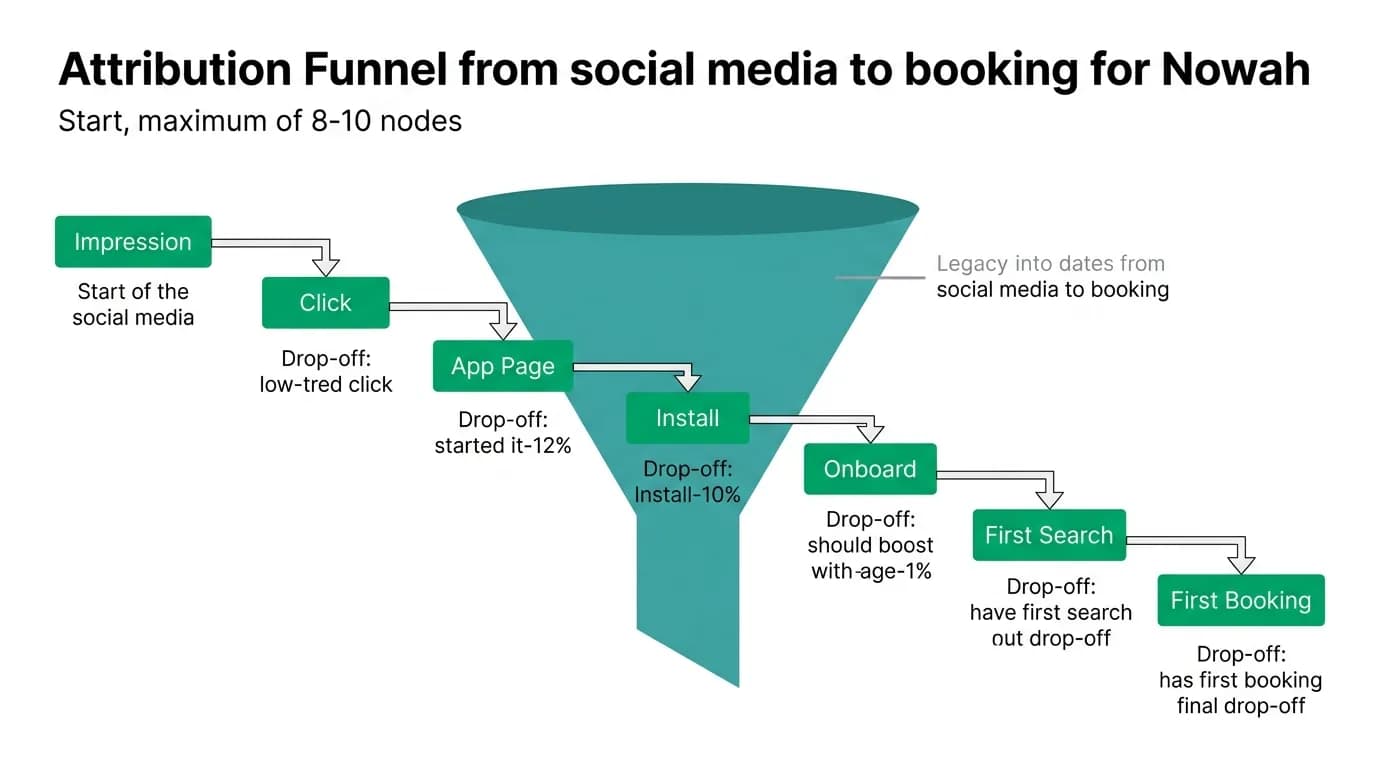
Measuring social media ROI requires tracking the full funnel from impression to app install to first booking. Attribution across platforms is imperfect, but directional signals are enough to inform strategy. We know which platforms drive installs and which drive engagement. We invest accordingly.
Nowah is an AI travel agent that searches and books real flights and hotels through conversation — no filters, no thirty open tabs. Plan your next trip.