Building a Private Test Community Before Launch
Recruiting, managing, and learning from beta testers — channels that work, feedback collection systems, bug workflows, and how beta shaped the product.
One beta tester filed 47 bug reports in two weeks and became our most valuable product advisor. She was not a QA professional. She was a frequent business traveler who used every feature with the intensity of someone who actually depends on the tool. Her bug reports were detailed, contextual, and often accompanied by suggestions that were better than what we had on the roadmap.
Finding people like her, and building a community of testers who care enough to file 47 reports, does not happen by accident. It requires deliberate recruitment, structured feedback systems, and a genuine relationship between the product team and the private test community.
Recruitment
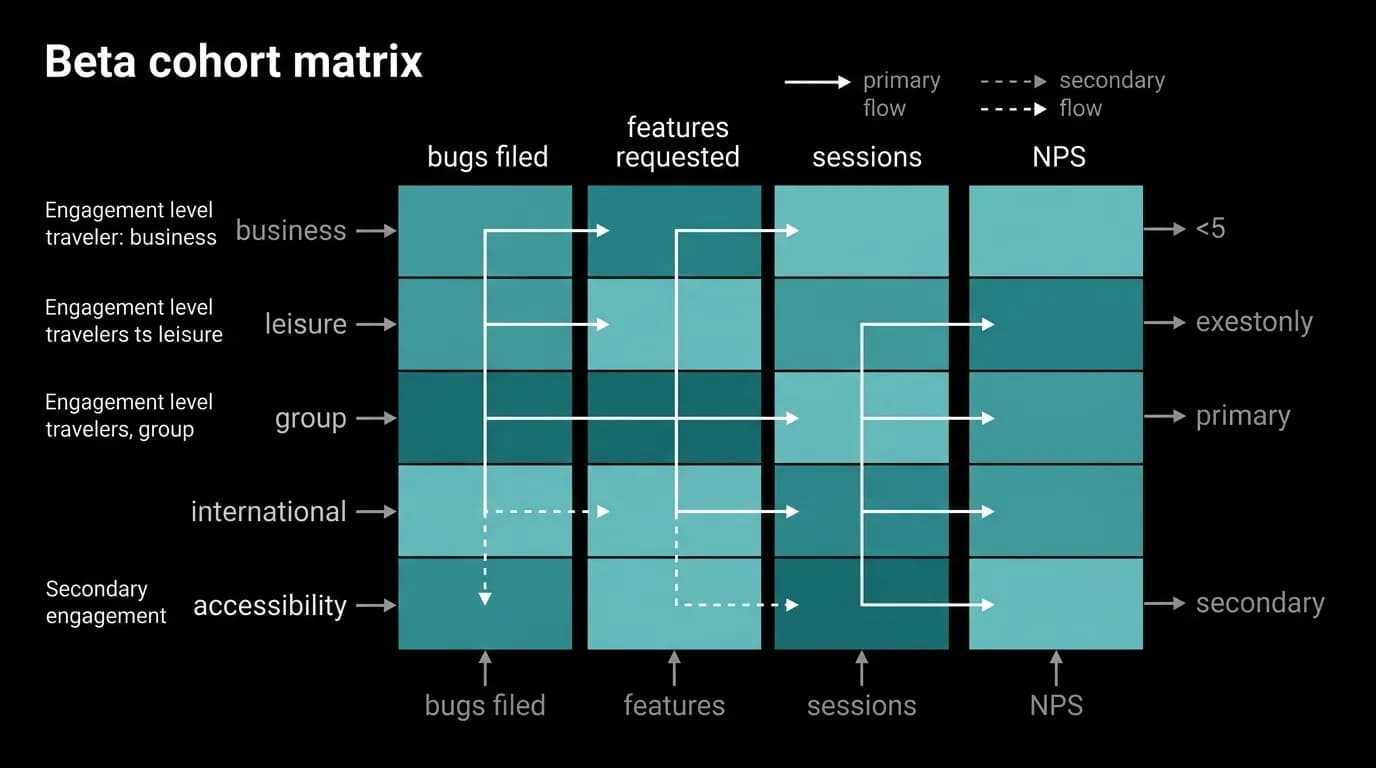
We recruited private testers from five categories to ensure diversity of travel behavior. Business travelers who book frequently with tight constraints. Leisure travelers who are flexible and exploratory. Group planners coordinating multiple people. International travelers dealing with visas and currency. And travelers with accessibility needs who exercise different interaction patterns.
Recruitment channels included travel forums and communities, social media groups for frequent travelers, direct outreach to people who had expressed interest in AI travel tools, and referrals from existing private testers. The referral channel produced the highest-quality testers because existing community members understood what we needed and recommended people who would be genuinely engaged.
We aimed for a minimum of 50 testers for each major feature launch, with at least two weeks of active testing before promoting to general availability. This threshold came from experience: smaller cohorts miss edge cases, shorter durations miss patterns that only appear over repeated use.
Feedback collection
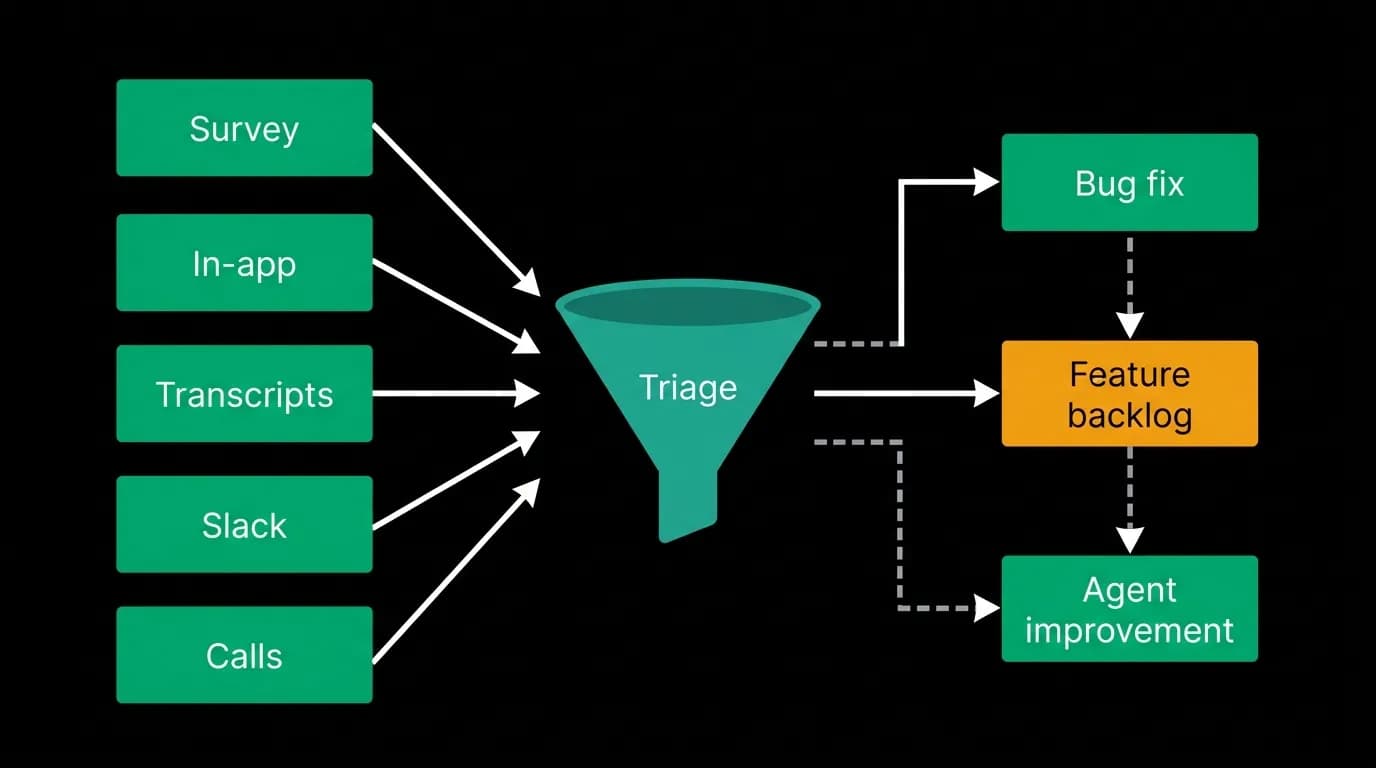
Structured feedback collection produces structured insights. We use multiple channels, each optimized for a different type of feedback.
Structured surveys after each session capture quantitative data: satisfaction scores, task completion rates, and specific feature ratings. In-app feedback buttons let testers report issues in context, with the current conversation state attached to the report. Chat transcript analysis reveals agent failure patterns that testers may not explicitly report because they worked around the issue. And direct conversations with testers who encountered notable issues provide depth that structured channels cannot.
The feedback flows through a triage pipeline that categorizes each item as an agent bug, an API issue, a UX confusion, a feature request, or a performance problem. Each category routes to the appropriate team for resolution.
From beta to general availability
The transition from beta to GA is a sensitive moment. Private testers have invested time and emotional energy in the product. They expect to be recognized and to continue having a voice in the product's direction.
We manage this transition by keeping the private test community active after GA launch. Private testers get early access to every new feature. They have a dedicated feedback channel. And they know, because we tell them explicitly, that their input directly shaped the product that launched.
Beta tester retention into GA is one of our key product-market fit signals. If the people who used the product most intensively during private testing continue using it after public launch, we have built something that works for the people who know it best.
Nowah is an AI travel agent that searches and books real flights and hotels through conversation — no filters, no thirty open tabs. Plan your next trip.