Summer Travel 2026: How AI Agents Beat the Crowds and the Prices
Peak season does not have to mean peak prices. AI agents find value in summer through alternative destinations, timing optimization, and smart flexibility.

Paris in July costs three times what it costs in October. But Lisbon in July costs half what Paris does — with comparable weather, equally stunning architecture, world-class food, and a fraction of the crowds. The question is not whether alternatives exist. They always do. The question is whether your booking tool is designed to find them.
Traditional booking platforms are built to sell you what you search for. Type "Paris, July" and you get Paris in July at Paris-in-July prices. The platform has no incentive to suggest Lisbon, Porto, or Ljubljana — destinations that match the experience you want at a fraction of the cost. The search box takes your input literally. AI agents take your input intelligently.
Peak season does not have to mean peak prices. But navigating summer travel effectively requires the kind of multi-dimensional optimization that AI agents are uniquely equipped to provide.
The peak season problem
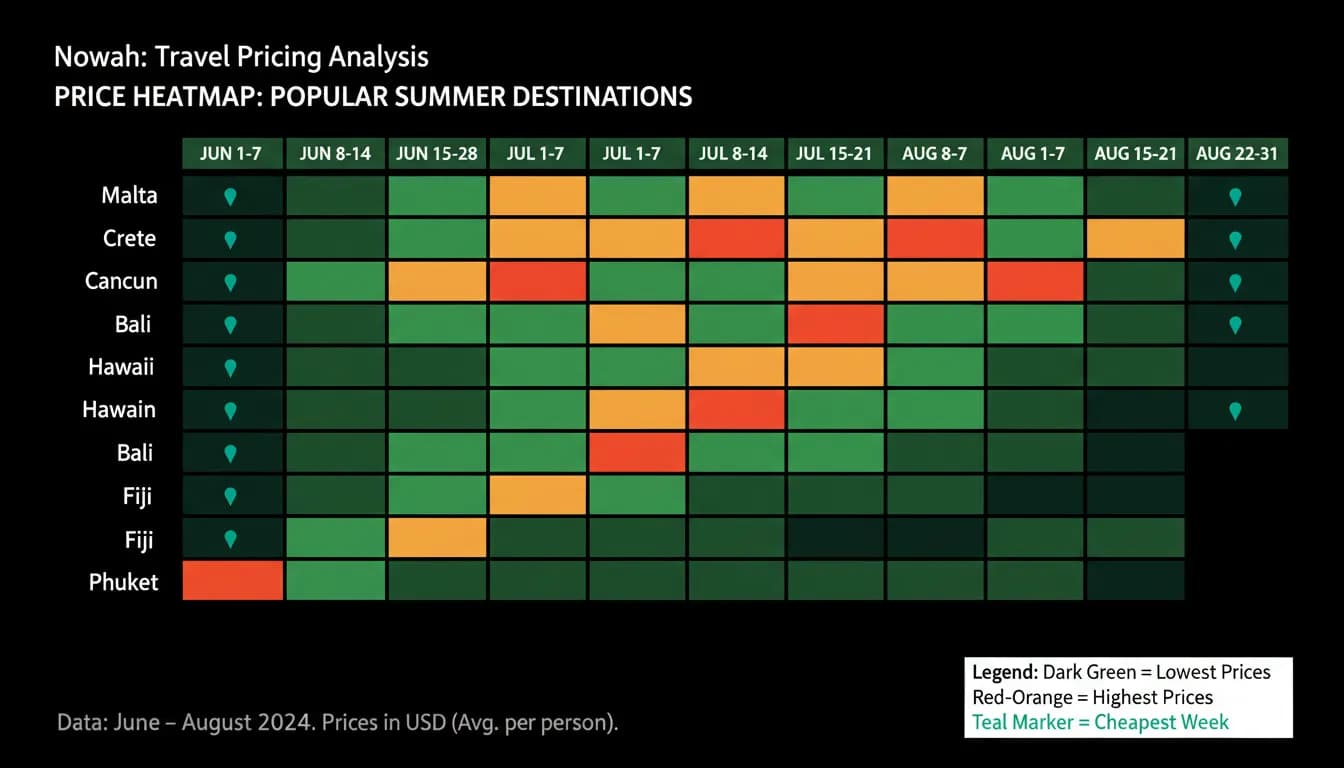
Summer pricing premiums for popular European destinations range from 50 to 200 percent above shoulder season. A hotel room in Santorini that costs $180 in May costs $450 in August. A flight from New York to Rome that costs $500 in October costs $1,200 in July.
The premiums exist because demand is concentrated. The top 10 summer destinations account for 40 percent of all summer bookings. Everyone wants to go to the same places at the same time. This creates a predictable supply-demand imbalance that drives prices to peaks.
But the other 60 percent of destinations — many of which offer comparable or superior experiences — are underbooked, underpriced, and underappreciated. The traveler who discovers them saves money and avoids crowds. The traveler who defaults to the top 10 pays peak prices and competes with every other tourist for restaurant reservations and attraction tickets.
Alternative destination intelligence
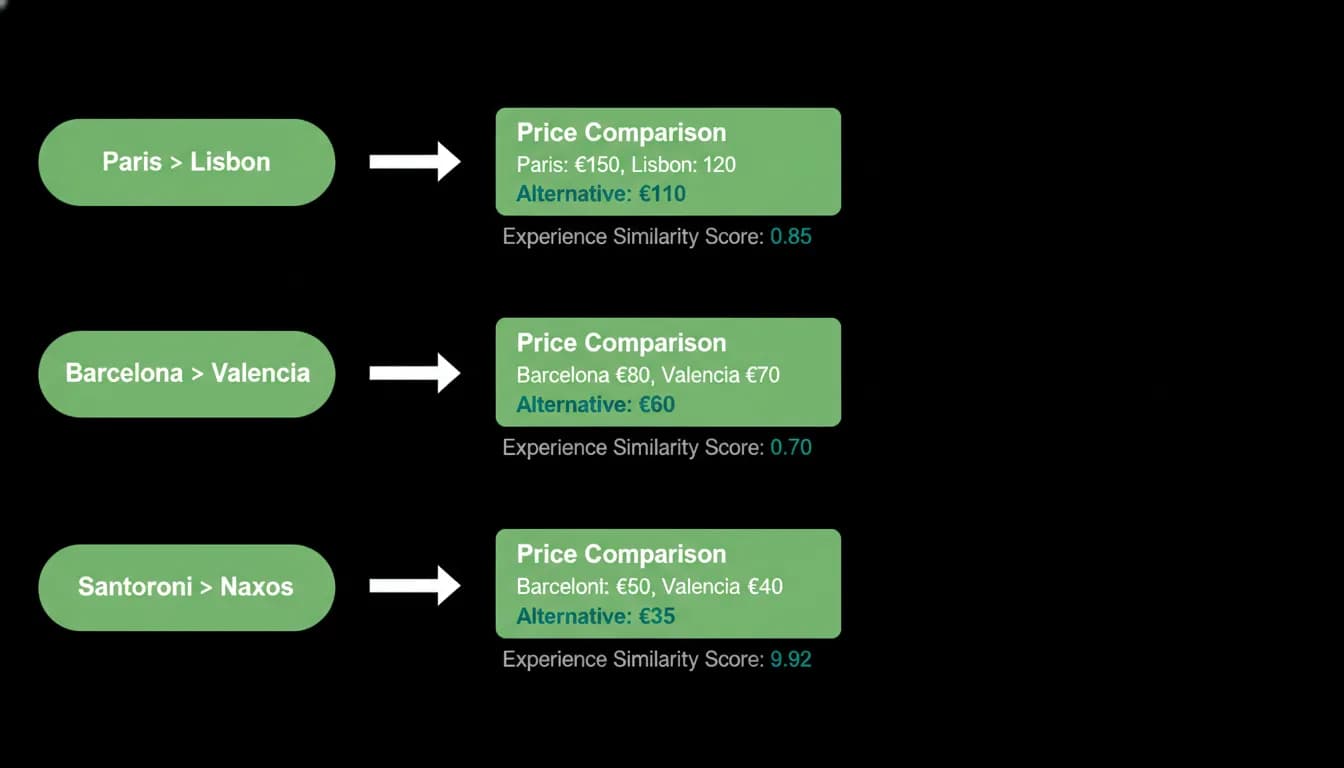
AI agents excel at alternative destination recommendations because the problem is inherently multi-dimensional. "I want a Mediterranean beach vacation" is not a request for a specific city — it is a request for a type of experience. Many destinations deliver that experience. The optimal one depends on your budget, departure city, schedule, interests, and tolerance for crowds.
"You searched for Barcelona in July. Flights from your city: $680. Hotels averaging $220 per night. Barcelona will be extremely crowded — peak tourist season. Alternative suggestion: Valencia. Same Mediterranean coast, 300 minutes by train from Barcelona if you want a day trip. Flights from your city: $420. Hotels averaging $130 per night. Similar beaches, excellent food, significantly fewer tourists. Total savings: $890 over a 5-night trip."
Alternative destinations save 30 to 60 percent for comparable experience quality. The savings come from lower demand, which translates to lower prices and better availability. But the experience quality is not lower — it is often higher because you are not fighting crowds for a restaurant table or a spot on the beach.
AI agents suggest alternatives based on the attributes of your original search, not just the geography. If you want "warm, walkable, great food, beach access, under $200 per night," the agent evaluates every destination that matches — not just the one you happened to type first.
Timing optimization within summer
Even within the summer peak, pricing varies significantly by week. The first two weeks of June in Europe are often 20 to 30 percent cheaper than the last two weeks of July. Late August, after many European holidays end, drops back toward shoulder-season pricing in many destinations.
A 1 to 2 week date shift within summer can save 20 to 40 percent on flights and hotels. This is the easiest form of savings because it requires minimal compromise — you are still traveling in summer, still getting good weather, just shifting the specific dates.
AI agents present timing optimization automatically. "Your target dates in the last week of July are peak pricing. Shifting to the first week of June saves $580 in flights and hotels. Weather in your destination averages 28 degrees versus 31 degrees in July — comparable. Crowds are significantly smaller. Recommend the shift."
For families constrained by school schedules, the timing window is narrower but still meaningful. The first week after school ends and the last two weeks of August often offer better pricing than the core July dates that most families target.
Early booking versus last-minute
The optimal booking strategy for summer travel depends on your flexibility and risk tolerance.
Early booking (60 or more days out). For families and travelers with fixed dates, early booking saves 25 percent versus last-minute summer pricing. The best availability — the preferred room types, the convenient flight times, the boutique hotels with only 15 rooms — disappears early. Family summer bookings made 60 or more days in advance consistently outperform late bookings on both price and quality.
Last-minute booking (under 14 days). For flexible solo travelers or couples, last-minute summer deals exist but are unpredictable. Some destinations have excess hotel inventory that gets discounted close to the date. Others are fully booked with no late deals. AI agents assess the probability of last-minute deals for specific destinations: "Barcelona is 92 percent booked for your dates — last-minute deals unlikely. Crete is 68 percent booked — last-minute discounts probable."
The middle window (14 to 45 days). This is typically the worst time to book summer travel. Early enough that last-minute distress pricing has not kicked in, late enough that the early-booking rates have expired. AI agents that track pricing curves identify when you have passed the early-booking window and advise accordingly.
Family summer trip complexity
Family summer travel adds layers of complexity that AI agents handle naturally.
School schedule constraints. Most families operate within a fixed window. AI agents optimize aggressively within that window rather than outside it. "You have June 15 through August 25. The cheapest week for your destination is June 22 to 29. Recommend it."
Kid-friendly requirements. Pools. Connecting rooms. Family-friendly restaurants. Activity options for multiple age groups. The AI filters on these requirements automatically, eliminating the hotels and activities that do not work for families before presenting options.
Budget management. Family trips multiply every cost by 3, 4, or 5. The $50-per-night savings that is minor for a solo traveler becomes $250 over 5 nights for a family of five with two rooms. AI agents optimize for total family cost, not per-person cost, making the savings tangible.
Activity planning. Summer family trips need activities that engage both children and adults — a challenge that generic "best things to do" lists handle poorly. AI agents match activities to the specific ages and interests of your family, sequencing them to manage energy levels across the day.
Start planning now
Summer 2026 pricing patterns are already forming. The travelers who engage an AI agent now — describing their ideal summer trip, getting alternative destination suggestions, understanding the pricing curves, and monitoring for optimal booking windows — will pay 30 to 50 percent less than travelers who search for "Paris, July" on an OTA next month.
Describe the trip you want, not the destination you assume. Let the AI find the best match for your experience, your dates, your budget, and your group. The results will almost certainly include options you would never have found on your own — and savings that make the entire trip better.
Nowah is an AI travel agent that searches and books real flights and hotels through conversation — no filters, no thirty open tabs. Plan your next trip.