What We Learn From Studying Travel Conversations at Scale
Patterns we study in travel conversations at scale — intent, ambiguity, trust moments — and how they shape the agent before launch.

Travel chat is not search. People revise dates mid-sentence, mix constraints, and test whether the agent is trustworthy before they hand over money.
We study conversation patterns — from private tests, dogfooding, and research — long before we claim tens of thousands of production turns. The lessons still shape the product.
Patterns that keep showing up
The most common first message
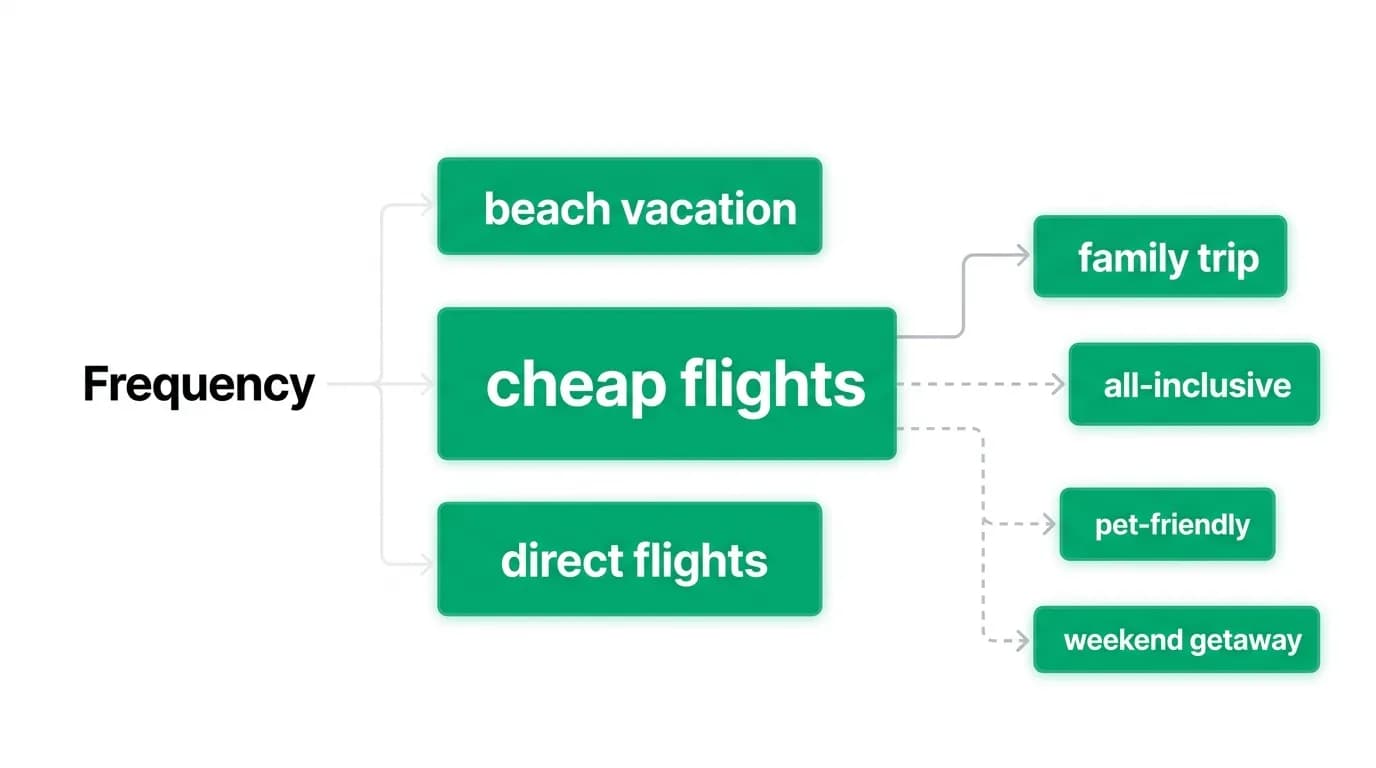
The most common pattern for a first message is a vague destination combined with approximate dates and a budget range. Something like: "I want to go somewhere warm in March, maybe around two weeks, budget is flexible but not luxury."
This tells us something crucial about travel intent. Most people do not start with a specific destination. They start with a feeling, a time frame, and a financial comfort zone. The product must be great at handling this vagueness, not just processing specific queries.
The say-do gap
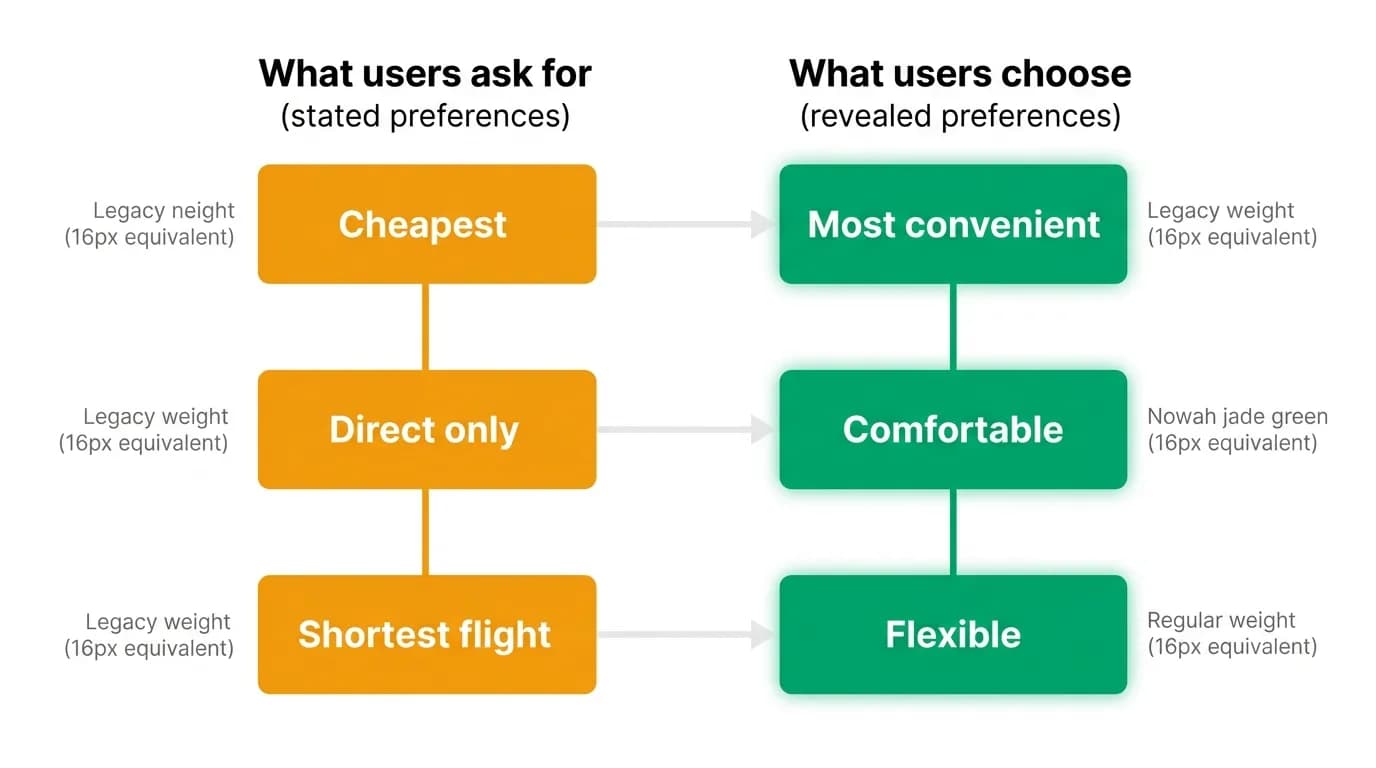
This is the most interesting finding. Users who say "cheapest" select mid-range options the majority of the time when presented with trade-offs.
A user says: "Find me the cheapest flight to Barcelona." The agent returns three options: the cheapest with a six-hour layover, a mid-range direct flight, and a premium option with extra legroom. More often than not, the user picks the direct flight.
"Cheap" does not mean cheapest. It means "do not waste my money." Users want value, not the absolute lowest price. They want to feel that they are getting a good deal, not that they are suffering for a bargain. When the agent explains that the fifty-dollar premium buys three hours of their life back, the mid-range option wins.
Conversational signals
After travel conversations at scale, we can identify patterns that predict user states.
Short, decisive messages ("Book option 2") indicate a confident user ready to commit. Long, exploratory messages ("What about maybe going to Portugal instead, or actually what's the weather like in Greece in April?") indicate someone who needs more guidance and narrowing.
Questions about cancellation policies early in the conversation indicate a cautious user who needs extra trust-building. Questions about activities and restaurants indicate a user who is mentally committed to the destination and ready to deepen the trip.
These signals inform how the agent responds. A confident user gets efficiency. An exploratory user gets more suggestions and comparisons. A cautious user gets extra transparency about policies and flexibility.
When people plan
Conversation data reveals clear temporal patterns. Planning peaks in the evening hours, especially between 8 PM and 11 PM. Weekend mornings are the second peak. Midday on weekdays shows the lowest volume.
Seasonal patterns are equally clear. January is the biggest planning month, followed by periods before summer and major holiday seasons. The classic "new year, new travel plans" effect is real and measurable.
What triggers booking
The data shows three primary triggers that move users from exploring to booking.
A price drop or deal that creates urgency without artificial pressure. When the agent reports that a watched fare has decreased, booking intent spikes.
A clear recommendation with reasoning. When the agent says "based on your preferences, this is the best option and here is why," users commit faster than when presented with an equal list.
Time proximity. As the intended travel date approaches, exploratory conversations shift to decisive ones. Users who have been casually exploring for weeks suddenly book when the trip is four to six weeks out.
The next ten thousand
Every conversation makes the agent smarter. Preference patterns stabilize after three to five conversations per user, meaning the agent's recommendations get measurably better with each interaction. The next travel conversations at scale will produce an agent that knows its users more deeply than any traditional travel tool ever could.
The data speaks, and we are listening.
Nowah is an AI travel agent that searches and books real flights and hotels through conversation — no filters, no thirty open tabs. Plan your next trip.