Why Every OTA's AI Chatbot Will Fail
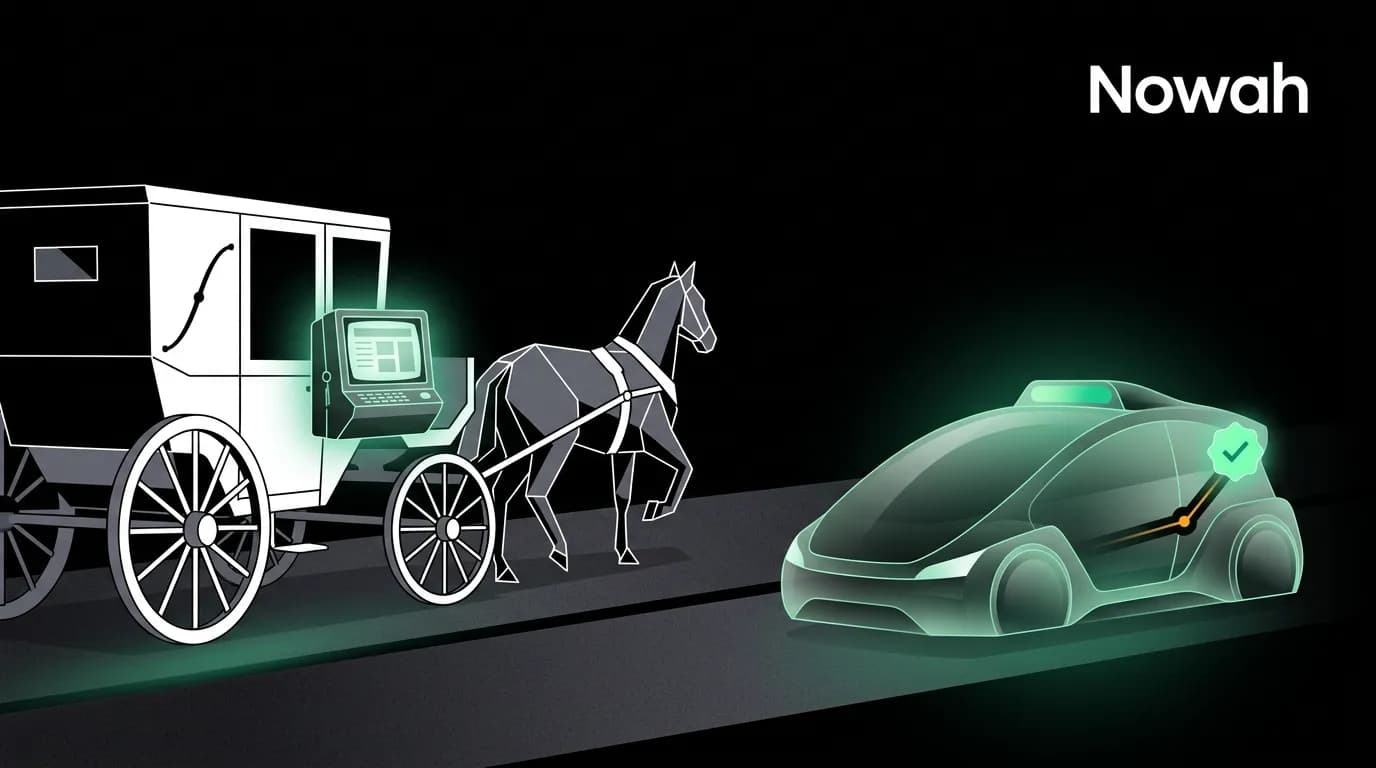
Adding a chatbot to an OTA is like putting a touchscreen on a horse-drawn carriage. The business model conflict guarantees failure. Here is why.
Every major OTA launched an AI chatbot in the last two years. Trip planners, destination advisors, booking assistants. The press releases were enthusiastic. The demos were polished. And none of them have meaningfully changed how people book travel.
This is not a technology failure. The underlying AI models are capable. It is a business model failure. The chatbot cannot recommend what is best for the traveler because what is best for the traveler is often worst for the platform's revenue.
The business model conflict
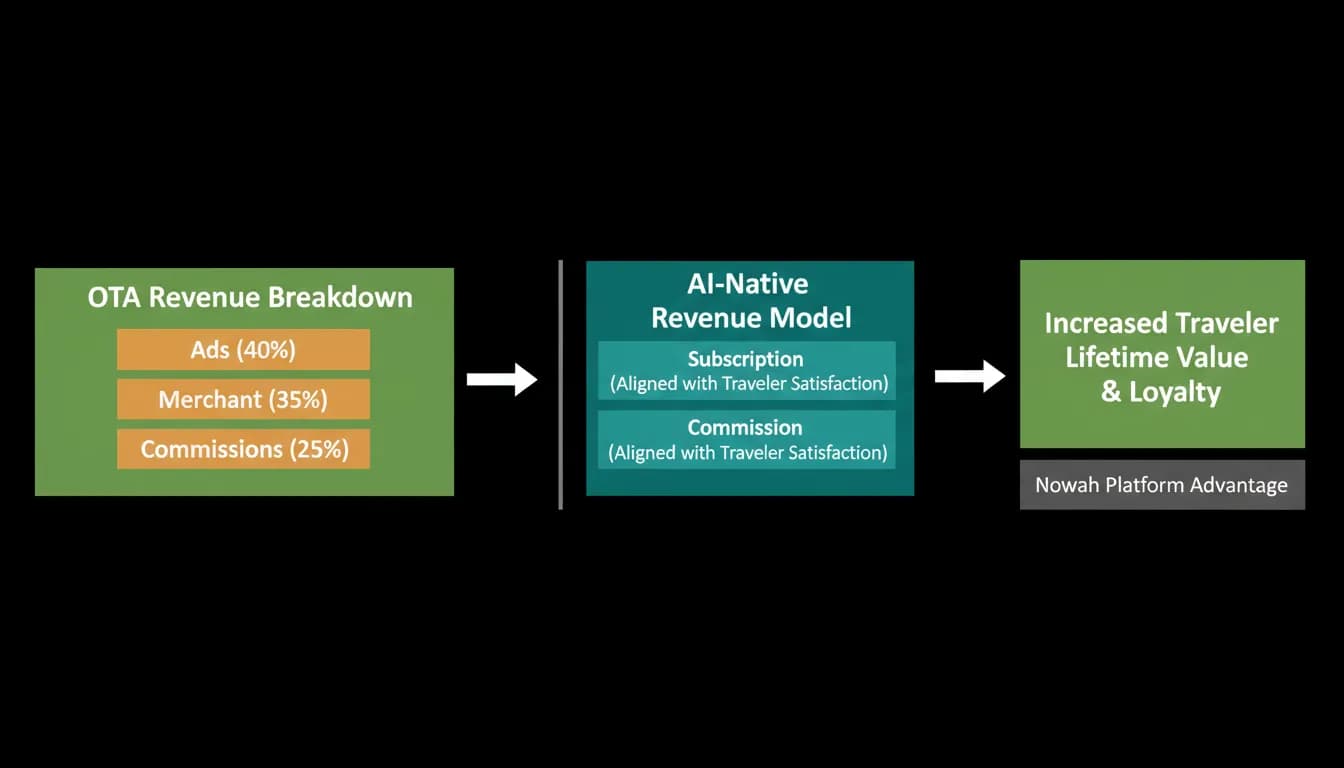
OTAs generate 30 to 40 percent of their revenue from advertising. Hotels and airlines pay for prominent placement in search results. The labels vary — "Preferred Partner," "Sponsored," "Featured" — but the mechanism is the same: visibility is for sale.
An AI chatbot that genuinely recommends the best option for each traveler would systematically deprioritize properties that pay for placement whenever a non-paying property is actually better. A chatbot that does this eliminates 30 to 40 percent of the platform's revenue.
No publicly traded company with billions in advertising revenue will deploy AI that cannibalizes that revenue. So the chatbots are designed to be helpful without being too helpful. They answer questions about destinations. They suggest broad categories of options. They provide inspiration. But when you want to actually book, they redirect you to the same search results page with the same advertising-influenced rankings.
The chatbot is a feature. The search results page, with its paid placements and merchant margins, is the product.
Architecture constraints
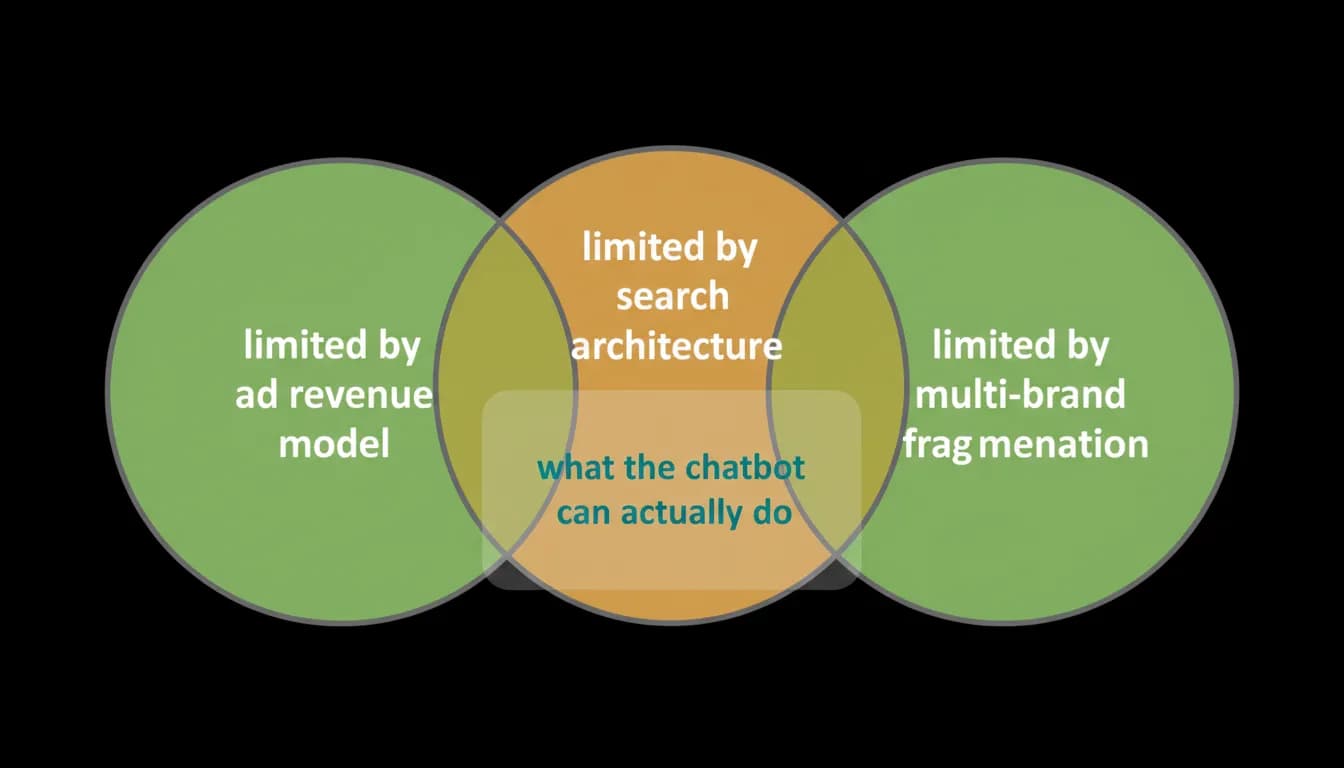
Even if an OTA wanted its chatbot to fully replace the search experience, the underlying architecture makes it difficult.
OTA databases are optimized for structured queries: origin, destination, dates, travelers, price range, star rating. The search index is designed to return sorted lists based on these parameters. An AI agent that processes natural language requests like "somewhere warm near a beach with good snorkeling under $3,000 for two people" requires a different data architecture — one that can match subjective preferences against unstructured information.
Retrofitting this capability onto a search database designed for structured queries produces half-measures. The chatbot can process the natural language and convert it to structured query parameters, but it loses the nuance in translation. "Good snorkeling" becomes a destination filter. "Under $3,000 for two people" becomes a price cap. The subjective, contextual elements that make the AI potentially valuable are stripped away because the backend cannot process them.
AI-native platforms are built on different data architectures from day one. The agent processes rich, unstructured information and maintains context across conversations. This is not something that can be added to an existing search-based architecture through a chatbot layer.
The half-measure problem
OTA chatbots consistently demonstrate one of two half-measures: they plan but cannot book, or they book but cannot personalize.
The planning-only chatbots generate itinerary suggestions, recommend destinations, and answer questions. But when you want to act on the suggestion, you are dropped into the standard booking flow — search form, results list, filters, comparison. The chatbot generated the idea; the legacy product executes it. The disconnect undermines the entire experience.
The booking chatbots can search inventory and present options within the conversation. But the options are ranked by the same advertising-influenced algorithm as the main search results. The conversational interface is new; the recommendation logic is the same. You are getting the same biased results through a different medium.
Neither version solves the traveler's actual problem. And neither can, because the structural constraints prevent it.
Incentive misalignment
The fundamental question every traveler should ask their booking platform's AI: whose interests does this serve?
An AI chatbot on a platform funded by hotel advertising serves the platform's interests first and the traveler's interests second. When those interests align — as they sometimes do — the chatbot is useful. When they conflict — as they often do — the chatbot optimizes for the platform.
AI-native platforms align incentives differently. When the platform makes money through transparent transaction fees rather than advertising, the AI agent's success is measured by traveler satisfaction, not advertising revenue. The agent genuinely recommends the best option because the platform's financial outcome depends on the traveler being happy, not on the hotel paying more.
This incentive alignment cannot be faked. It is a structural property of the business model, not a feature that can be toggled on.
Why AI-native beats AI-added
The structural advantages of building a product around an AI agent rather than adding an AI chatbot to an existing product are numerous and compounding.
Architecture: the data layer is designed for rich, contextual processing rather than structured queries. Incentives: the business model aligns the agent's recommendations with the traveler's interests. Memory: the agent builds persistent understanding of each traveler rather than starting fresh each session. Scope: the agent handles the full lifecycle from planning through booking through trip management rather than covering one slice.
These advantages cannot be replicated by adding features to an existing platform. They are consequences of architectural decisions made at the foundation level. Adding a chatbot to an OTA is like adding a touchscreen to a horse-drawn carriage. The interface is modern; the underlying vehicle is not.
Ask your booking platform's AI to recommend the best option for your next trip. Then ask it to explain why that option was ranked first. If the explanation does not reference your personal preferences and instead points to ratings, popularity, or unnamed algorithms, the chatbot is serving someone else's interests.
Nowah is an AI travel agent that searches and books real flights and hotels through conversation — no filters, no thirty open tabs. Plan your next trip.