Workation Planning: How AI Helps You Work and Travel
Reliable Wi-Fi, time zone alignment, coworking spaces, monthly rates — workation booking requires a new kind of planning that AI agents handle naturally.

You want to work from Lisbon for three weeks. The requirements are specific: Wi-Fi fast enough for video calls, a time zone that overlaps with your team in New York, a comfortable workspace, accommodation with a monthly rate discount, and a digital nomad visa if needed.
No traditional booking platform handles this combination of needs. Flight search does not know about Wi-Fi requirements. Hotel search does not filter by time zone overlap. Visa requirements are a separate research task entirely. Monthly rates are hidden behind daily rate interfaces. Coworking proximity is not a filter on any major OTA.
AI agents handle all of it in one conversation because workation constraints, like all complex travel constraints, are naturally expressed in language and naturally processed by agents.
The unique workation stack
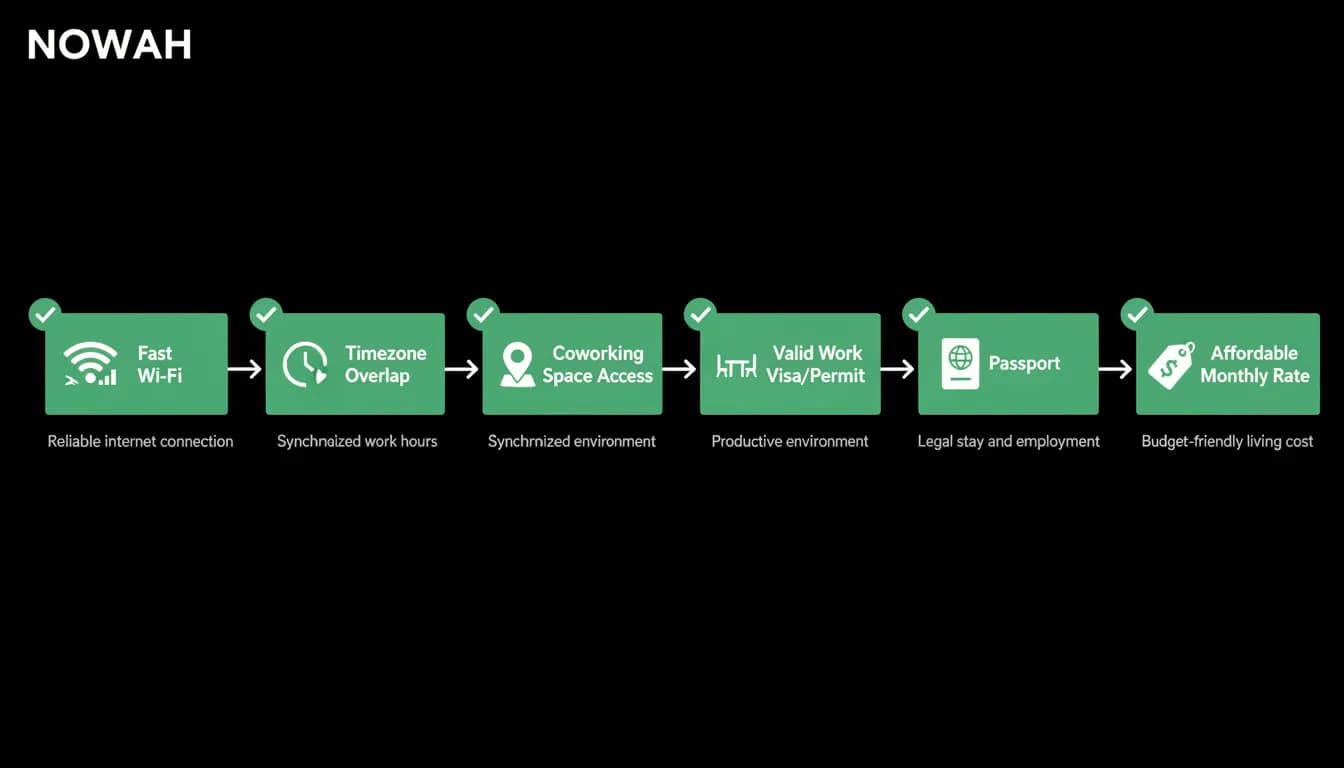
Workation travelers have a distinct set of requirements that overlaps with both business and leisure travel but matches neither category perfectly.
Connectivity: Not just "Wi-Fi available" but Wi-Fi fast enough for reliable video calls. The minimum for a smooth video call experience is 25 Mbps, and many hotels that claim "fast Wi-Fi" fall below this threshold. AI agents extract real Wi-Fi performance data from reviews — guest mentions of video call quality, speed test results shared in reviews, and complaints about connectivity.
Time zone alignment: If your team is in New York and you need to be available from 9 AM to 3 PM EST, you need a destination where that window falls during reasonable local hours. Lisbon (UTC+0) means 2 PM to 8 PM local — workable. Bali (UTC+8) means 10 PM to 4 AM local — not workable. AI agents calculate time zone math automatically for your specific work schedule.
Workspace: A desk that can hold a laptop and an external monitor. Good lighting for video calls. A chair that does not destroy your back over three weeks. Not every hotel room provides this, and the listing says "workspace" regardless. Review synthesis reveals reality.
Monthly rates: Accommodation for three or more weeks at daily rates is prohibitively expensive. Monthly rates average 40 to 60 percent less than the equivalent daily rate. But finding monthly rates requires searching platforms that daily-rate-focused OTAs do not aggregate. AI agents search across accommodation types and surface monthly-rate options.
Visa and legal: Thirty-five percent of knowledge workers have done a workation in the past 12 months. Over 50 countries now offer digital nomad visas. But visa requirements, tax implications, and maximum stay rules vary widely and change frequently. AI agents check these proactively when you mention a destination.
Why OTAs fail workation travelers
The standard OTA search form assumes you are a tourist. You select dates, number of guests, and accommodation type. The filters are tourist-oriented: pool, beach access, room view, star rating.
None of the filters that matter for workation travelers exist on traditional platforms. There is no "minimum Wi-Fi speed" filter. No "coworking space within walking distance" filter. No "monthly rate available" filter. No "digital nomad visa compatible" filter.
You end up piecing together information from multiple sources: the hotel's website for Wi-Fi claims (unreliable), a coworking space directory (separate search), a visa information website (another separate search), and a monthly rental platform (yet another search). Five platforms for one trip.
AI evaluation
An AI agent processes all workation requirements in a single conversation.
"Find me a place to work remotely in Lisbon for 3 weeks starting April 1. I need reliable Wi-Fi for video calls, a workspace in the room or a coworking space nearby, and I want to keep accommodation under $2,000 total."
The agent searches accommodation with monthly rate options, filters for properties with strong Wi-Fi reviews, checks coworking space proximity, verifies visa requirements for your passport, calculates time zone overlap with your team's location, and presents curated options with all relevant details.
"Option 1: Serviced apartment in Chiado, $1,800 for 3 weeks. Guests report Wi-Fi at 80 Mbps. Desk with ergonomic chair in room. Two coworking spaces within 10-minute walk. Portugal allows visa-free stays up to 90 days for US passport holders."
Long-stay optimization
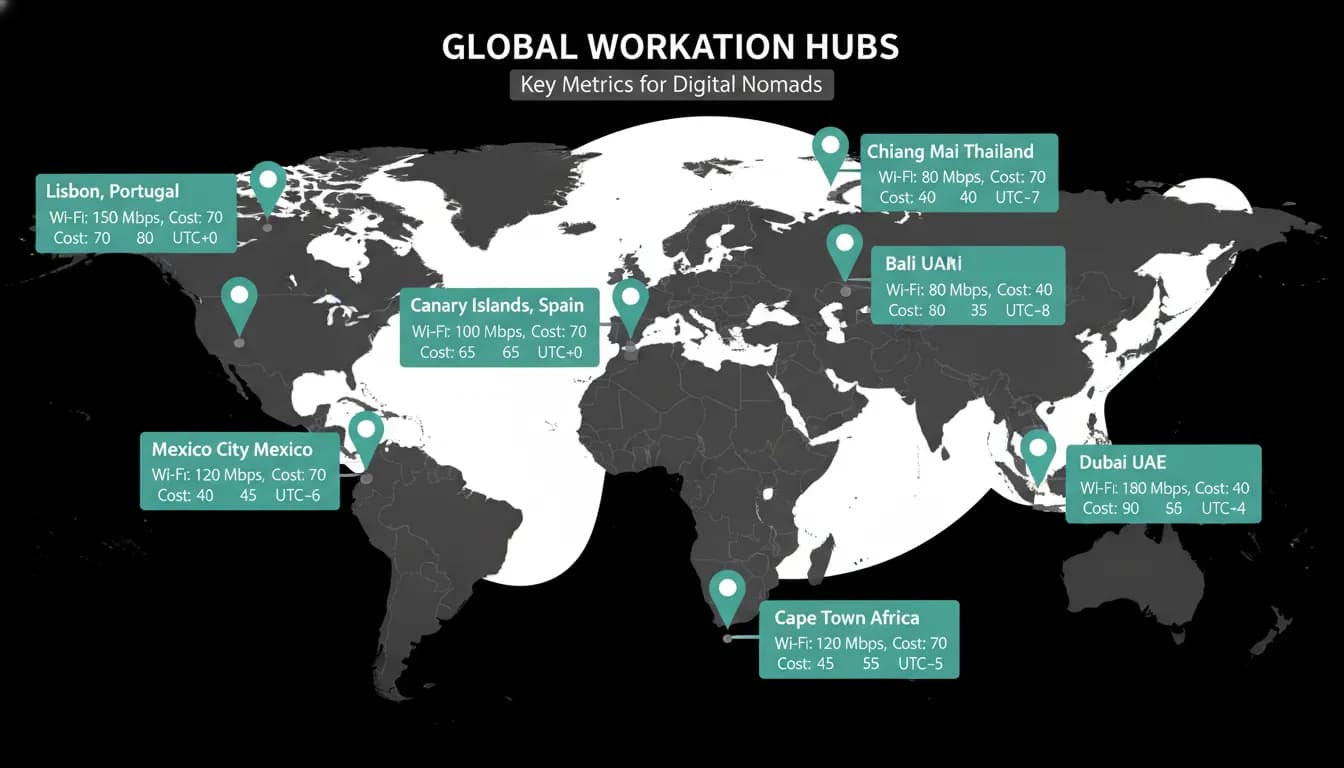
For workation stays of 2 weeks or longer, AI agents identify savings opportunities that short-stay travelers do not need.
Serviced apartments and apart-hotels typically offer weekly and monthly rates that are 40 to 60 percent less than nightly rates. Some hotels offer extended-stay rates that are not advertised on standard booking platforms. AI agents identify these by searching across accommodation types and rate structures.
Loyalty program strategies differ for long stays. A 21-night stay at one chain can accelerate status qualification significantly. AI agents factor this into recommendations when you have loyalty memberships.
Visa and legal considerations
The legal landscape for remote work abroad is evolving rapidly. AI agents track digital nomad visa programs, standard tourist visa work restrictions, and tax implications.
"Portugal's D7 visa allows remote work for up to 1 year. For stays under 90 days, no visa needed for US passport holders, and remote work for a US employer in a country where you are not tax-resident generally does not create tax obligations — though you should confirm with a tax advisor."
This is the kind of nuanced, country-specific information that traditionally required hours of research across government websites and expat forums. AI agents synthesize it in seconds.
Describe your work setup needs
Start your workation planning with your work requirements, not your vacation wishes. "I need to work remotely for [duration], my team is in [time zone], I need [Wi-Fi speed] for video calls, and my budget for accommodation is [amount]."
The agent matches destinations to your work requirements first, then layers on the lifestyle factors: weather, cost of living, food scene, safety, and community. This ensures the "work" part of the workation actually works, which is the difference between a productive adventure and a stressful experiment.
Nowah is an AI travel agent that searches and books real flights and hotels through conversation — no filters, no thirty open tabs. Plan your next trip.