2027 Travel Industry Predictions: What AI Will Change Next
Autonomous trip management, AI-negotiated pricing, predictive travel insurance, universal travel profiles — ten predictions for where AI takes travel next.

Everything in this article felt impossible in 2024. By 2027, it will feel obvious. That is the nature of AI-driven change in travel — each capability seems speculative until it arrives, at which point travelers immediately wonder how they tolerated the old way.
Two years ago, conversational flight booking was a novelty. Today, AI agents process millions of bookings per month. Two years from now, capabilities that currently seem futuristic — autonomous trip management, AI-negotiated pricing, predictive insurance — will be production features used by mainstream travelers.
These ten predictions are grounded in technology trends already in development, market dynamics already in motion, and traveler behavior patterns already shifting. They are not science fiction. They are the logical next steps of an industry in transformation.
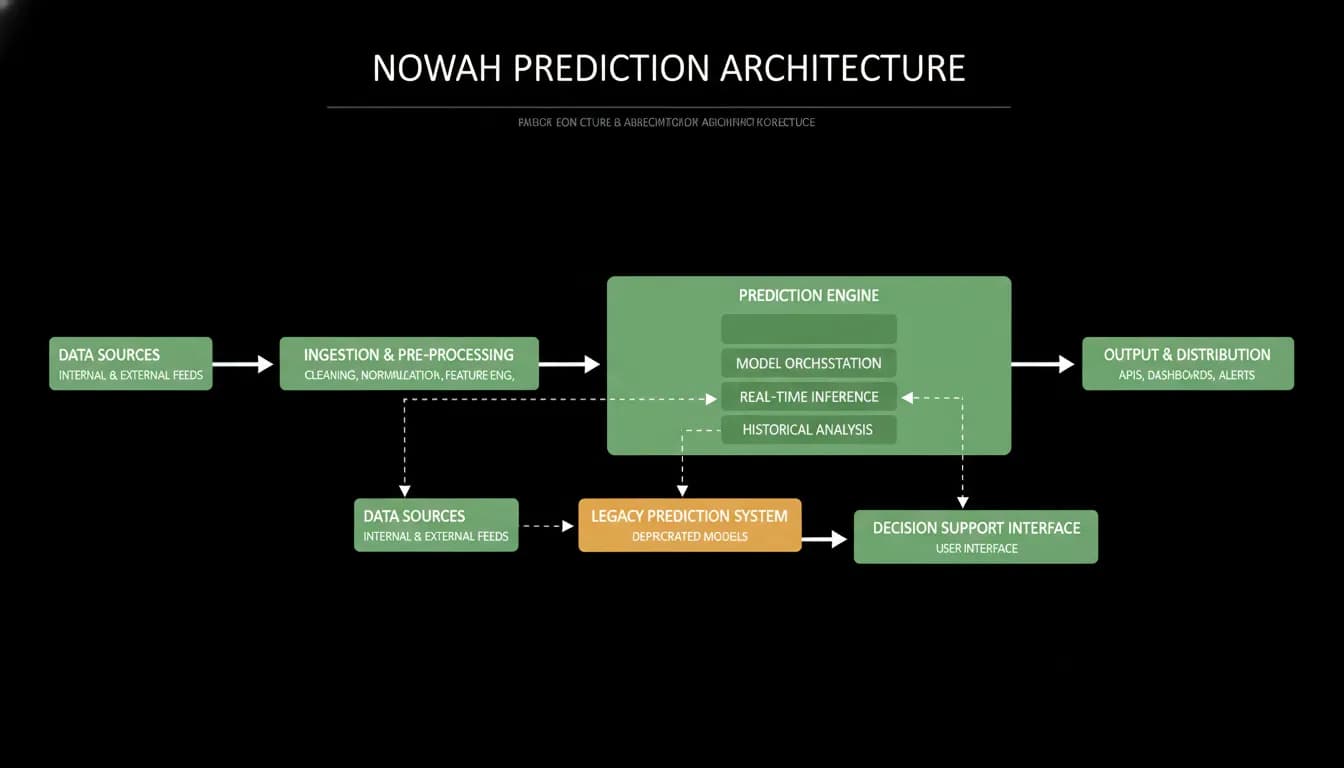
Prediction 1: Autonomous trip management
What it means. Your AI agent manages your trip end-to-end without requiring your active involvement. It monitors flights for disruptions, rebooks automatically within your pre-approved parameters, adjusts downstream reservations, and notifies you after the fact.
Why it happens. The components already exist: real-time flight monitoring, preference-aware rebooking, and cascading itinerary management. The missing piece is traveler trust — willingness to delegate booking decisions to the agent. As AI agents build track records of good decisions across millions of interactions, that trust threshold will be crossed.
By 2027, autonomous rebooking — no human approval needed — is expected for 30 percent of disruptions. The traveler wakes up, checks their phone, and sees: "Your flight was delayed 3 hours overnight. I rebooked you on an earlier flight that departs in 90 minutes. Same seat preference. Hotel and car rental adjusted. No action needed."
Prediction 2: AI-negotiated pricing
What it means. AI agents negotiate rates with hotels and airlines on behalf of travelers, leveraging booking volume, flexible dates, and loyalty data to secure pricing not available through standard distribution.
Why it happens. Hotels already offer negotiated rates to corporate clients, travel agents, and high-volume bookers. AI agents that represent millions of travelers collectively have negotiating leverage comparable to the largest corporate travel programs. AI-negotiated hotel rates could save 5 to 15 percent on business travel — meaningful savings that create a powerful incentive for travelers to consolidate bookings through AI platforms.
The negotiation happens algorithmically: the agent evaluates available rates, identifies properties likely to negotiate, and proposes terms based on the traveler's flexibility and the hotel's occupancy data. No phone calls. No back-and-forth emails. Algorithmic negotiation at computational speed.
Prediction 3: Predictive travel insurance
What it means. Travel insurance transforms from a static, one-size-fits-all product to a dynamic, usage-based model that adjusts coverage and pricing based on real-time risk assessment.
Why it happens. Current travel insurance is priced on broad actuarial categories: destination region, trip duration, traveler age. AI enables micro-risk assessment: specific route disruption probability, weather patterns, health risks for the specific destination, and the traveler's historical claim patterns.
The result: a traveler flying a reliable route in good weather pays less than a traveler flying a disruption-prone route during winter. Coverage activates automatically based on context — trip interruption coverage activates when a disruption is detected, medical coverage adjusts based on destination health infrastructure.
Predictive travel insurance is projected to be a $5 billion market by 2028, disrupting the traditional insurance model that charges everyone the same rate regardless of individual risk profile.
Prediction 4: Universal travel profiles
What it means. A single, portable traveler profile that works across platforms — carrying your preferences, loyalty memberships, accessibility requirements, dietary needs, and trip history from one AI agent to another.
Why it happens. Traveler lock-in through proprietary preference data is a short-term competitive strategy that creates long-term consumer frustration. The platform that embraces portability — allowing travelers to export and import their profiles — builds trust and attracts travelers who are currently locked into inferior platforms.
Universal travel profile adoption is expected to reach 20 percent of travelers by 2027. The standard will likely emerge from the AI-native platform ecosystem, where interoperability is more valued than in the legacy OTA ecosystem.
Prediction 5: Ambient intelligence
What it means. Your AI agent manages your trip without being explicitly asked. It checks you in for flights when the window opens. It monitors weather at your destination and suggests itinerary adjustments. It detects that you are at the airport and provides gate information. It notices your hotel check-in is approaching and confirms the reservation.
Why it happens. The shift from reactive to proactive AI is already underway. Current agents monitor flights and send disruption alerts. The extension to ambient intelligence — continuous, context-aware management without explicit commands — is a natural progression.
Ambient intelligence requires deep trip context (the full itinerary), real-time situational awareness (location, time, calendar), and trusted autonomy (permission to act without asking). As these components mature, the AI agent becomes less like a tool you use and more like an assistant that handles logistics in the background while you focus on the experience.
Prediction 6: The death of the booking confirmation email
What it means. The static booking confirmation email — that PDF-formatted itinerary that becomes outdated the moment anything changes — is replaced by a living document that updates in real time as the trip evolves.
Why it happens. Confirmation emails are artifacts of a stateless booking model. In an AI agent world, the trip is a living object: flights update with gate changes and delays, hotels update with room assignments and check-in links, activities update with weather-adjusted timing. A static email that captures a single moment in time serves no purpose when the agent maintains a continuously updated trip state.
Prediction 7: AI-mediated group travel coordination
What it means. Planning a trip with 8 friends stops being a logistical nightmare. The AI agent interfaces with each participant, collects preferences, identifies constraints, finds options that satisfy the group, and coordinates booking across all participants.
Why it happens. Group travel planning fails because of coordination overhead, not because of booking complexity. Finding a hotel that works for everyone, flights that align from multiple departure cities, and activities that satisfy diverse interests requires managing a combinatorial explosion that humans handle poorly. AI agents handle it computationally — and present the optimized result to the group for approval.
Prediction 8: Real-time itinerary optimization
What it means. Your itinerary adjusts during the trip based on real-time conditions. A rainy afternoon triggers a swap from the outdoor market to the museum. A restaurant closure redirects you to an equivalent alternative. A flight delay cascades adjustments through the rest of the trip automatically.
Why it happens. The components exist: real-time weather data, live venue status, flight monitoring, and itinerary management. Connecting them into a continuous optimization loop is an engineering challenge, not a conceptual one. By 2027, the loop will be tight enough to feel seamless.
Prediction 9: Embedded travel in workplace tools
What it means. Business travel booking happens inside the tools you already use — calendar apps, email clients, project management platforms — rather than requiring a separate booking platform.
Why it happens. When a meeting is scheduled in another city, the AI agent embedded in your calendar detects the travel need, searches flights and hotels within corporate policy, and proposes a booking. Approval happens in the calendar interface. The booking happens through the AI agent. The expense report generates automatically.
The booking platform disappears into the workflow. The traveler never opens a separate app. Travel booking becomes a side effect of scheduling rather than a separate task.
Prediction 10: AI-first loyalty programs
What it means. Loyalty programs redesign around AI agents as the primary interaction channel. Earning, burning, status qualification, and benefit delivery happen through the AI agent rather than through the airline or hotel's own app.
Why it happens. If 20 percent of bookings flow through AI agents by 2028, loyalty programs that do not integrate with agents lose 20 percent of their touchpoints with members. The programs that embrace AI agent integration — exposing earning rates, redemption options, and status benefits through APIs that agents can consume — maintain relevance in the AI era.
AI-first loyalty programs may offer agent-exclusive benefits: bonus points for bookings made through AI agents, instant status matching across programs, and real-time earn/burn optimization that the traveler never has to manage manually.
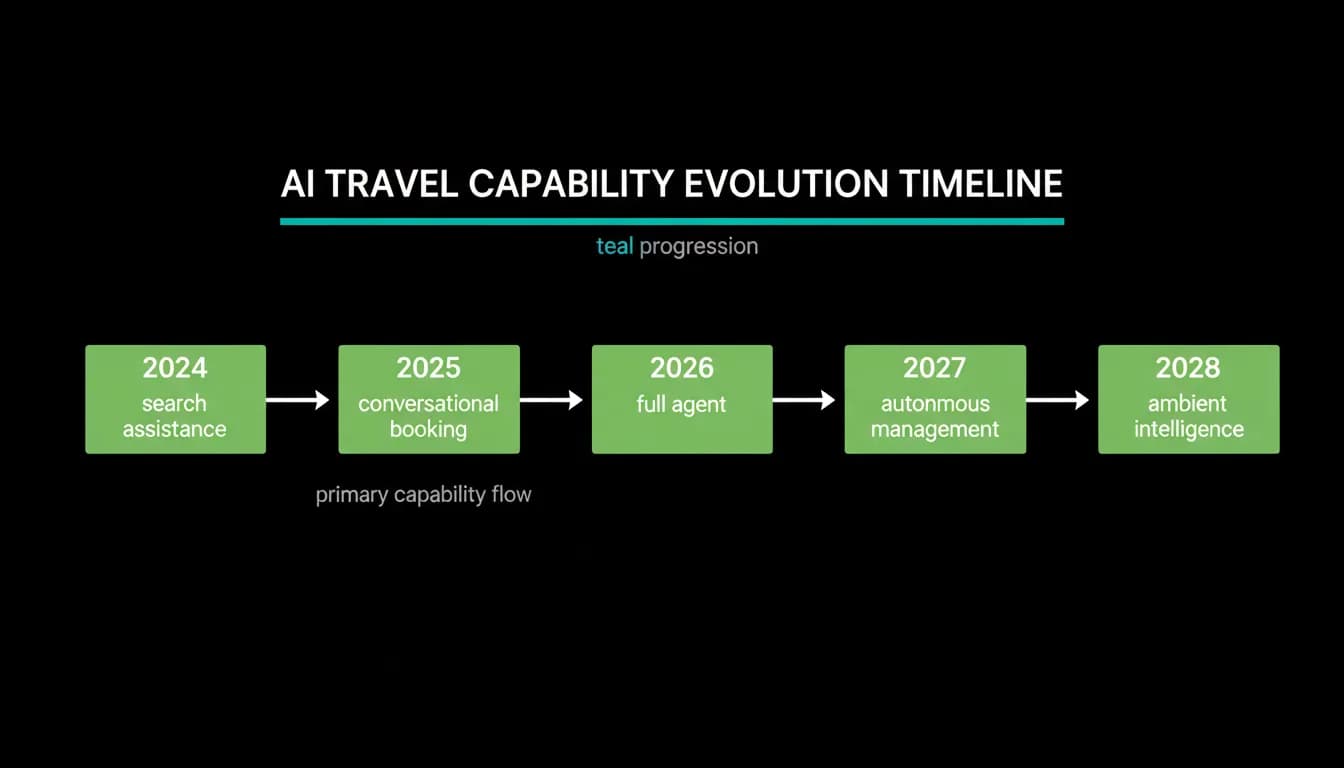
Prepare now
The 2027 travel landscape will reward travelers who have built AI relationships now. The agentic memory that develops over your next 5 to 10 trips becomes the foundation for autonomous management, personalized negotiation, and ambient intelligence.
The AI travel agent market is projected to reach $25 to $30 billion by 2027, up from $15 billion in 2026. The growth is driven by travelers who discover that AI booking is not just faster — it is fundamentally better. And it gets better with every trip.
Start your travel profile. Book your next trip through an AI agent. Provide feedback. Build the relationship. The predictions in this article will arrive whether you are ready or not. The travelers who started early will have agents that know them deeply. The travelers who wait will start from scratch.
The future of travel is not a search box. It is a conversation that never ends.
Nowah is an AI travel agent that searches and books real flights and hotels through conversation — no filters, no thirty open tabs. Plan your next trip.