AI vs. Human Travel Agents: A Data Perspective
Data access, processing speed, personalization depth, and recommendation quality compared objectively. Where AI excels — and where humans still matter.
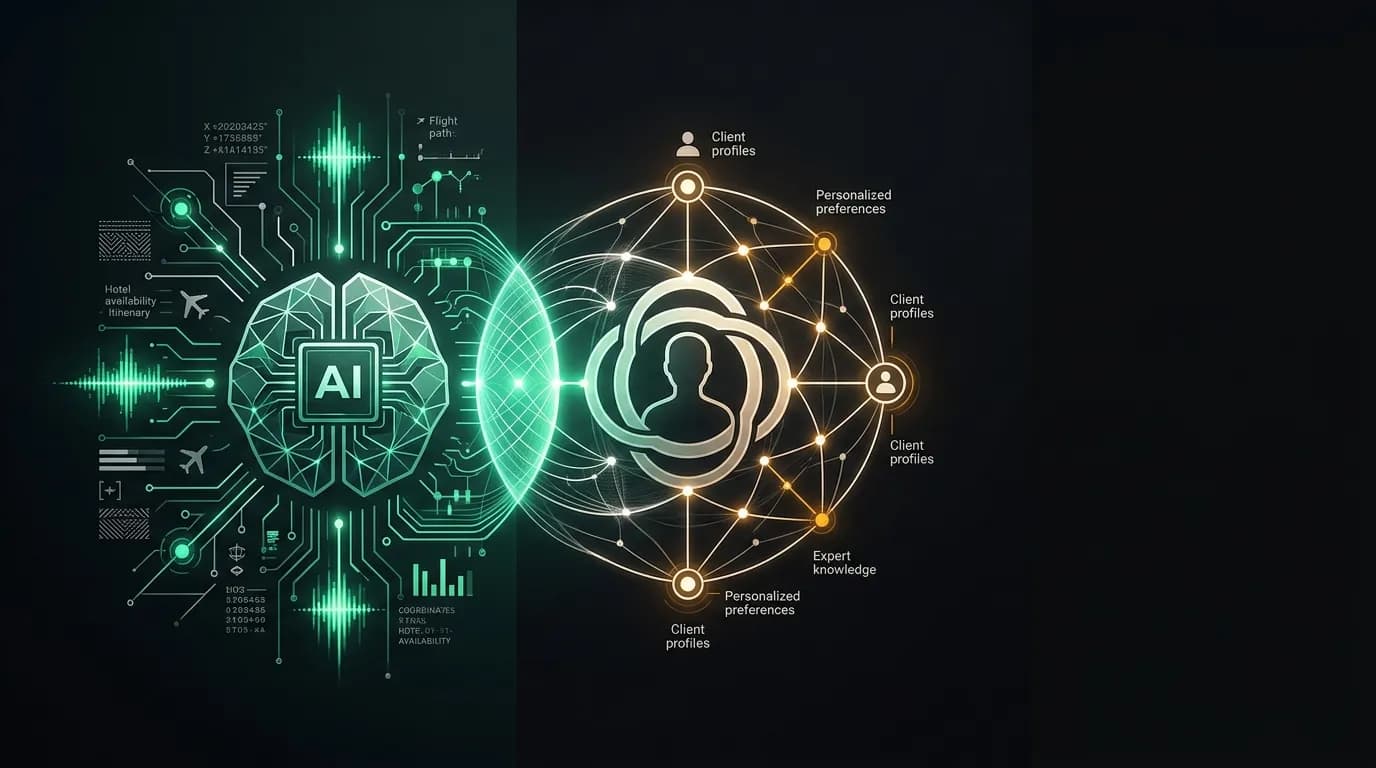
A human travel agent remembers 50 clients well. Their favorite airlines, their budget ranges, the trip to Italy where the hotel was perfect. An AI travel agent remembers every detail of every traveler — preferences, past trips, stated likes and dislikes, behavioral patterns — with perfect recall across unlimited travelers and unlimited time.
That comparison captures the core data advantage of AI in travel. But data advantage is not the same as overall advantage. The relationship between AI and human travel agents is more nuanced than "AI is better." The data tells a story about complementary strengths, and the future probably looks like both working together rather than one replacing the other.
Data access: breadth and depth
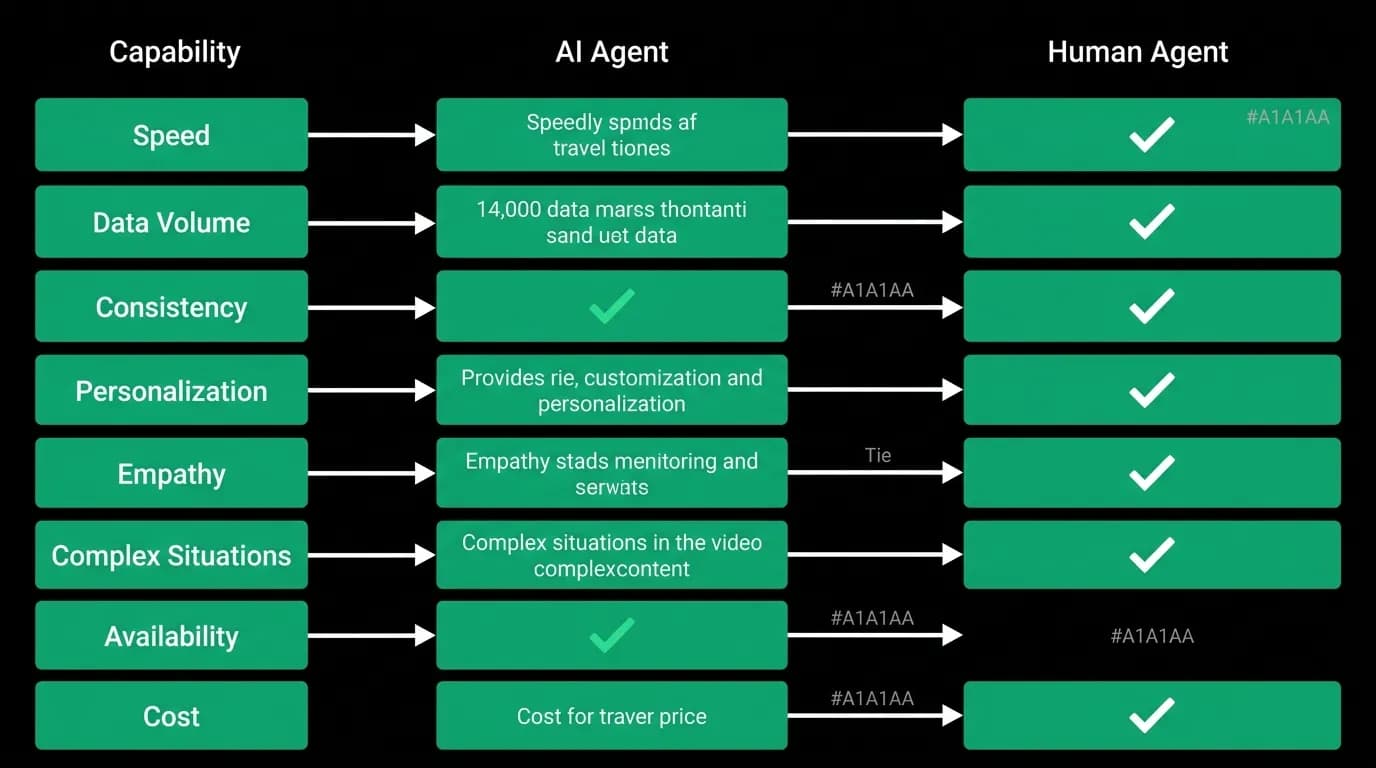
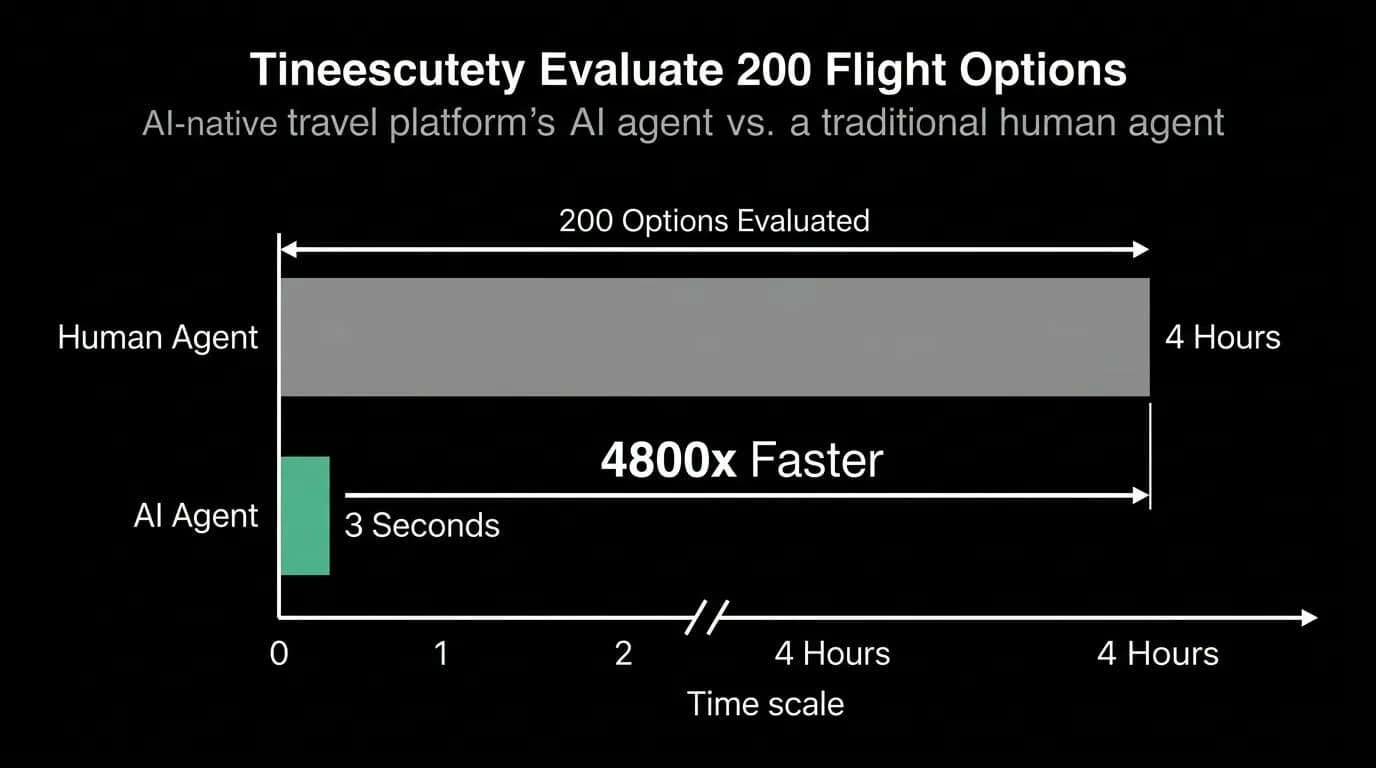
The most fundamental difference is what each agent can see. A human travel agent typically checks 5 to 10 flight options for a given query, constrained by time and the tools they use. They might check a preferred airline, a backup option, and a couple of alternatives. Their search is guided by experience and instinct about which options are likely to be good.
An AI agent evaluates hundreds of options in seconds. Every airline, every connection, every fare class, scored against the traveler's preferences simultaneously. The AI does not have instinct, but it has completeness. It will not miss the option the human agent never thought to check.
This breadth advantage compounds with route complexity. On a simple nonstop route, the human agent's experience might identify the best option quickly because there are only a handful of choices. On a multi-city itinerary with flexible dates and specific connection preferences, the combinatorial space explodes to thousands or millions of possible itineraries. The human agent cannot evaluate more than a fraction. The AI evaluates all of them.
Processing speed
Speed differences are not subtle. An AI agent can search, score, and rank hundreds of flight options in under 10 seconds. A human agent doing the same work — pulling up fares, comparing schedules, checking seat availability, cross-referencing loyalty programs — takes 15 to 30 minutes for a single query. For complex itineraries, the human process can take hours spread across multiple sessions.
Speed matters not just for convenience but for accuracy. Airline prices change throughout the day. A search that takes 30 minutes is comparing fares from the beginning of the search with fares from the end, and they may have shifted in between. The AI's near-instantaneous search compares all options at the same point in time, producing a more consistent comparison.
Personalization depth
Human travel agents personalize through relationship and memory. A great human agent remembers that you hate early morning flights, that your spouse is vegetarian, that you had a bad experience at a specific hotel chain. This relationship-based personalization is powerful but limited by human memory, which degrades over time and cannot scale beyond a manageable client base.
AI personalization operates through structured, persistent memory that stores every preference, every piece of feedback, and every behavioral signal across the traveler's entire history. The AI's memory does not fade. It does not confuse one client with another. And it can identify patterns the traveler has not consciously articulated — like the fact that you consistently choose flights departing between 10 AM and 2 PM, even though you have never stated a preference for midday departures.
The depth is different too. A human agent might remember 10 to 20 preferences about a regular client. The AI stores hundreds of data points, from seat preferences to meal requirements to airline-specific experiences to destination satisfaction ratings. Each data point nudges future recommendations toward a better fit.
Where human judgment still wins
The data comparison favors AI, but there are dimensions where human agents maintain a genuine edge. Complex emotional decisions — booking a honeymoon, planning a memorial trip, navigating a family reunion where relationships are strained — benefit from human empathy and emotional intelligence that AI cannot replicate.
Crisis handling is another human strength. When things go wrong during a trip — a medical emergency, a political disruption, a natural disaster — a human agent with supplier relationships and local contacts can make phone calls, pull strings, and advocate for you in ways that an AI agent connected to APIs cannot. The human agent's network is a resource the AI does not have.
VIP and luxury travel is a third area. The world of suite upgrades, private transfers, and restaurant reservations at fully booked establishments runs on personal relationships between agents and suppliers. A well-connected luxury travel agent has access to inventory and experiences that are not available through any API.
The hybrid future
The most likely trajectory is not AI replacing human agents but AI handling the data-intensive work while humans handle the relationship-intensive work. AI searches and scores. Humans advise and empathize. AI remembers everything. Humans understand what matters.
The AI travel market is projected to exceed $5 billion by 2027, but the human travel agent segment has been growing too, particularly in the luxury and corporate segments. The expansion of AI is not a zero-sum game with human agents. It is creating a new category alongside them.
Experience AI-powered travel planning on Nowah — with the depth of data processing that no human agent can match, and the transparency that builds trust one trip at a time.
Nowah is an AI travel agent that searches and books real flights and hotels through conversation — no filters, no thirty open tabs. Plan your next trip.