How Family Travel Creators Can Earn With a Rooming-First Nowah Workflow
Help family audiences clarify rooming requirements before hotel recommendations through a useful Nowah research workflow.
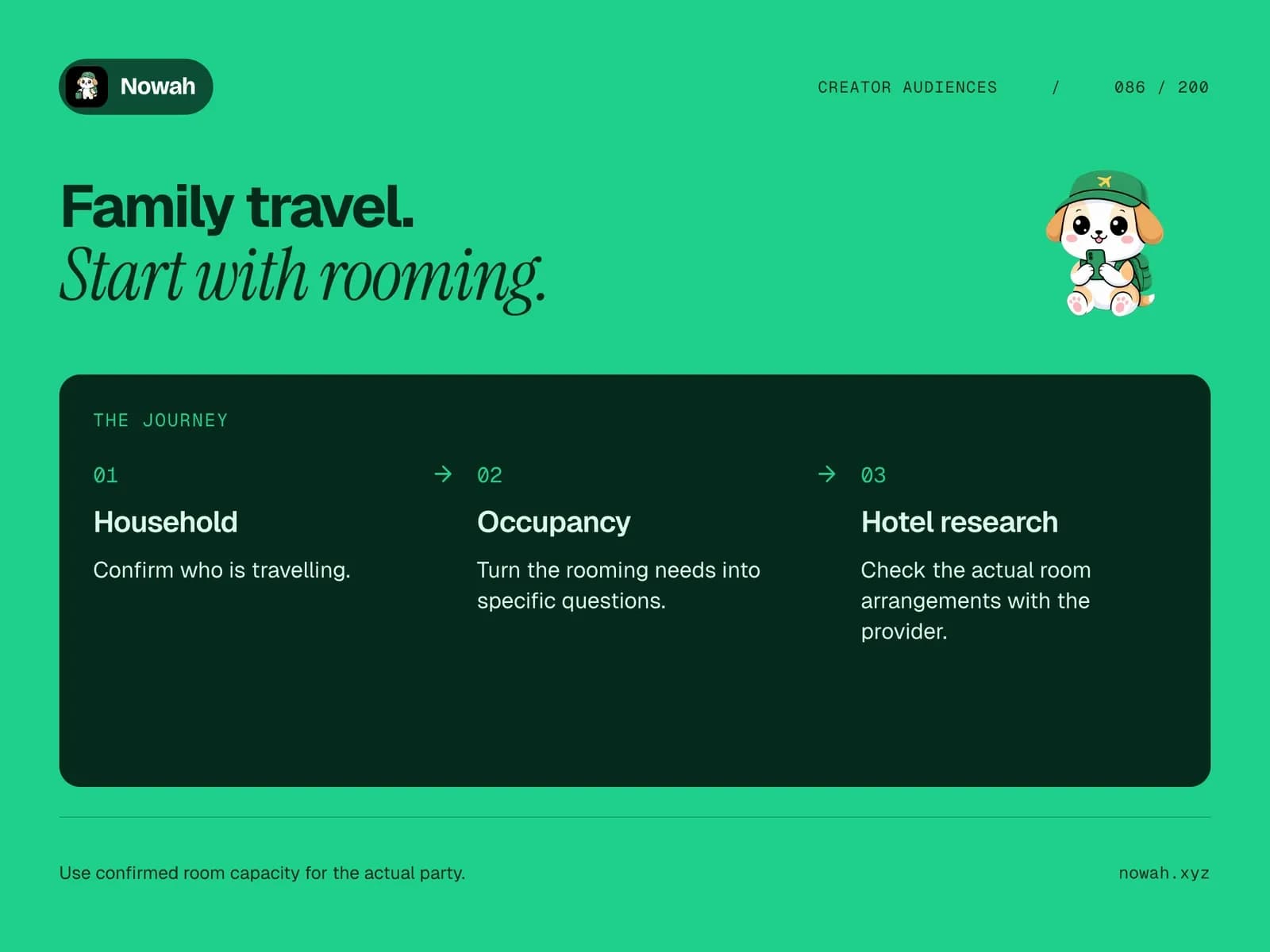
When a parent asks whether a hotel is good for their family, a room tour rarely supplies the whole answer. The travelling party, required arrangement and actual occupancy evidence come before a useful accommodation recommendation. Approved Nowah partners can turn that explanation into a practical research demonstration, a disclosed referral and potential earnings from qualifying bookings by newly attributed travellers.
Nowah is useful when the creator makes the question more specific before exploring a shortlist. Show how a family brief develops, which requirements remain fixed and what a provider needs to confirm. The audience sees a relevant reason to continue through Nowah instead of receiving a generic hotel link that leaves its main question unanswered.
The partner share is 35% of Nowah net revenue from qualifying travel under the program terms. A larger family, more rooms or a premium property does not establish a particular commission. The recommendation should help the family investigate its requirements rather than steer it toward extra spending.
Turn a broad audience question into a scoped brief
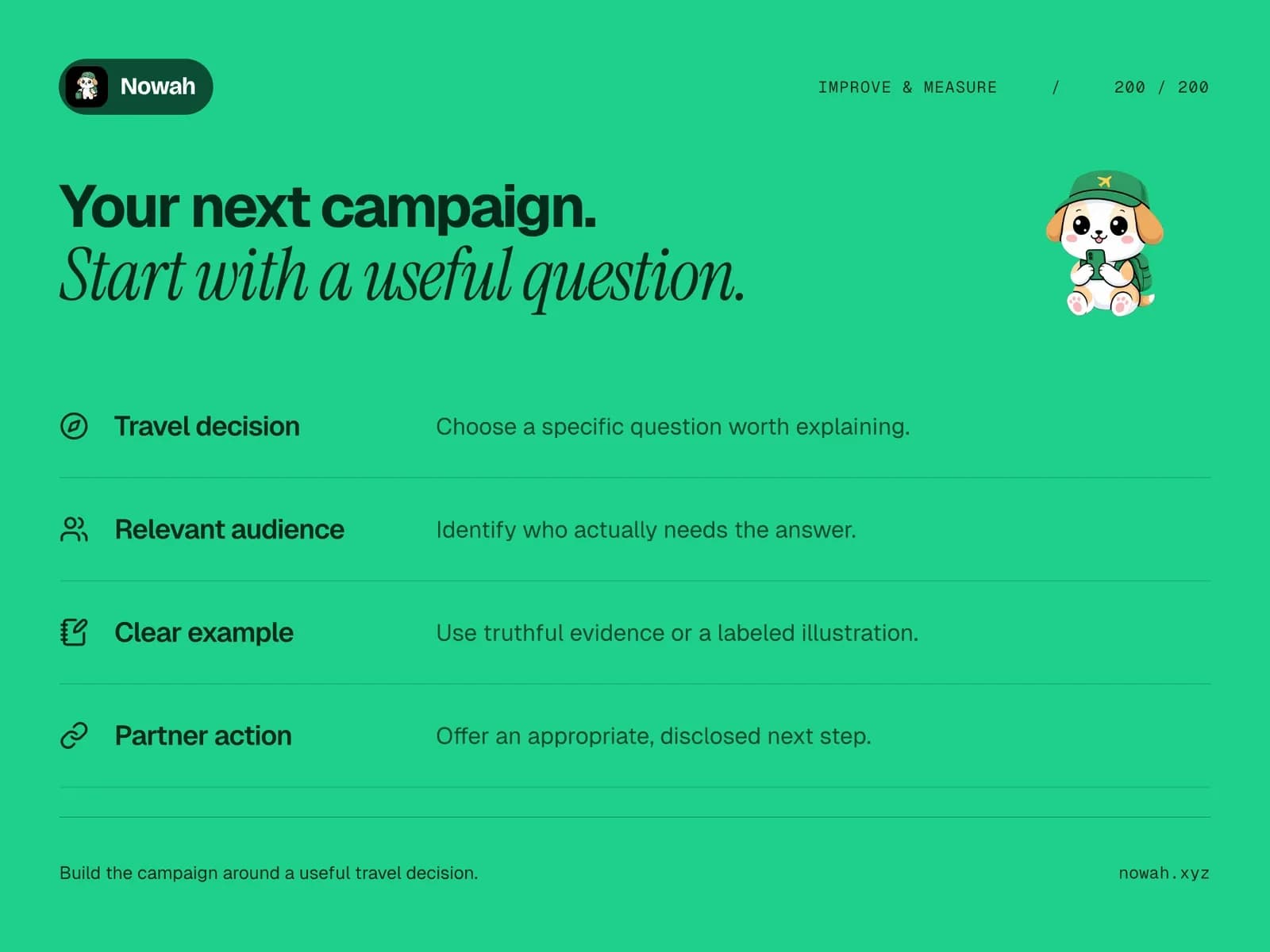
Start with the question a creator can actually help explain. “Does this hotel work for families?” may need several separate answers: who is travelling, what rooming arrangement they need and what the actual offer permits.
For a public demonstration, use a fictional follower question rather than personal messages or children's information. Explain which inputs matter without displaying names, identity details or private family circumstances. A teaching example can be specific enough to show the method while remaining clearly fictional.
Do not assume that every family wants the same arrangement. Some may investigate one accommodation unit, others several rooms, and others a requirement that needs direct provider evidence. The creator's first useful action is to preserve that requirement rather than replacing it with a broad family-friendly label.
Separate three different rooming questions
The party question identifies the travellers relevant to the offer. The arrangement question describes what the family needs. The occupancy question asks what the specific option actually accommodates. These inputs relate to one another, but none should be silently substituted for another.
A property describing itself as family-friendly does not by itself establish an occupancy limit, sleeping arrangement or room relationship. Likewise, a photograph of several beds does not answer every condition attached to the selected room and rate.
Explain which provider information is current and what remains unresolved. If a particular arrangement needs confirmation, make that dependency visible before recommending that the family rely on it.
The luxury family rooming guide examines how to compare arrangements in more detail. This rooming-first workflow addresses the earlier step: deciding which questions must be answered before a shortlist can become useful.
Use a rooming question map
Give readers a small question map they can adapt. Useful entries include:
- What is the travelling party relevant to this search?
- Which accommodation arrangement is required?
- Which part is a preference that could change?
- What does the current offer say about occupancy and sleeping arrangements?
- Which question needs a provider answer?
- What research direction changes if the answer is different?
Do not fill the map with invented property facts. A visibly unresolved field is useful when it explains why the creator cannot yet make a confident accommodation conclusion.
The map also helps the creator choose the next piece of content. A follower asking about occupancy needs a different answer from one asking about the daily plan. Link to the appropriate resource rather than forcing both questions into one long hotel review.
Demonstrate the brief in Nowah
Use Nowah to explore the fictional family brief with the rooming requirement kept visible. Explain which research question you are asking and why it matters to the accommodation direction.
Review the proposed direction against the requirement. If a suggestion changes the room arrangement or assumes a feature without evidence, identify that point and revise the brief. Show the audience how a clearer question improves the planning conversation.
Do not imply that the demonstration certifies occupancy, confirms connecting rooms or establishes current availability. Actual room and rate conditions still require the appropriate current booking information and provider evidence.
This is where Nowah becomes more than a closing recommendation. The viewer sees the work it helps organise and understands the next question to investigate. Your partner action follows that useful explanation rather than interrupting it.
Work through a fictional audience question
Imagine a follower has saved a family hotel video but has not decided which accommodation arrangement to investigate. The creator's public example can show how the broad question becomes a brief with a party, an essential requirement and an unresolved occupancy point.
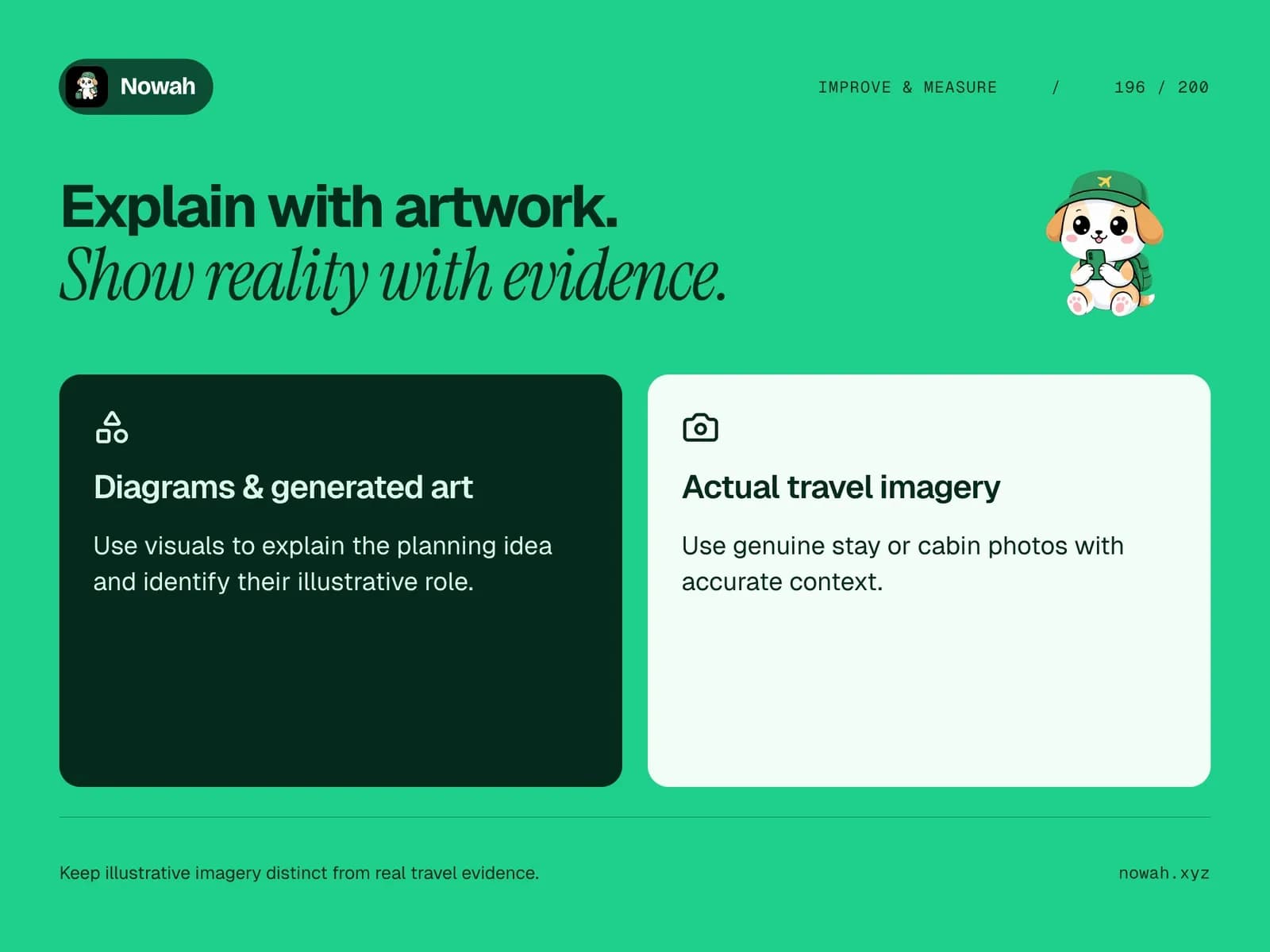
Instead of declaring the filmed room suitable, explain what the footage establishes and what it does not. A real room observation is evidence about the observed space; a supplier condition must come from the relevant offer information. A fictional planning diagram is a teaching aid, not proof of a stay.
Use Nowah to explore the brief, then show the question that remains for the provider. If the answer changes the family’s preferred direction, revise the demonstration rather than treating the original room tour as a recommendation that must be defended.
The premium rate-inclusions guide helps when the family also needs to compare meals, charges and cancellation conditions. Those offer details are distinct from the initial rooming requirement.
Keep rooming and day-plan content connected
Once the accommodation question is clear enough to investigate, the family may need help with the trip's rhythm. That is a useful next task, but it should not erase an unresolved rooming condition.
The family rest-day planning guide provides an illustrative day-block method. Link where the audience's question changes from where everyone will stay to how the trip might be structured.
If you make several social formats from the same fictional brief, preserve the party and arrangement assumptions. Do not let a shorter video quietly remove the condition that made the hotel question important. A companion article can hold the full map, while the short version retains the key requirement and evidence status.
Explain the active partner route clearly
When recommending that the family continue the relevant research through an active Nowah partner link, disclose that you may receive commission from qualifying referred bookings. Put the relationship beside the action rather than expecting the audience to infer it from your profile.
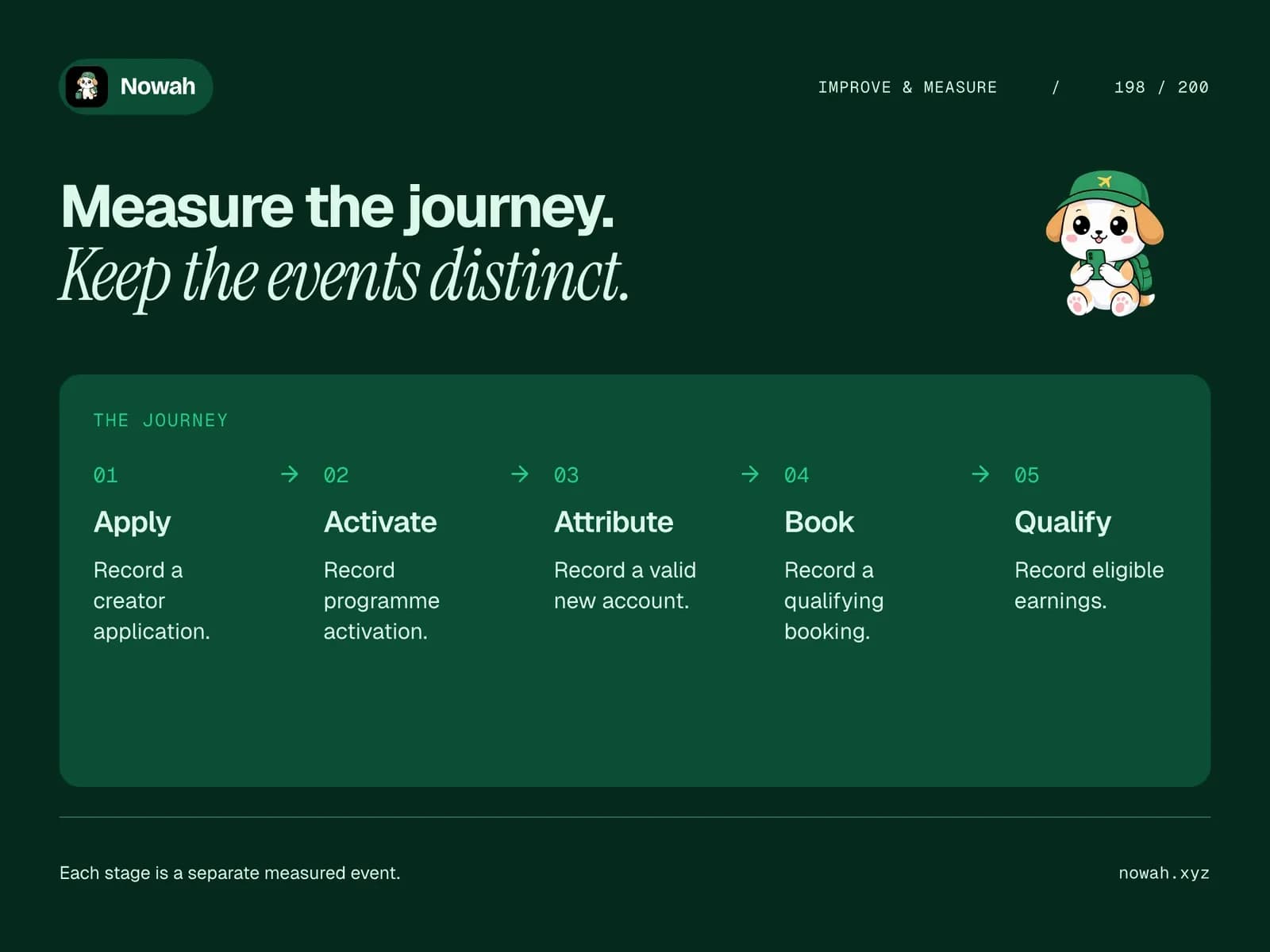
The Nowah terms require an eligible traveller to follow an active partner link and create a new account within 30 days of the introduction. Existing accounts, self-referrals and artificial accounts do not qualify. Tracking must reach Nowah successfully; a family comment or a link click is not proof of attribution.
Once valid attribution is established, it can persist for that traveller account's lifetime, including qualifying later bookings. It does not automatically attribute an entire household or guarantee repeat purchases and income. A viewer interested in becoming a partner needs the separate application journey, not the same instruction as a parent researching a trip.
A useful follow-up example changes one input at a time. Suppose the fictional family decides it would consider a different accommodation arrangement. Revisit the occupancy question and the actual offer evidence before treating the earlier shortlist as equally relevant. Do not change the party and the requirement simultaneously while suggesting the recommendation was tested on the same brief.
This makes the creator’s method visible: the question map is a way to preserve the information that changes the decision. It is not a family profile that automatically proves suitability. A follower can adapt the questions to their own search without assuming that the room shown in the creator’s video has already been verified for them. Keep that boundary in the companion graphic as well as the article, especially when the visual may be shared without its original context.
Keep the earning claim proportional to the evidence
Nowah's listed qualifying categories are hotels, flights and paid eSIMs. A family activity, meal or service discussed in the itinerary is not automatically a partner commission event.
The partner receives 35% of Nowah net revenue, not the family's booking expenditure. A labelled hypothetical $60 in qualifying Nowah net revenue would produce $21 in partner earnings. That example does not estimate the return from a particular family room or establish that booking additional rooms increases creator income.
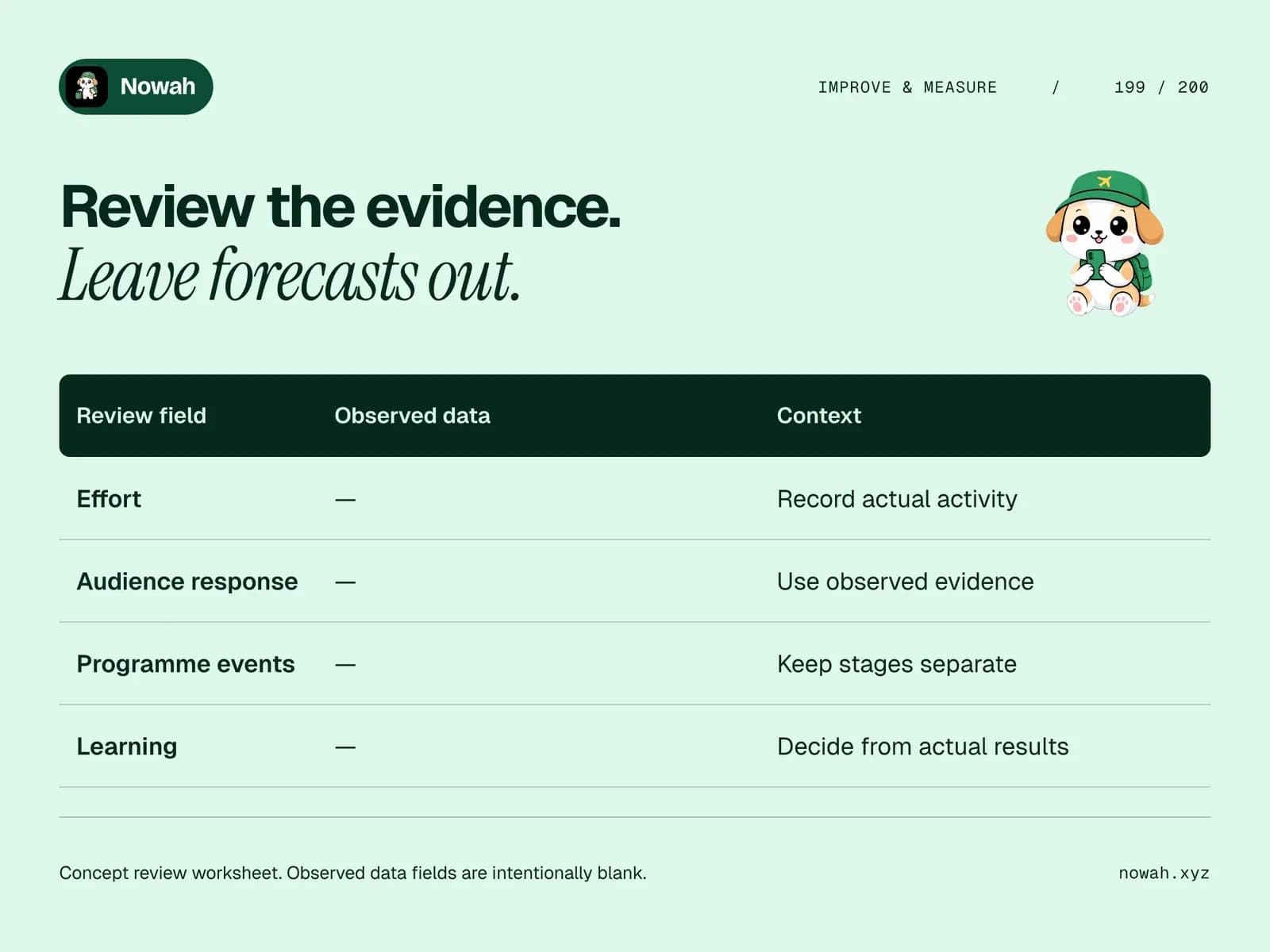
Completion, supplier settlement, the applicable hold and payout conditions matter before earnings become eligible. Distinguish the content question, valid attribution, a qualifying booking and an eligible earning when discussing results.
The older Nowah article on the anatomy of a hotel recommendation offers background for putting requirements before a shortlist. To participate, apply to Nowah Partners. Applying is free, applications are reviewed and there is no minimum follower count. Start with one useful rooming question, demonstrate the relevant Nowah brief and help families investigate the evidence their own decision needs.