How Luxury Travel Creators Can Turn a Review Into a Useful Nowah Next Click
Turn luxury reviews into relevant Nowah next steps with useful demonstrations, clear disclosures and distinct audience journeys.
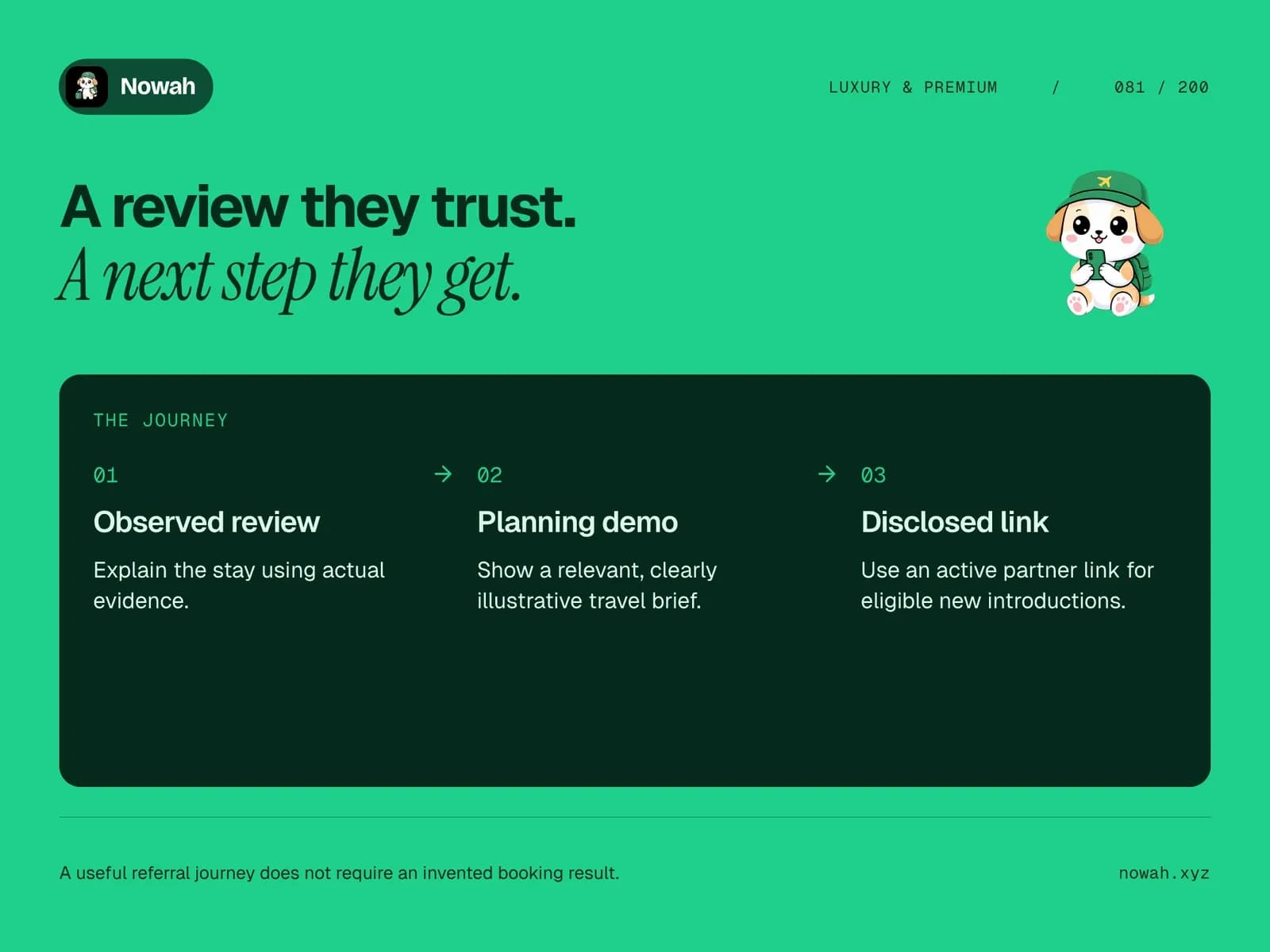
A luxury review can win attention without giving a follower a clear way to continue planning. The missing piece is often a useful next action: a specific question to investigate, a demonstration of how Nowah helps and an understandable explanation of the partner relationship. Approved Nowah partners can connect that sequence to potential earnings from qualifying bookings by newly attributed travellers.
Nowah fits this transition because the viewer can move from admiring a stay to exploring a current travel brief. A creator can show why the room, location or itinerary question matters and how they revise the planning direction. The link then continues work the content has already begun instead of asking the audience to abandon the review for a generic sales destination.
The commercial objective should remain precise. A view or click is not itself an attributed account or a booking. The partner share is 35% of Nowah net revenue from qualifying travel, subject to the program conditions.
Identify the decision the review has created
Ask what the follower is likely to need after watching. A room tour may create an occupancy question. A location review may lead to a hotel-area decision. A premium-flight discussion may raise arrival and accommodation questions. Choose the decision your evidence and demonstration can actually help explain.
Do not assume that every viewer wants to reproduce your exact trip. A useful review can inspire someone who has different dates, party requirements or accommodation priorities. The next click should help them investigate those current inputs rather than imply that the creator's experience is a universally suitable package.
Use fictional details when demonstrating a general method. Label the example so the audience can distinguish it from your own stay evidence and from actual current supplier information.
Show the question becoming a Nowah brief
Give the demonstration a small set of relevant inputs: trip duration, travelling party, a priority and an unresolved question. Explain why those inputs matter to the review's conclusion.
Use Nowah to explore that brief, then review the proposed direction. If the initial outline assumes an unverified arrangement or ignores a boundary, show the revision. The audience should understand what improved and which question remains open.
This makes the product recommendation concrete. You are not merely saying that Nowah is useful; you are showing the planning task it helps organise. Keep current availability, room conditions and provider arrangements attached to appropriate evidence rather than treating an itinerary draft as confirmation.
The luxury traveller brief guide provides a useful starting structure when the follower needs help expressing the question before searching. It lets the review focus on the transition without repeating every possible input question.
Match the destination to the audience's task
A traveller and a prospective creator partner need different next steps. The traveller wants to continue the relevant trip research through an approved partner's active referral route. A creator reading the article to learn the business model needs the Nowah program explanation and application.
Do not combine both actions into an unexplained instruction. A follower should know whether a link begins travel planning or explains how to become a partner. A clear destination is part of the value of the content, not merely a matter of button wording.
If the format has different link surfaces, check the actual current tools available to the account and platform. Do not promise that every video description, comment or profile surface behaves the same way. The content's stated action must correspond to a route the viewer can actually use.
Build a review-to-action message card
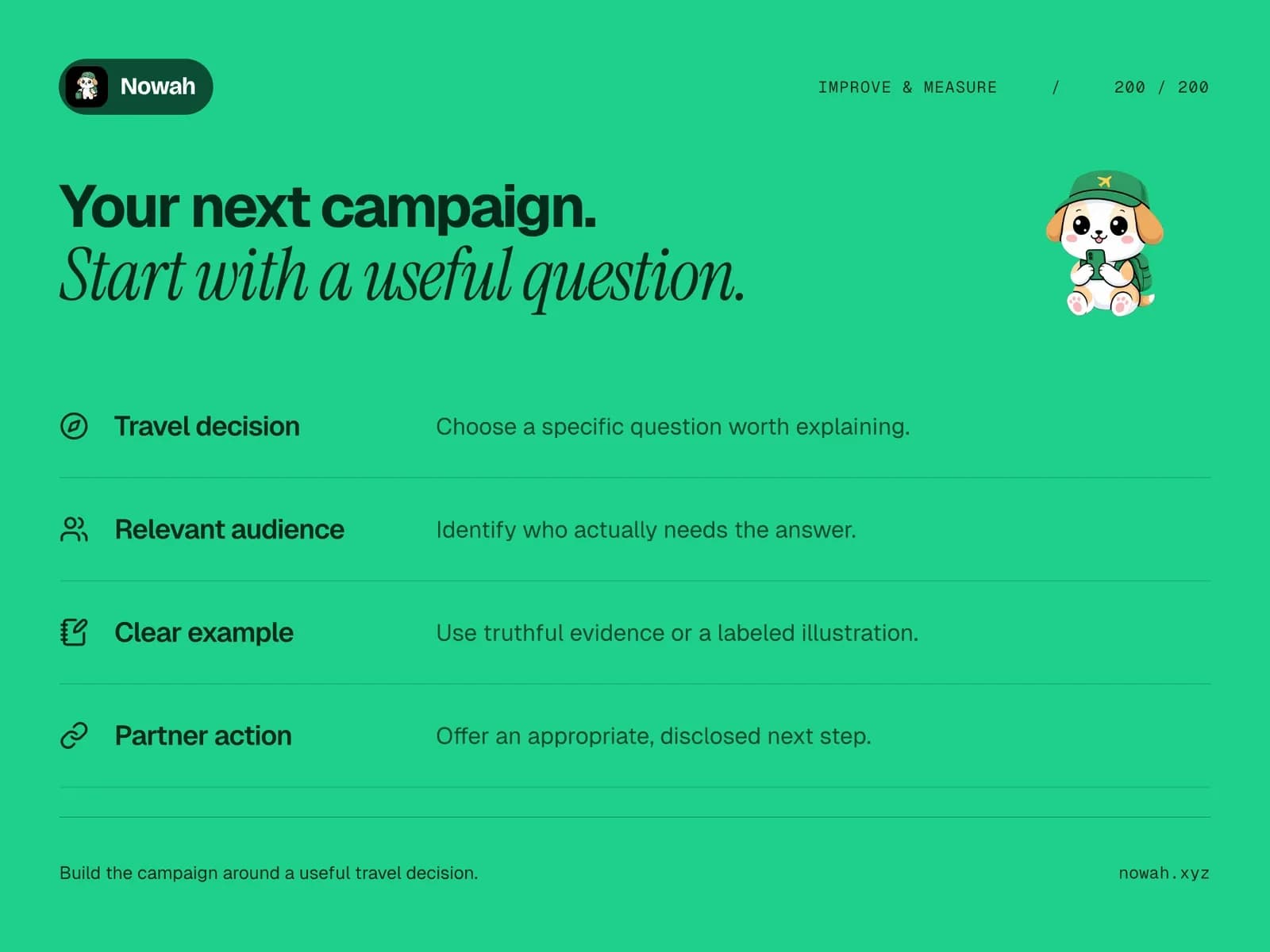
A message card helps creators make the transition explicit. Use these fields:
- The review observation that matters to the viewer.
- The traveller decision it creates.
- The Nowah task demonstrated in the content.
- The qualification or unresolved supplier question.
- The partner disclosure beside the recommendation.
- The destination and what the viewer should expect there.
For a hypothetical example, the observation could concern how an accommodation base relates to the trip's daily rhythm. The decision is whether that direction fits a follower's own priorities. The demonstration shows how to explore the brief in Nowah, while the open supplier question remains visible.
The message card keeps the commercial transition connected to the teaching. It is particularly useful when editing a short cut from a longer review, because the evidence and qualification can otherwise disappear while the link invitation survives.
Write a specific invitation without inventing a benefit
A useful invitation explains the task the audience can continue. Ask the viewer to investigate their own rooming or itinerary question rather than promising a saving, upgrade or special arrangement that the evidence does not establish.
Keep the language proportionate to the demonstration. If the review has shown how to clarify a travel brief, the invitation should not claim that the entire trip is confirmed. If an accommodation detail remains unresolved, the caption should not imply that following the link resolves it automatically.
The luxury filming-plan guide provides a shot structure that connects observation, requirements, a planning demonstration and the disclosed action. Use it to keep the invitation part of the story rather than an abrupt ending.
For written content, put a relevant internal link where the next question arises. A review that creates a rate-inclusion question can point readers to the premium rate-inclusions guide before asking them to make a travel decision.
Explain how an introduction becomes a valid attribution
Disclose that you are a Nowah partner and may receive commission from qualifying referred bookings when you recommend an active partner link. The relationship should be understandable beside the useful next step.
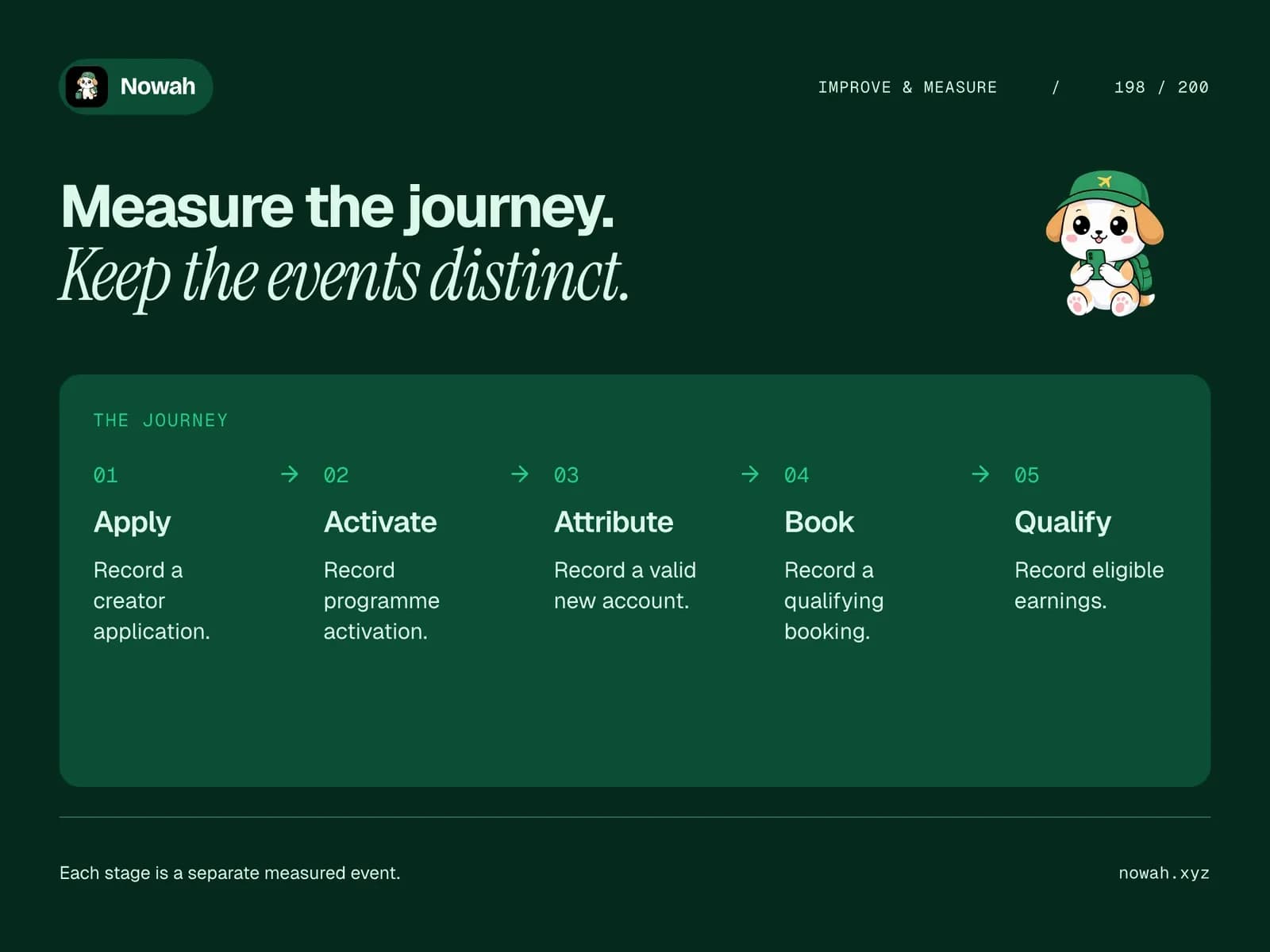
Under the Nowah terms, an eligible traveller must follow an active partner link and create a new account within 30 days of the introduction. Existing accounts, self-referrals and artificial accounts do not qualify. Tracking must successfully reach Nowah; a link being shared does not establish that every viewer or click is attributed.
Once valid account attribution is established, it can remain for the lifetime of that traveller account, including qualifying later bookings. That offers a potential continuing earning relationship while future travel and income remain unguaranteed.
Avoid adding an unverified promise about tracking across every device, app installation or account journey. Explain the actual conditions and keep uncertain implementation details out of the recommendation until verified.
Keep the earning example separate from the click
Nowah lists qualifying hotels, flights and paid eSIMs as eligible categories. A service, meal or activity mentioned in a luxury review does not automatically become commissionable because it appears alongside the travel recommendation.
The partner receives 35% of Nowah net revenue after the direct deductions defined in the terms. For a clearly hypothetical calculation, $60 of Nowah net revenue produces $21 of partner earnings. That example does not predict what a click, a review or a particular follower will generate.
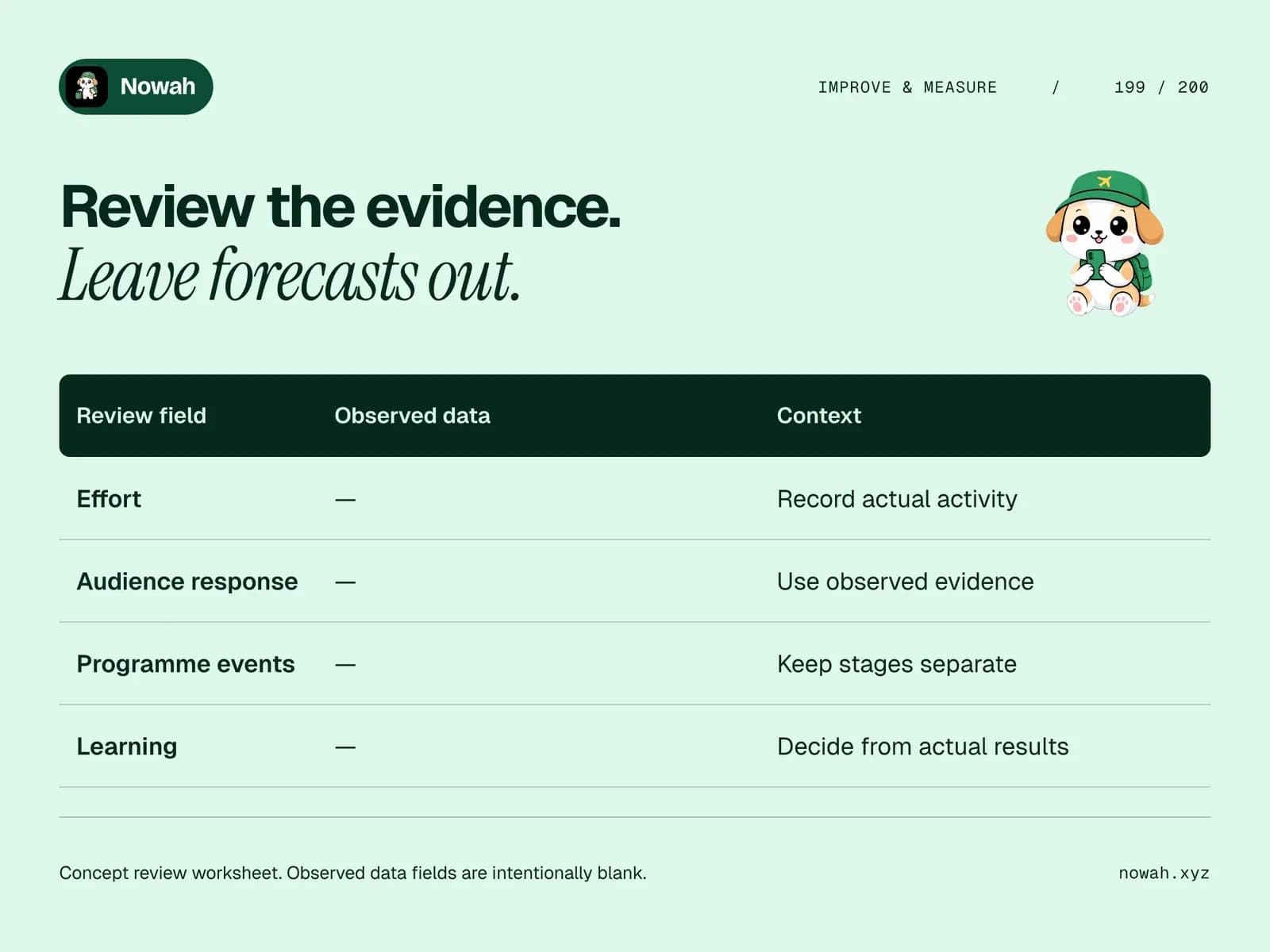
Completion, supplier settlement, the applicable hold and payout conditions matter before earnings become eligible. When assessing content, distinguish attention, a useful action, valid attribution, a qualifying booking and eligible earnings. Do not use an encouraging audience response as a substitute for a completed commercial outcome.
Test the message card with two different reader intentions. First, imagine a traveller who wants to investigate the accommodation question. Then imagine another creator who wants to understand the earning model. Each should be able to identify the action intended for them without guessing which destination sits behind an ambiguous instruction.
If the traveller invitation only explains how to apply as a partner, it has not continued the travel task. If the creator invitation implies that simply clicking a traveller link enrols someone in the program, it also needs revision. This small editorial check helps keep the article’s commercial purpose clear while preserving a useful journey for the audience whose trip inspired the review.
Check the transition in the finished content
Review the piece as someone who has not seen your other posts. Can they explain the travel question, the Nowah demonstration and what the link is meant to do? Can they understand your commercial relationship without reconstructing it from a profile or an old episode?
Check that the short-form cut and companion article preserve the same fictional inputs and important conditions. If a claim changes between formats, fix the explanation rather than hoping the fuller version supplies context the viewer may never encounter.
The older Nowah article on the twenty-tab problem offers background for explaining why a clear next research step matters. Your review-to-action message card makes that idea practical for a specific audience and decision.
To participate commercially, apply to Nowah Partners. Applying is free, applications are reviewed and there is no minimum follower count. Begin with a useful review, demonstrate the relevant Nowah task and give each audience a transparent route to continue the work the content has already started.