How Outdoor Creators Can Handle Uncertain Conditions in Nowah Travel Content
Keep changing outdoor conditions visible while demonstrating useful Nowah travel research and transparent partner next steps.
Outdoor inspiration can remain appealing while the information needed for an actual trip changes. A useful creator keeps route ideas, current conditions and travel arrangements distinct instead of publishing an attractive plan as a guarantee. Approved Nowah partners can connect that careful explanation to disclosed referrals and potential earnings from qualifying bookings by newly attributed travellers.
Nowah is a strong fit for the wider travel brief. Show which accommodation, flight or itinerary question depends on information still needing a current check. Demonstrate how you revise the planning direction when an assumption changes, rather than suggesting that a finished graphic certifies the conditions.
Keep the earning scope clear. Qualifying hotels, flights and paid eSIMs are the listed Nowah partner categories. An outdoor activity, permit or specialist service is not automatically commissionable because it appears in the travel story, and a planning demonstration does not certify a route or traveller's suitability.
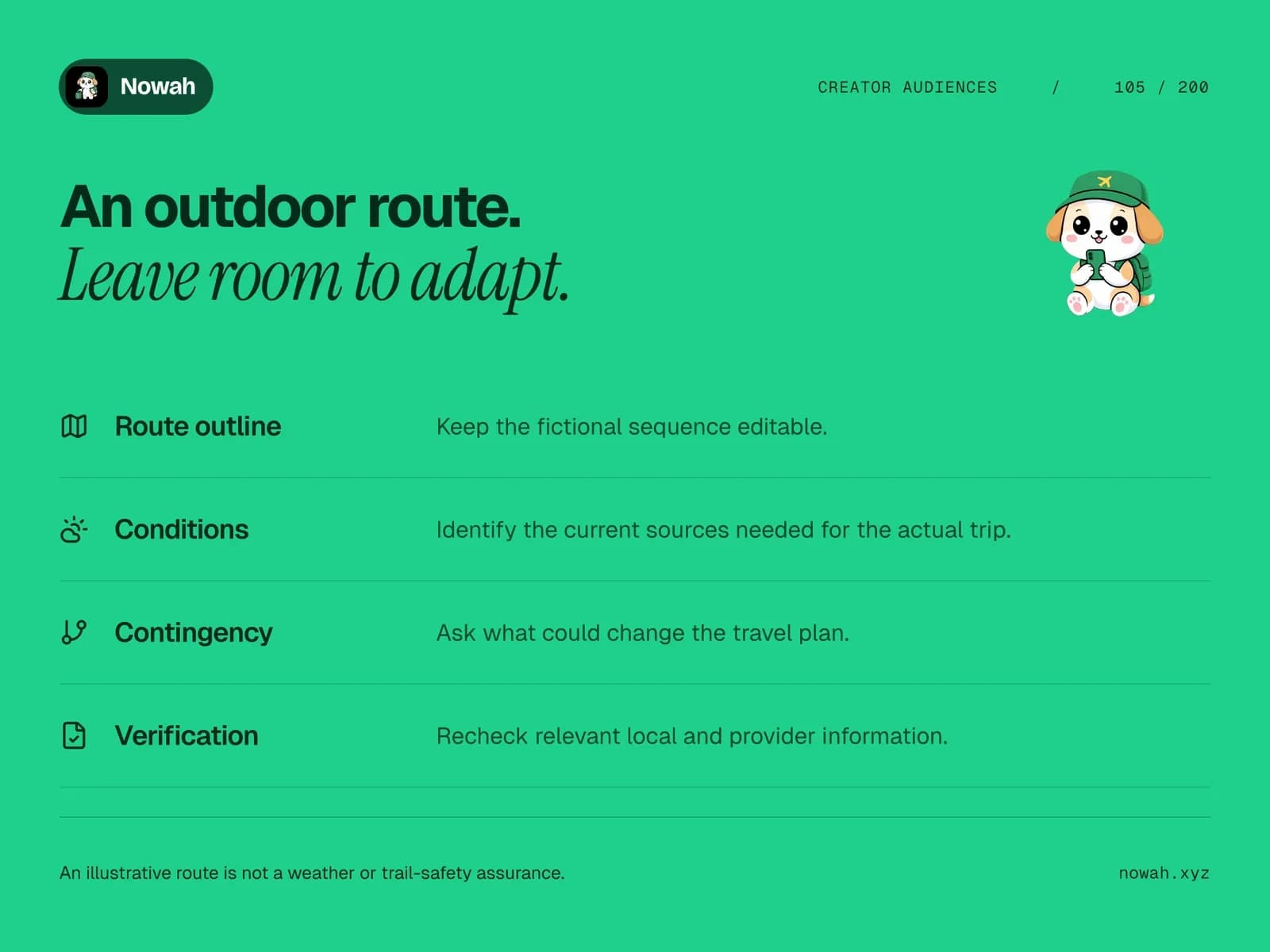
Identify what could change the travel direction
Start with the specific dependency rather than a vague warning that travel can be unpredictable. Access status, provider arrangements or current conditions may affect the accommodation question, the travel window or the sequence being investigated.
Use fictional inputs in a public teaching example. Explain which details are assumptions and which facts would need appropriate current sources. Do not invent a real closure, forecast or provider announcement to make the scenario dramatic.
A creator can explain the question without supplying technical activity instructions. The useful task here is to show how current information affects the wider travel plan, while the actual activity requires the relevant authority and qualified provider information.
Keep condition sources relevant and current
Choose sources appropriate to the actual place and question. An old social clip, a broad destination label or another traveller's experience does not establish the current conditions a future visitor will encounter.
For US weather questions, the National Weather Service's forecast and weather-hazard resources provide a route to official information. This is an example of using the relevant service for the actual location and issue; it is not a forecast for the fictional itinerary or a universal authority for every country.
Record what a source establishes and when you checked it. Do not let a current-looking date on your own graphic imply that every underlying fact has been verified. A creator's planning resource should make the relevant evidence visible instead of suggesting permanent certainty.
Build a condition-dependence log
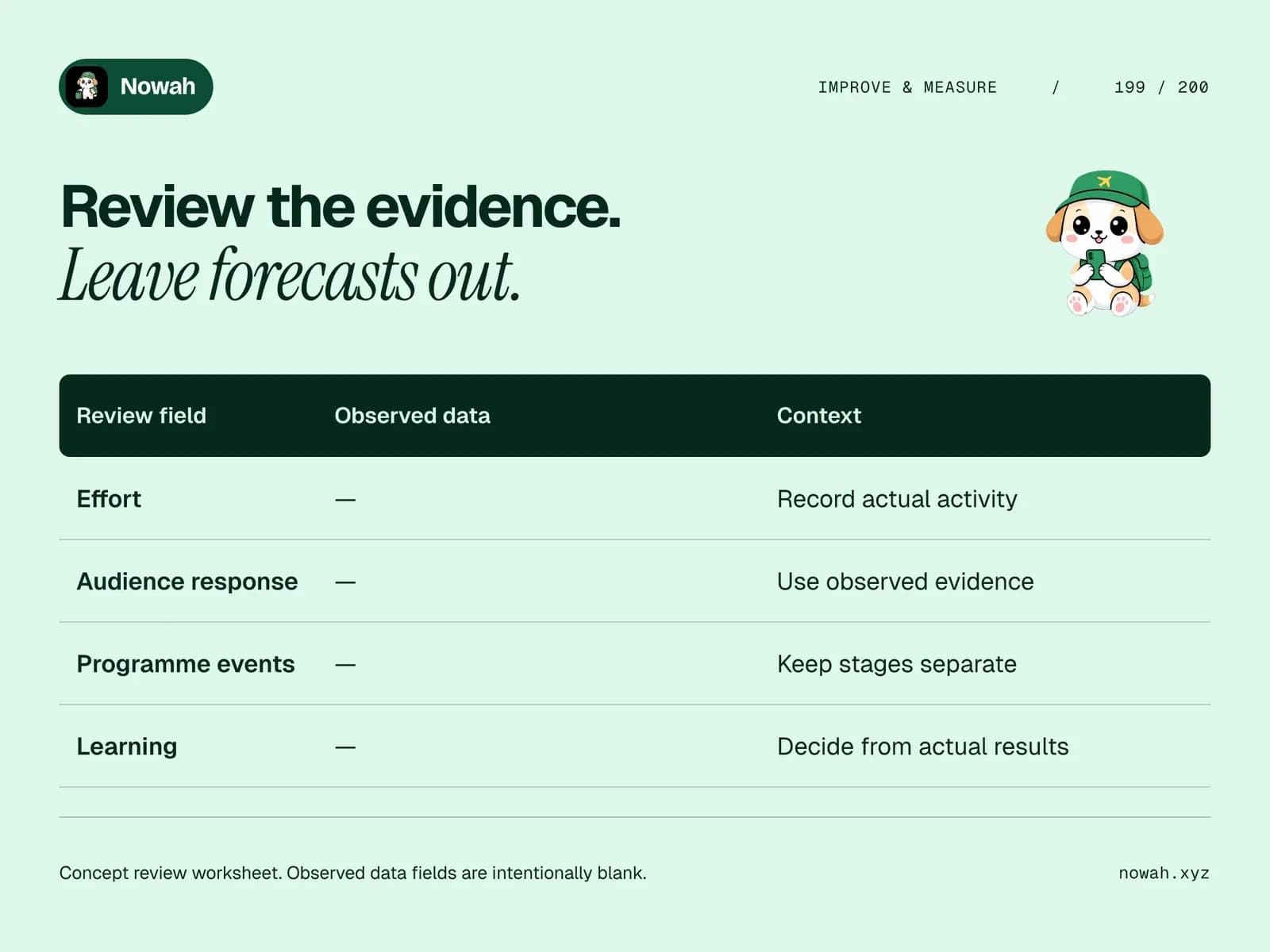
A small log can help the audience understand which part of the plan needs reassessment. Useful fields include:
- The outdoor idea and the travel question it creates.
- The condition or access fact that affects the direction.
- The appropriate information source.
- What is currently known and what remains unresolved.
- The accommodation, flight or itinerary assumption that depends on it.
- The next verification or planning action.
Do not fill unresolved fields with guessed timing or reassuring language. An open question is useful when it identifies why the travel conclusion is provisional.
The log can sit beside the Nowah demonstration in a companion article. A short video can show one important dependency while preserving the qualification that changes the recommendation.
Demonstrate the wider brief in Nowah
Use Nowah to explore the fictional travel requirements with the unresolved condition clearly labelled. Explain which question you are asking: how the trip structure changes, which accommodation direction deserves research or what must remain optional in the outline.
Review the proposed plan against the evidence. If it treats an unresolved condition as settled or assumes a convenient movement without support, identify that issue and revise the brief. Show the change so the audience can follow why the direction developed differently.
The practical recommendation is the clearer planning conversation and relevant travel research. It does not imply that Nowah guarantees weather, access, actual availability or specialist arrangements. Keep those facts attached to appropriate current evidence.
The adventure travel-base guide addresses the earlier accommodation question around an outdoor interest. Link when a changed condition prompts the traveller to reconsider the base rather than merely edit an activity label.
Work through a fictional change of assumption
Imagine a fictional traveller investigating an outdoor idea and a stay direction that depends on an access fact. In Version A, the fact remains unverified. In Version B, new relevant information requires the traveller to reconsider the itinerary question.
Do not invent the actual condition or describe either version as a certified route. The creator can show which planning input changes and how the accommodation or travel-window question responds. Keep dates, party and other requirements consistent unless the revision explicitly changes them.
Use Nowah to explore the revised direction, then update the dependence log. Which question has been resolved, which remains open and which earlier assumption no longer belongs in the plan? A useful conclusion may be the next research action rather than a complete replacement itinerary.
This teaches a method the audience can adapt without treating a social post as permanent evidence of conditions.
Keep booking conditions separate from changed circumstances
A changed forecast or access question does not by itself establish the terms of a flight or hotel offer. Do not invent a cancellation entitlement, deadline or penalty to make the revised plan easier to recommend.
The cancellation-flexibility guide helps creators keep the traveller's uncertainty attached to the actual offer conditions. Use current supplier evidence for a specific claim, or preserve the point as a question needing an appropriate answer.
The content should not imply that a premium label or a partner relationship guarantees flexibility. A useful Nowah research step can remain relevant while the actual booking conditions are still being investigated.
Refresh the published resource coherently
When an important input changes, revisit the article, diagram and any short-form cut together. Updating a caption alone may leave an older graphic implying that the original direction has just been confirmed.
The changing-facts refresh guide provides a broader maintenance method. Its relevant principle is to keep current evidence, checked dates and the actual claim aligned rather than adding a new date to an unchanged conclusion.
Your own experience, supplier information and fictional planning should remain distinguishable. A generated illustration can explain a dependence, but it is not evidence of current conditions or a real trip you completed.
Explain the disclosed referral route
When recommending an active Nowah partner link, say that you may receive commission from qualifying referred bookings. Put the relationship beside the useful action so the audience understands the destination and your commercial connection.
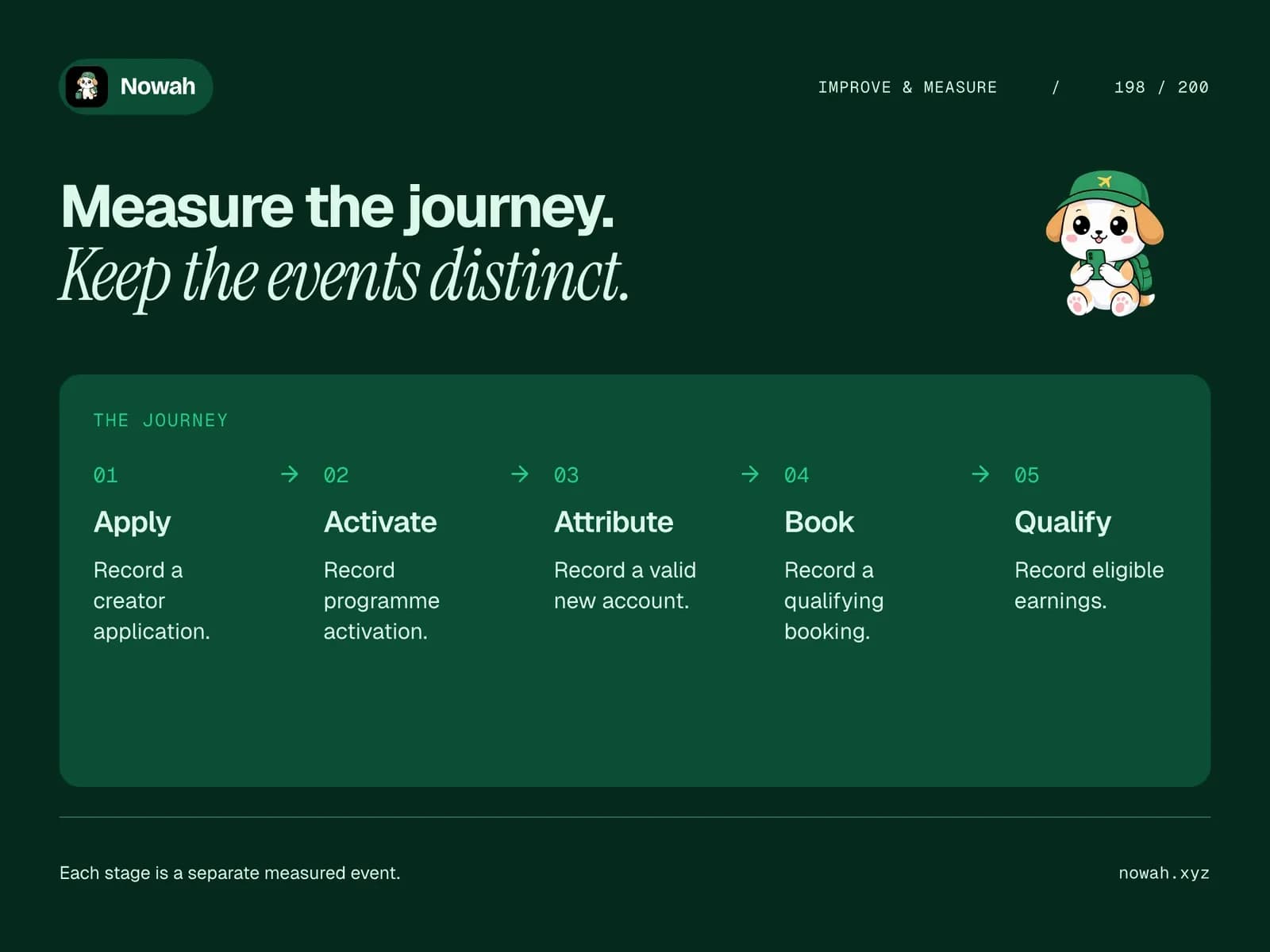
Under the Nowah terms, an eligible traveller must follow an active partner link and create a new account within 30 days of the introduction. Existing accounts, self-referrals and artificial accounts do not qualify. Tracking must reach Nowah successfully; a saved outdoor idea or link click is not proof of attribution.
Valid account attribution can remain for the lifetime of that traveller account, including qualifying later bookings. That offers a potential continuing relationship, while future travel and income remain unguaranteed. A creator wanting to participate needs the separate program explanation and application journey.
A useful refresh note identifies the affected claim, not only the date of an update. If a current source changes an input, record which accommodation or movement assumption needs reassessment. If the information does not settle a question, retain that uncertainty rather than giving the revised graphic a blanket confirmation label.
For the fictional demonstration, show the old assumption and the new research question together. The audience can then follow why the Nowah brief has changed. This is more useful than presenting a different outline as if the original plan had simply become certain. Preserve the same source scope and qualification across the companion article, image and short-form cut so each version remains understandable on its own.
Keep the earning claim conditional
The partner receives 35% of Nowah net revenue after the direct deductions defined in the terms, not a share of the traveller's whole outdoor budget. A labelled hypothetical $60 of Nowah net revenue produces $21 in partner earnings. That arithmetic does not predict the return from either fictional planning version or establish commission on an activity or permit.
Completion, supplier settlement, the applicable hold and payout conditions matter before earnings become eligible. Keep useful research, valid attribution, qualifying travel and completed payouts distinct when discussing results. A popular outdoor video does not establish every stage of the commercial journey.
The older Nowah article on what travel AI can get wrong provides context for maintaining clear boundaries between a planning suggestion and the evidence needed to rely on it.
To participate, apply to Nowah Partners. Applying is free, applications are reviewed and there is no minimum follower count. Start with one honest condition-dependent question, demonstrate the relevant Nowah revision and give followers a transparent route to investigate the travel around their interests.