Designing for Global Travelers: Localization Beyond Translation
RTL layouts, cultural color associations, date format localization, currency conventions, and name field design — true global design goes far deeper than translating strings.
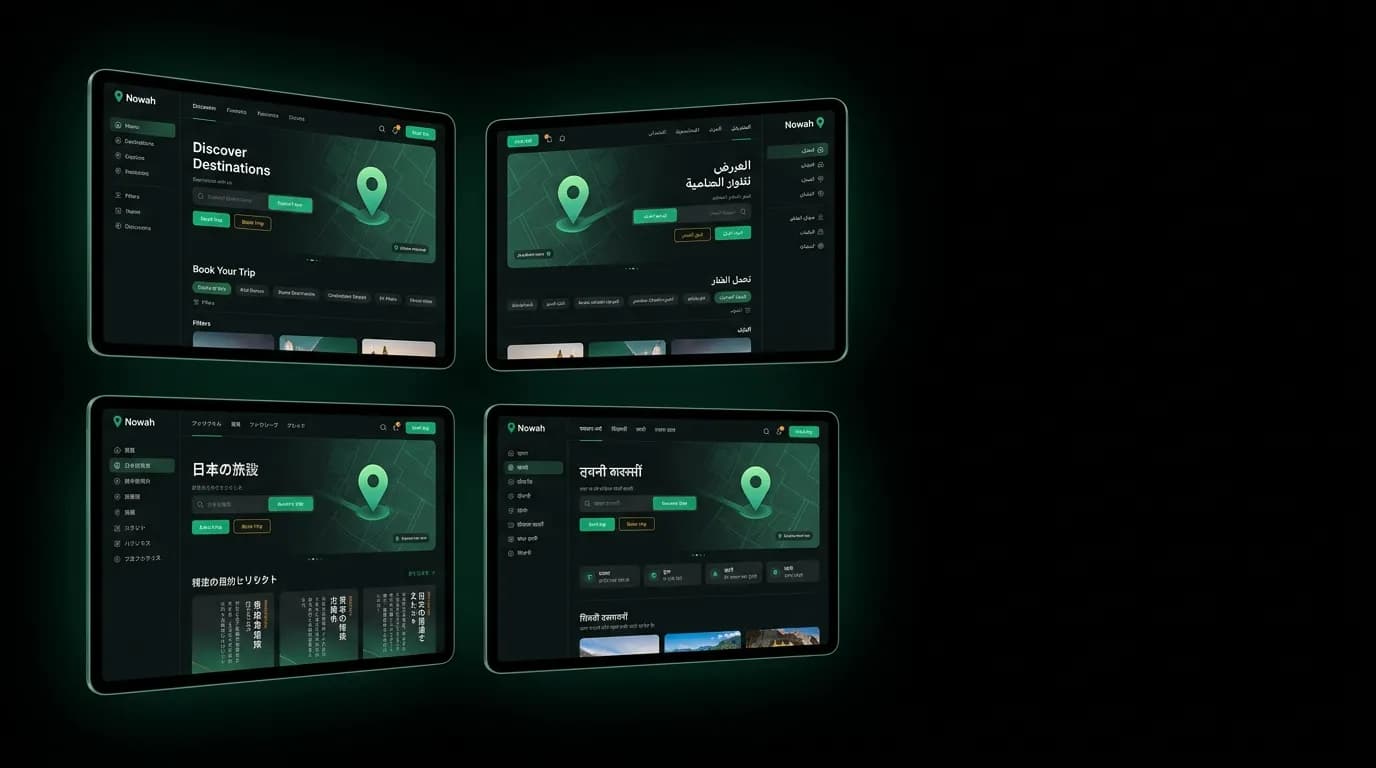
Translation is roughly 10% of localization. You translate the strings, and congratulations, the words are in a different language. But the layout still flows left to right when it should flow right to left. The date format still shows month before day when the user expects day before month. The currency symbol is on the wrong side of the number. The name field asks for "First Name" and "Last Name" when the user's culture puts the family name first or uses a single name.
True localization is a design problem, not a translation problem. It requires rethinking layout direction, rethinking cultural assumptions baked into interface patterns, and rethinking data formats that seem universal but are actually regional.
RTL layout support
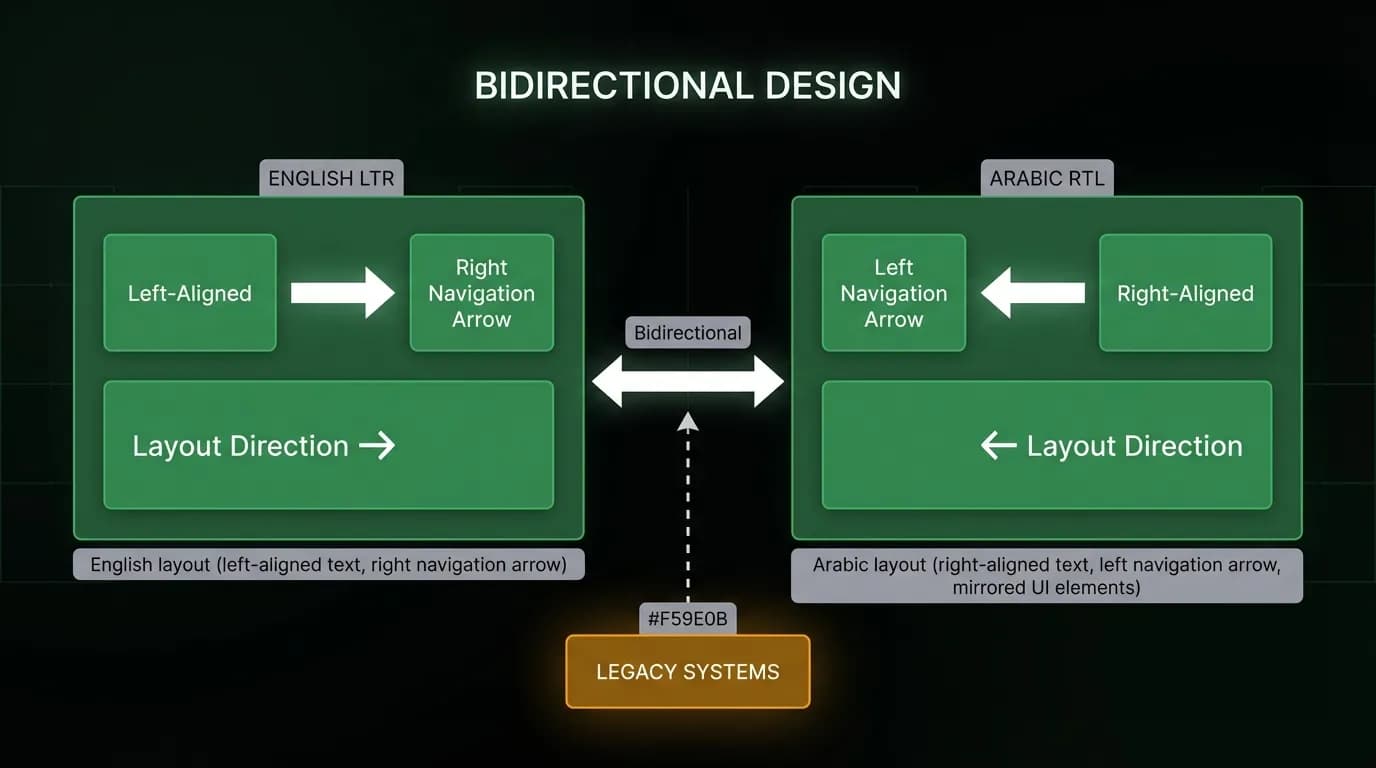
When the user's language reads right to left, the entire interface mirrors. Navigation flows from right to left. Text aligns to the right edge. Icons that imply direction flip horizontally. A back arrow that points left in English points right in Arabic.
This mirroring is not just cosmetic. It reflects how the user's eyes scan the screen. An RTL reader starts at the top right and scans leftward and downward. UI elements need to follow this scan pattern to feel natural. A primary action button that sits at the bottom right in an LTR layout should sit at the bottom left in an RTL layout.
For a chat interface, RTL mirroring means the user's messages align to the left (they come from the right-reading user) and the AI's messages align to the right. This is the opposite of the LTR convention. The chat remains conversational and natural because the alignment follows the reading direction.
Some elements should not mirror. Icons that represent real-world objects (a phone, a clock, a plane) keep their original orientation because the real-world objects do not change direction based on language. Icons that represent direction or progress (arrows, checkmarks that imply motion, progress bars) do mirror.
Cultural color associations
Colors carry different meanings across cultures. Green means go, growth, and money in Western contexts. In some other cultural contexts, green carries different associations. Red means danger or error in many Western interfaces. In some East Asian contexts, red signifies luck and celebration.
For a global travel product, this means color cannot be the sole carrier of meaning. Our error states use red, but they also use an icon and a text label. A user who associates red with something other than error will still understand the state from the icon and text. Color reinforces meaning. It does not solely create it.
Our primary green accent is used consistently for actions and price highlights. While green carries positive associations in most cultures, we ensure that every green element also communicates its purpose through shape, position, and label. The "Book" button is green, but it is also labeled "Book" and positioned in the action area. A user who does not associate green with action still understands the button.
Date and time format localization
Date formatting is where localization failures cause real-world harm. "3/4/2026" means March 4th in the United States and April 3rd in most of Europe. A user who books travel on the wrong date because of format ambiguity has a concrete, expensive problem.
We use unambiguous month-name formats ("Mar 15") that work across all locales. But time format is another consideration: 12-hour (2:30 PM) versus 24-hour (14:30) varies by region. Our time display component respects the user's locale settings and formats accordingly.
Day-of-week naming, week start day (Sunday in the US, Monday in most of Europe), and calendar system (Gregorian is not universal) are additional localization dimensions that affect date pickers and schedule displays. Each of these needs to respect the user's cultural context rather than imposing a default.
Currency conventions
Currency formatting varies significantly across regions, and the differences are not just the symbol. The position of the currency symbol (before or after the number), the decimal separator (period or comma), and the thousand separator (comma, period, or space) all change.
A price displayed as "$1,234.56" in US formatting becomes "1.234,56 EUR" in German formatting or "1 234,56 EUR" in French formatting. The underlying number is the same. The display must adapt to the user's convention to feel correct.
Our price component handles this through locale-aware formatting. The user's locale setting determines every aspect of currency display: symbol, position, separators, and decimal precision. The user sees prices in the format their eyes expect, which is a small detail that has an outsized impact on trust.
Name field design
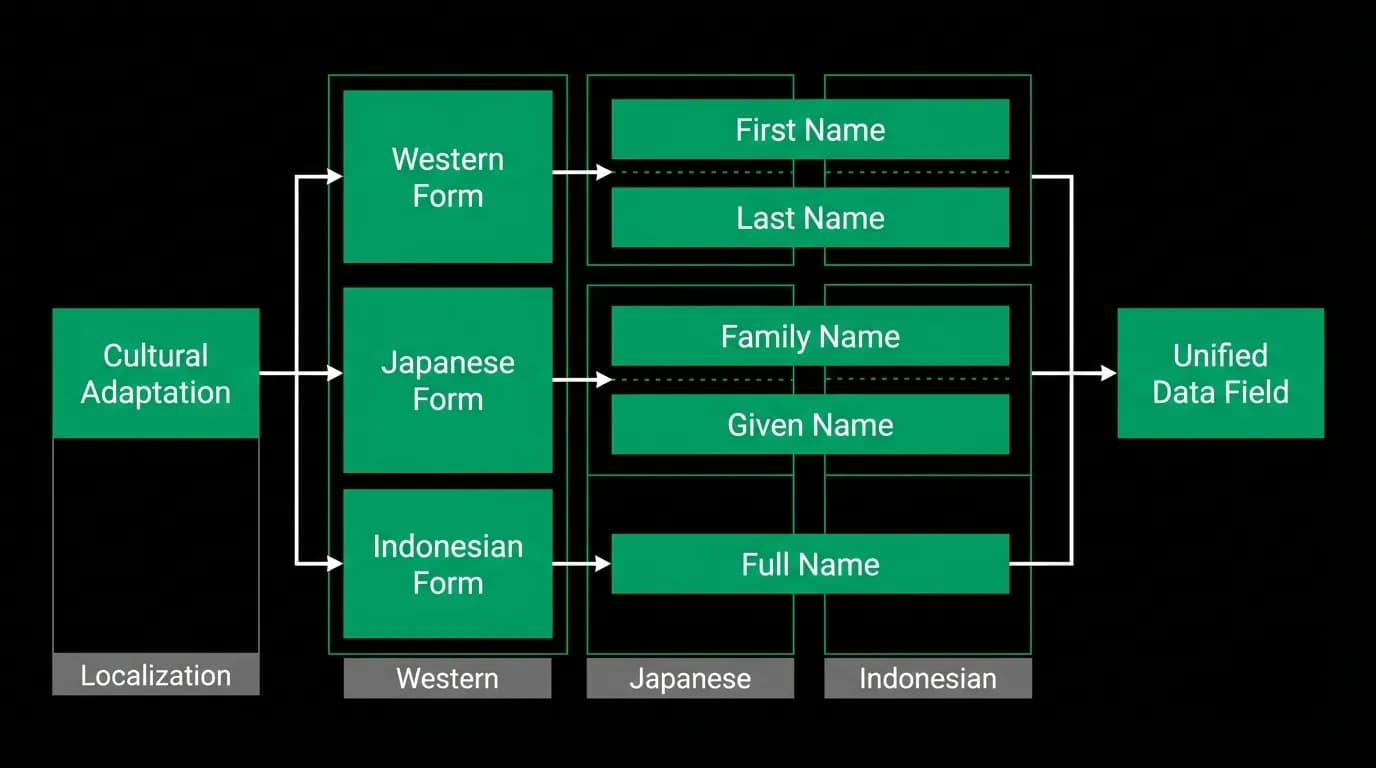
"First Name" and "Last Name" is a Western convention that does not map to many cultures. In East Asian naming conventions, the family name comes first. In many Indonesian cultures, a single name is standard with no family name at all. In some South Asian contexts, names may include patronymic elements that do not fit neatly into a two-field format.
For a travel product, name accuracy is not just a cultural nicety. It is a legal requirement. The name on the booking must match the name on the passport. A form that forces a single-name user to fabricate a "last name" or that reorders a East Asian name into Western format creates booking errors that can prevent a person from boarding a flight.
Our approach uses a flexible name input that adapts to the user's cultural context. The fields, labels, and order adjust based on locale. The AI can also parse names from conversation: "Book for Sukarno" (single name) or "Book for Yamada Taro" (family-given order) without forcing the user to decompose their name into an unfamiliar structure.
Building a culturally-aware design checklist
For any global travel product, the localization checklist extends far beyond translation:
Layout direction: does your interface support RTL? Color semantics: does every color-coded state have a non-color fallback? Date formats: are your dates unambiguous across locales? Currency: does your price component respect locale-specific formatting? Names: does your name input accommodate non-Western naming conventions? Icons: have you reviewed directional icons for RTL mirroring?
Each item on this list represents a category of users who will find your product confusing, untrustworthy, or unusable if the localization is incomplete. Translation gets you the words. Design localization gets you the trust.
Nowah is an AI travel agent that searches and books real flights and hotels through conversation — no filters, no thirty open tabs. Plan your next trip.