The First Response: Designing the AI's Opening Line
The AI's first message sets the tone for the entire relationship. It must be warm but not overpromising, helpful but not presumptuous, and personal without being creepy.
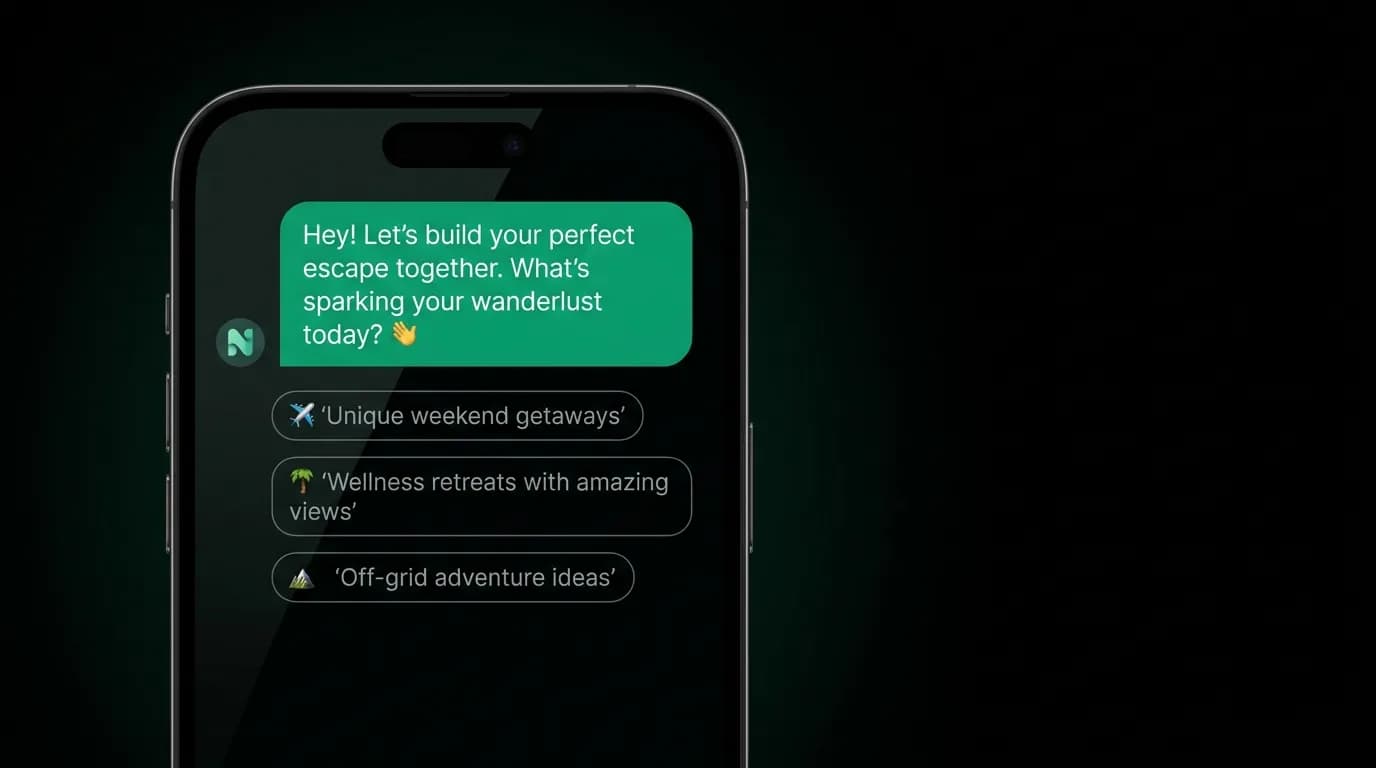
The AI's first message appears and the user immediately forms an opinion. Not about the technology behind it. Not about the feature set. About the personality. Is this thing friendly or corporate? Is it going to be helpful or annoying? Does it feel like talking to a person or interrogating a machine?
That opinion forms within seconds and it persists. First impressions in conversational interfaces are stickier than in traditional apps because the chat creates a pseudo-relationship. The user is not evaluating a tool. They are meeting an entity that will talk to them, remember them, and act on their behalf. The opening line is the handshake.
Tone calibration: the narrow band that works
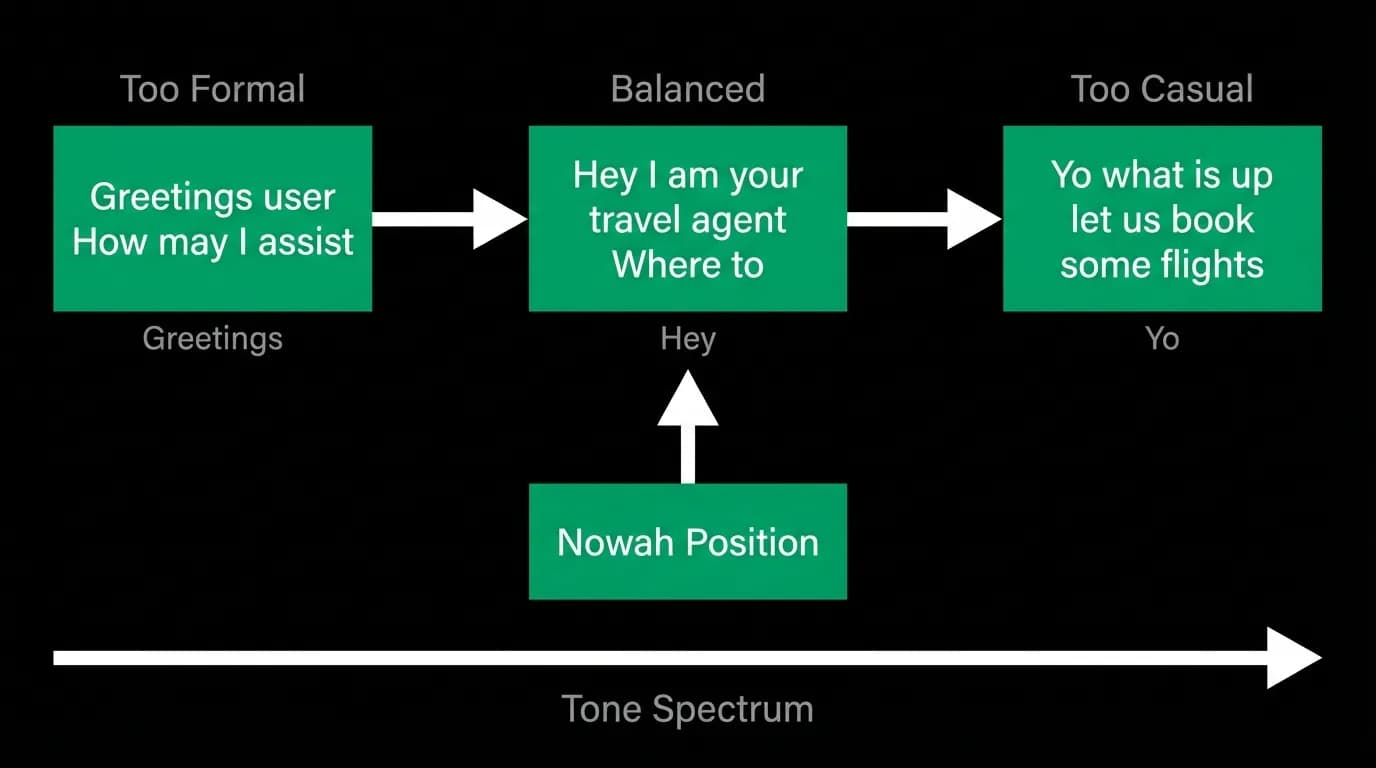
There is a spectrum from corporate formality to casual slang, and the viable range for a travel AI agent is narrower than you might think.
Too formal: "Greetings. I am your AI travel assistant. How may I be of service today?" This reads like a bank's automated phone system. It creates distance. The user feels like they are interacting with a corporation, not an agent that understands travel.
Too casual: "Hey! What's up! Let's book some trips!" This reads like a brand trying too hard to be relatable. It undermines credibility. The user is about to trust this thing with hundreds of dollars. Exclamation marks do not build that trust.
The sweet spot is conversational warmth with quiet competence. Friendly without being performative. Knowledgeable without being stiff. The AI should sound like a well-traveled friend who happens to be extremely good at logistics.
Capability hints without overwhelming
The first message needs to convey what the AI can do, but listing capabilities is the wrong approach. An opening message that says "I can search flights-layer-ai-agent-search-flights), book hotels, check visa requirements, convert currencies, find restaurants, plan itineraries, and track your bookings" is a feature dump that no user will read or remember.
Instead, capability hints should be woven into a natural greeting that mentions two or three things, enough to set expectations without overwhelming. The user learns that the AI can search and book. They will discover the other sixty-plus capabilities through conversation.
The suggested prompt chips below the greeting do the heavy lifting for capability demonstration. Each chip is a complete example query that shows a different capability in action. "Plan a weekend trip to Barcelona" demonstrates itinerary planning. "Find cheap flights to Tokyo" demonstrates search. "Where should I go for a beach vacation?" demonstrates exploratory conversation. Three chips, three capabilities demonstrated, zero feature lists.
Personalization for returning users
The first message is only the first message once. For returning users, the greeting should acknowledge the relationship. A user who has booked three trips through the platform should not see the same generic welcome as a first-time visitor.
Returning user greetings reference context. Past trips, upcoming travel, unfinished planning sessions. "Welcome back. Your trip to Barcelona is in 12 days. Anything you want to add?" This greeting is personal, useful, and action-oriented. It reminds the user of their context and invites a specific interaction rather than asking an open-ended "how can I help?"
If the user has no upcoming trips, the greeting can reference their preferences or travel patterns. "It has been a while since your last trip. Ready to plan the next one?" This is warm without being presumptuous. It acknowledges the relationship without assuming the user's intent.
What not to claim in the first message
Overpromising in the first message is a common mistake that erodes trust faster than almost anything else. If the AI says "I can book anything, anywhere, anytime" and then fails to find availability for a niche destination, the credibility hit is severe. The user trusted a promise and the promise was broken.
Better to be understated and over-deliver. A greeting that implies competence through tone rather than claiming it through statements sets realistic expectations. When the AI then handles a complex multi-city booking flawlessly, the user is pleasantly surprised rather than having their expectations merely met.
Avoid superlatives. Avoid guarantees. Avoid any language that sets a bar the AI cannot consistently clear. The opening line should promise nothing and demonstrate everything through the conversation that follows.
Cultural considerations
Greetings are culturally loaded. The level of formality, the use of names, the expectation of pleasantries before business, all of these vary significantly across cultures. A greeting that feels friendly in American English might feel presumptuous in Japanese cultural context.
The AI's greeting needs to work globally, which generally means keeping it simple and culturally neutral. Avoid idioms, avoid culture-specific references, avoid assumptions about time of day or season. A simple, warm greeting that invites conversation works across cultures better than a culturally specific one that resonates with some users and alienates others.
For users whose language preference is not the default, the greeting adapts linguistically. But the tone remains consistent: warm, competent, and inviting. The personality travels across languages even when the specific words change.
A/B testing frameworks
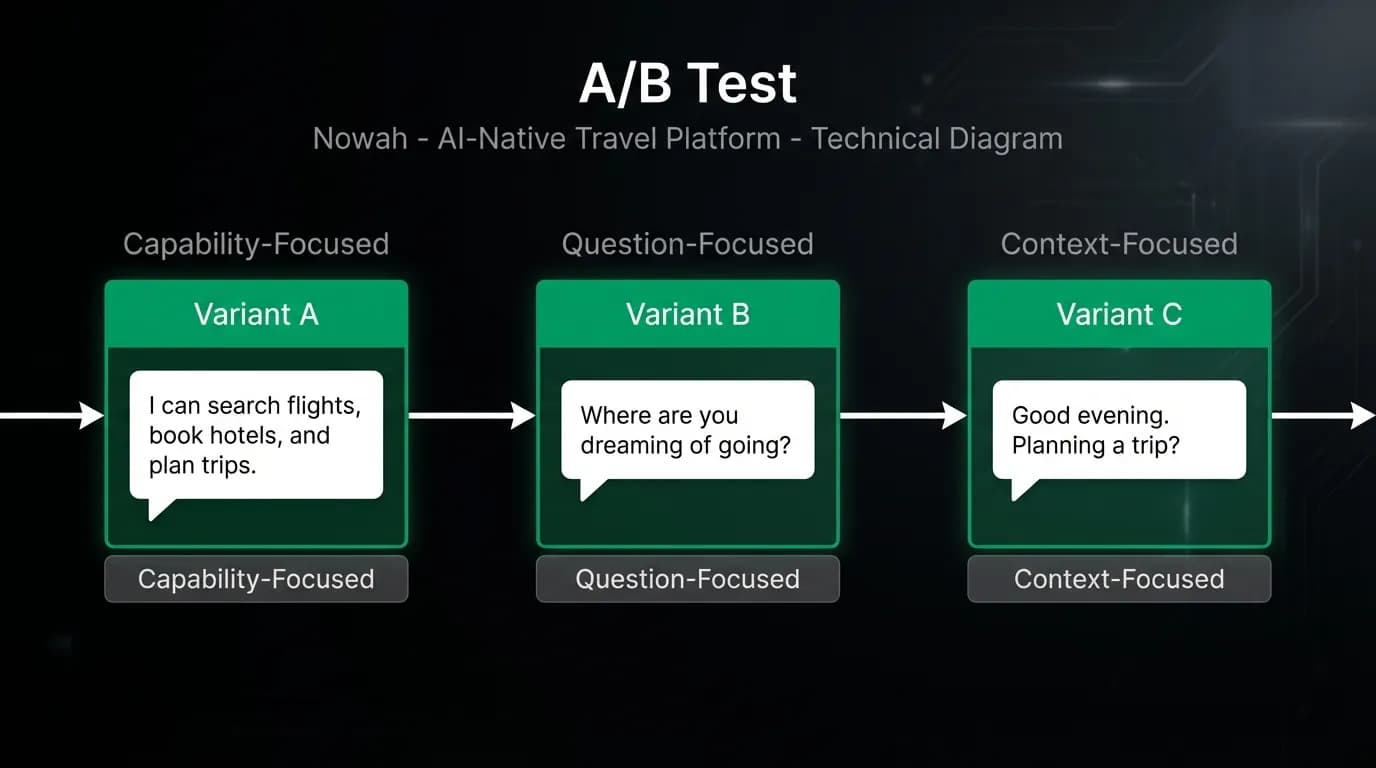
The opening line deserves rigorous testing because its impact cascades through the entire user experience. We test three variants at a minimum.
Capability-focused: the greeting mentions what the AI can do. Question-focused: the greeting asks where the user wants to go. Context-focused: the greeting references the time, season, or user's profile.
The metrics that matter are not just engagement with the greeting itself but downstream behavior. Which greeting variant leads to longer conversations? Higher booking rates? More return visits? The opening line is not an isolated interaction. It is the beginning of a relationship, and the relationship metrics are what matter.
Nowah is an AI travel agent that searches and books real flights and hotels through conversation — no filters, no thirty open tabs. Plan your next trip.