From Google Flights to AI Booking: A Traveler's Migration Story
Following a power user's journey from traditional search to AI-assisted booking — the learning curve, the breakthrough moments, and the point of no return.
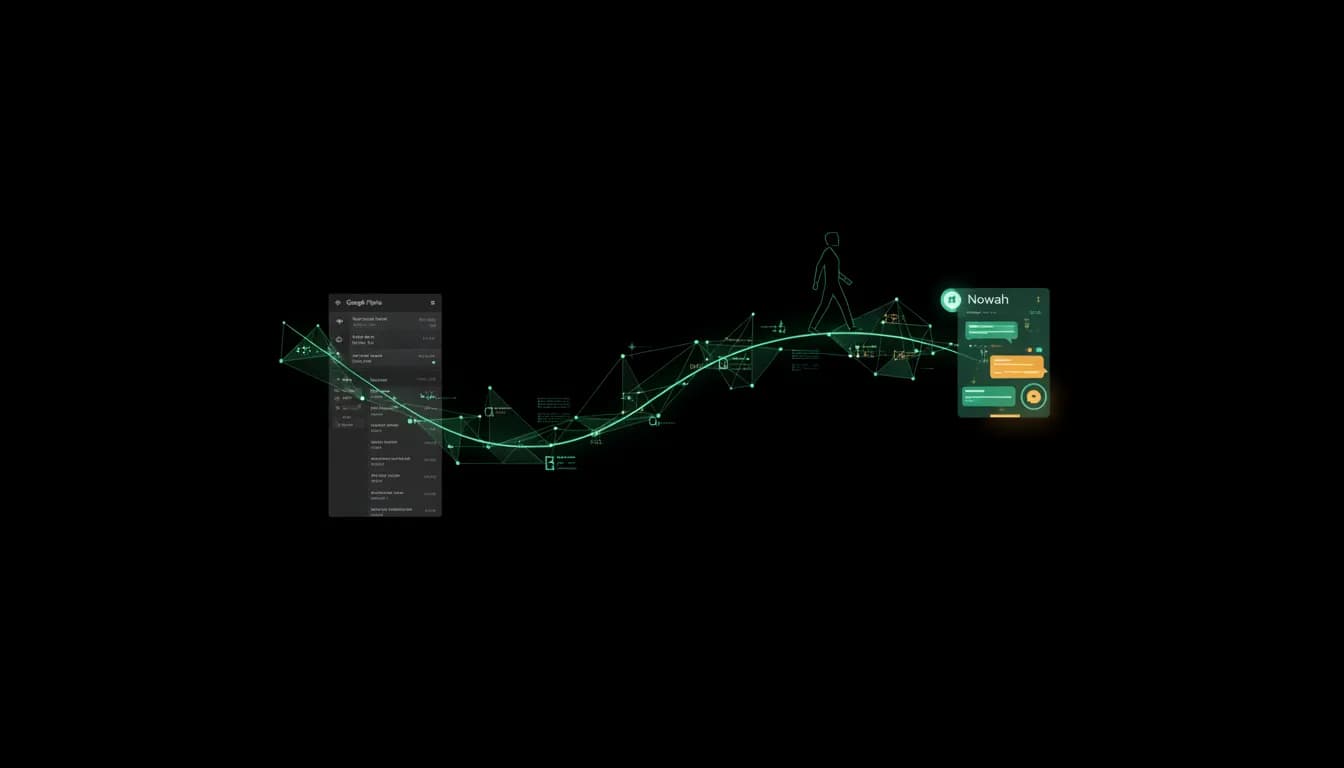
He booked twelve trips a year. He knew every filter trick. He had a system: start with a date flexibility view, identify the cheapest dates, cross-reference with two other booking sites for price comparison, check the airline's direct site for loyalty pricing, and only then commit. He could spot a good deal within seconds of looking at a price chart. He was, by any measure, a power user of traditional flight search.
He was also exactly the person we expected to be hardest to convert. And he was.
The skepticism phase
Power users are the most skeptical audience for AI travel tools. They have invested time mastering the existing tools. They have developed heuristics that work. They know that no algorithm is going to beat their twenty-tab, multi-site, price-comparison workflow because they have tried similar tools before and been disappointed.
His first conversation with our agent was deliberately adversarial. He asked for a specific route he knew well, with constraints he knew would be hard to optimize: flexible dates, specific time windows, minimum layover tolerance, and a price target he considered aggressive. He expected the agent to fail.
The agent did not fail. But it did not immediately impress him either. The results were good. Comparable to what he would have found manually. The experience was faster, certainly, but the results were not dramatically different from his own research. He closed the app thinking "nice, but I can do this myself."
The skepticism phase is normal. Power users evaluate AI tools against their own expertise, and their expertise is genuine. The first conversation rarely produces the conversion moment because the power user is testing the tool against their known optimums, not against scenarios where manual search struggles.
The learning curve
The transition from filter-thinking to intent-expression has a learning curve. Power users are accustomed to thinking in terms of search parameters: origin, destination, date, class, stops. Conversational booking asks them to think in terms of intent: what do you want from this trip?
The learning curve is not about the interface. Typing a message is simpler than configuring filters. The learning curve is cognitive: shifting from "let me set up the right search parameters" to "let me describe what I actually want and trust the agent to handle the parameters."
Our power user's second and third conversations were more natural. He started expressing preferences he never would have typed into a filter: "I want to arrive before dinner time local time," "I prefer airlines with decent food on this route," "last time I flew through this hub the connection was tight, find me something with more buffer." These are preferences that filter-based search cannot capture but conversational booking handles naturally.
The first breakthrough
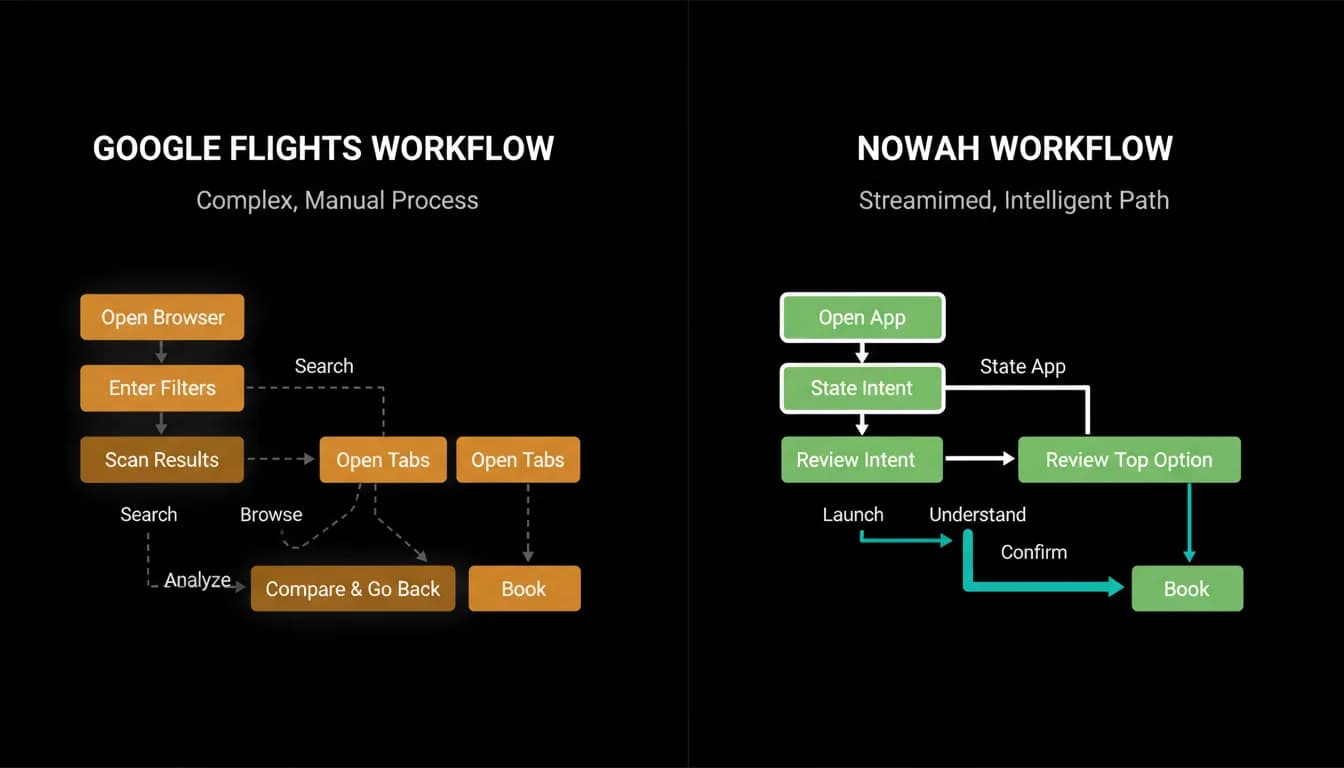
The breakthrough came on his fourth trip. He asked for a flight between two cities and specified his usual constraints. The agent returned a routing he had never considered: a connection through a mid-sized hub that he had always overlooked because it was not on the obvious connection paths his manual searches surfaced.
The connection was forty minutes shorter than his usual routing. The price was lower. The layover was in a hub with better lounges. He would never have found it through his manual process because his search strategy, like most power users' strategies, followed familiar patterns. He searched the same hubs, the same airlines, and the same date ranges because they had worked before. The agent searched everything without the cognitive shortcuts that humans develop through repetition.
"The AI found something I would have missed" is the breakthrough moment for power users. It is not about speed. Power users do not primarily care about saving time. It is about outcomes. When the AI finds a better option than the power user's expertise would have surfaced, the power user's evaluation framework shifts from "can it match my results?" to "can it beat my results?"
The personalization moment
The second breakthrough was subtler but more lasting. On his seventh or eighth trip, the agent referenced a preference he had expressed months earlier. He had mentioned preferring a specific seat configuration on long-haul flights. He had never repeated this preference. The agent remembered.
The personalization moment is when the traveler realizes the AI is not just a tool. It is a service that knows them. The memory system had accumulated his preferences across seven conversations: airline preferences, seat selections, layover tolerances, meal requirements, hotel styles, and neighborhood preferences. Each conversation added context. Each subsequent conversation benefited from the accumulated knowledge.
Traditional search tools do not learn. His twelfth search on a traditional platform was no better informed than his first. The AI's twelfth conversation was dramatically better than the first because it started with months of learned context. The personalization creates a compounding advantage that widens over time.
The point of no return
The point of no return typically happens after three to five successful AI-assisted bookings. For our power user, it was the fifth trip. He opened a traditional search site out of habit, started entering his parameters, and stopped. The process felt laborious. Selecting dates from a calendar. Choosing airports from a dropdown. Setting filter after filter. Each step was friction that he had always accepted as the cost of booking travel. After five conversations with an AI that handled all of this automatically, the friction was intolerable.
He closed the traditional site and opened the agent. The migration was complete.
The point of no return is not about the AI being marginally better. It is about the traditional experience feeling actively worse by comparison. Once a traveler has experienced conversational booking, filter-based search feels like going back to a flip phone after using a smartphone. The old tool still works. It just feels wrong.
What the migration tells us about adoption
Power users are the canary in the adoption curve. If a power user, someone who has invested heavily in mastering the existing tools, switches to AI-assisted booking, the mainstream audience will follow. Power users switch last because they have the most to lose. Their switch validates the product for everyone else.
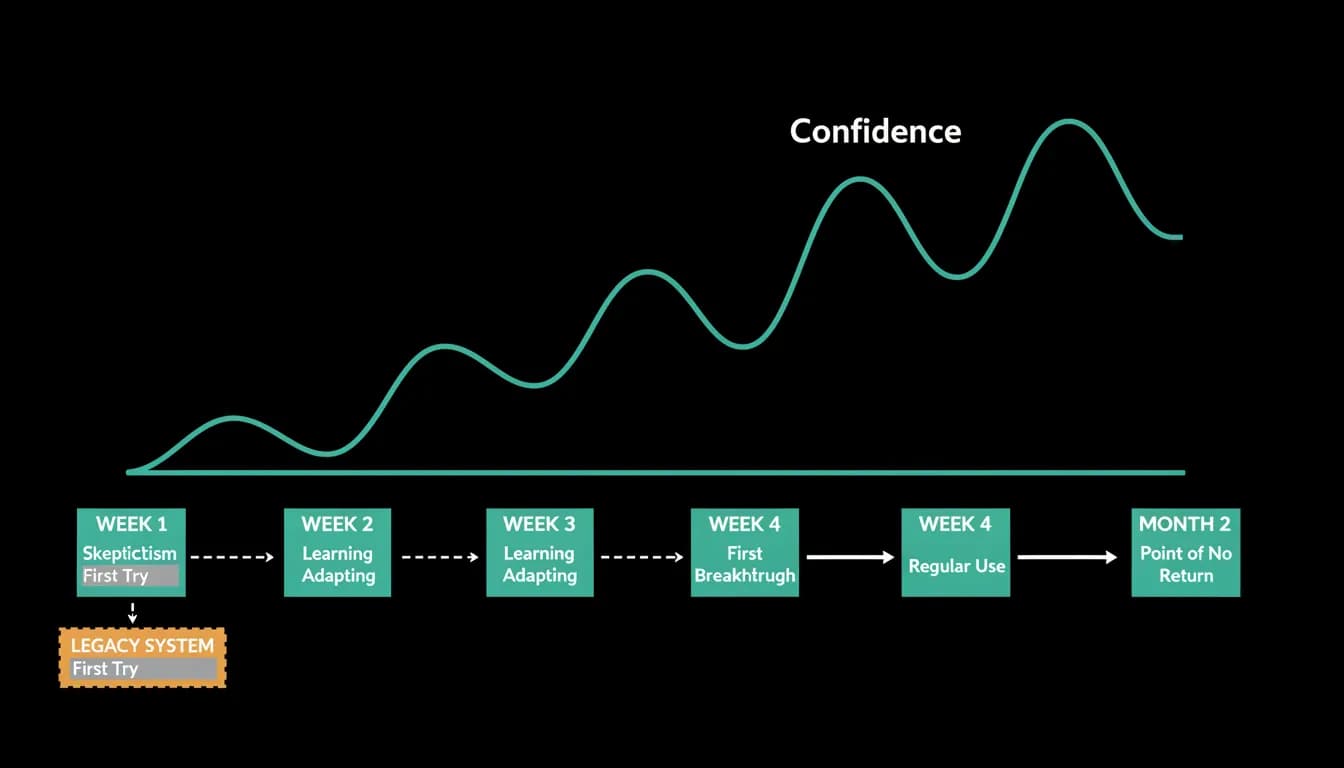
The migration curve follows a consistent pattern. Skepticism during the first use. Cautious experimentation during the second and third uses. A breakthrough moment when the AI produces an outcome the user could not have achieved manually. Deepening engagement as personalization accumulates. And finally, the point of no return when the old way feels unacceptable.
Understanding this curve shapes our product strategy. We do not try to convert power users on the first conversation. We optimize for giving them enough value to come back for a second and third conversation, where the breakthroughs happen naturally. The onboarding is not about flashy demos. It is about consistently delivering results that earn trust incrementally.
The power user who booked twelve trips a year through a meticulous manual process now books twelve trips a year through conversations with our agent. He is faster. He finds better options. And he tells every other power user he knows that they are wasting their time with manual search. That last part, the advocacy of a converted skeptic, is worth more than any marketing we could buy.
Nowah is an AI travel agent that searches and books real flights and hotels through conversation — no filters, no thirty open tabs. Plan your next trip.