How We Measure Recommendation Quality
Relevance scoring, booking conversion, post-trip satisfaction, and feedback loops — the metrics that tell us whether the AI is actually getting better.

An AI that recommends confidently but incorrectly is worse than no AI at all. If the agent consistently picks flights you would not have chosen or hotels that disappoint you, the trust erodes fast. "I could have found something better on my own" is the death sentence for an AI travel product.
So how do we know whether the AI is actually getting better at recommending? We measure it. Obsessively. Across multiple metrics that capture different dimensions of quality.
Relevance scoring: does the pick match what you wanted?
The most immediate quality metric is relevance: did the top recommendation match the traveler's stated and inferred preferences?
We measure this by comparing the attributes of the recommended option against the preference profile used to generate it. If you said you prefer morning flights and the top pick is a morning flight, that is a relevance hit. If your profile indicates you prefer non-stop routes and the recommendation is non-stop, another hit. If you have a negative preference against a specific airline and the AI never recommends it, that is relevance working correctly.
Relevance scoring is a leading indicator. It tells us before the traveler books whether the recommendation is likely to satisfy them. High relevance correlates with high conversion and high satisfaction, but it is not the whole picture.
Booking conversion: are travelers confident enough to commit?
Conversion rate measures whether travelers actually book the recommended options. Curated interfaces with 2-5 options convert meaningfully higher than uncurated search, but within our curated interface, we track which position gets booked (budget, balanced, or comfort) and whether travelers ask for alternative options before booking.
A high rate of "show me more options" requests signals that the initial recommendations were not hitting the mark. A high rate of booking from the first set of recommendations signals strong quality. We track this trend over time to measure whether the ranking engine is improving.
Conversion is a stronger signal than relevance because it reflects actual behavior, not just algorithmic alignment. But it is still an imperfect metric because a traveler might book a suboptimal recommendation simply because they are in a hurry.
Post-trip satisfaction: the ultimate test
The lagging indicator is post-trip satisfaction. Did you enjoy the flight? Was the hotel what you expected? Would you book something similar again?
This is the hardest metric to collect because it happens after the trip, and response rates on post-trip surveys are naturally low. But it is the most honest signal. A traveler who books and then has a terrible experience represents a recommendation failure even if the relevance score and conversion metrics looked good.
We capture satisfaction through direct feedback (post-trip ratings and comments), conversational signals in subsequent interactions ("that hotel was noisy," "great flight last time"), and implicit signals like whether the traveler returns to book again.
Many travelers report that booking is the most stressful part of trip planning. Reducing that stress through quality recommendations is a measurable outcome.
Preference accuracy: inferring the unstated
One of the more nuanced quality metrics is preference accuracy: how well does the AI infer preferences that the traveler never explicitly stated?
If the AI correctly guesses that you prefer hotels in walkable neighborhoods based on your booking pattern, that is a preference accuracy win. If it incorrectly infers that you are budget-focused when you are actually comfort-focused, the recommendations miss.
We measure this by tracking how often inferred preferences align with subsequent explicit statements or booking choices. When the AI infers something and the traveler later confirms it (through action or words), the inference was correct. When the traveler contradicts it, the inference was wrong.
The feedback loops
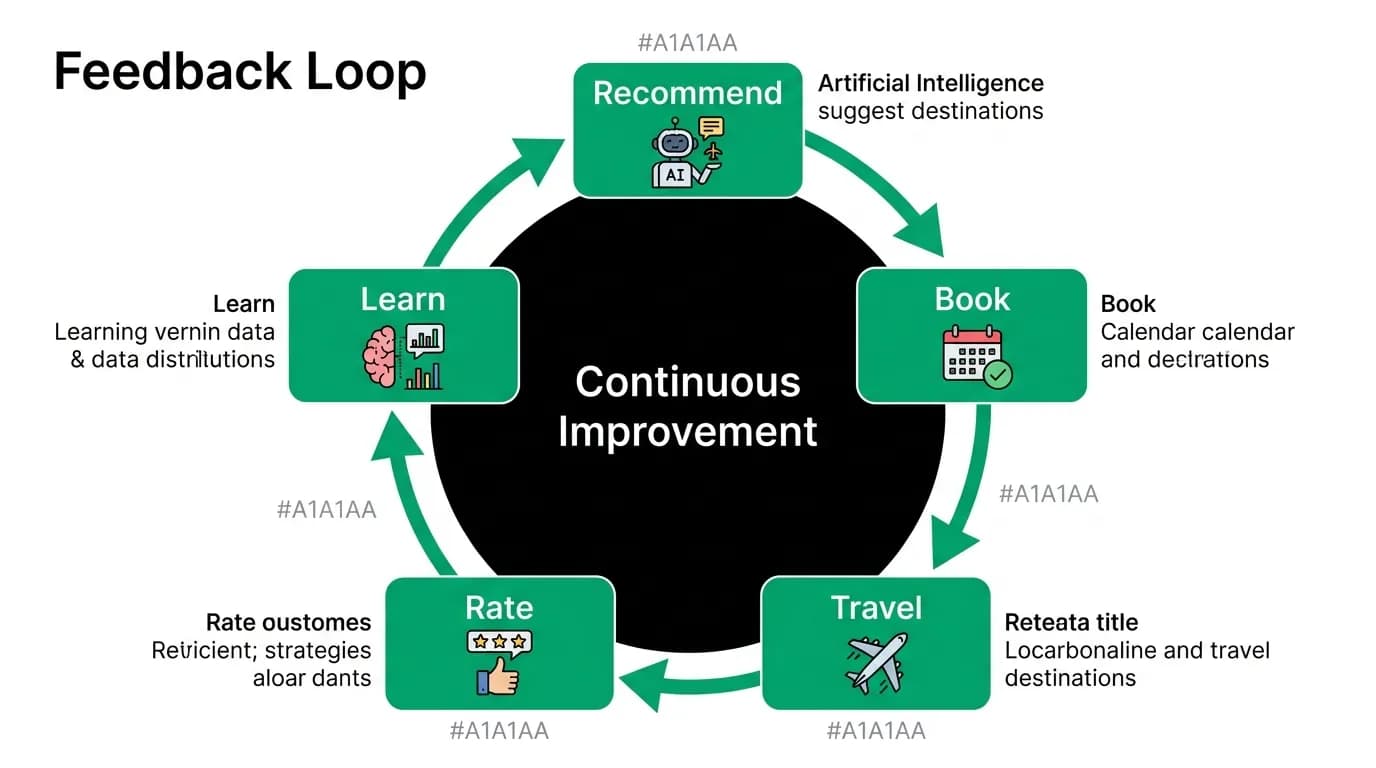
All of these metrics feed back into the system. Relevance failures inform scoring weight adjustments. Low conversion triggers analysis of what the recommendations are missing. Post-trip satisfaction data updates the preference model for that traveler and informs population-level defaults for future cold starts.
The feedback loop is what makes the system improve over time rather than just repeat the same mistakes. Every booking, every conversation, every post-trip comment is a data point that makes the next recommendation slightly better.
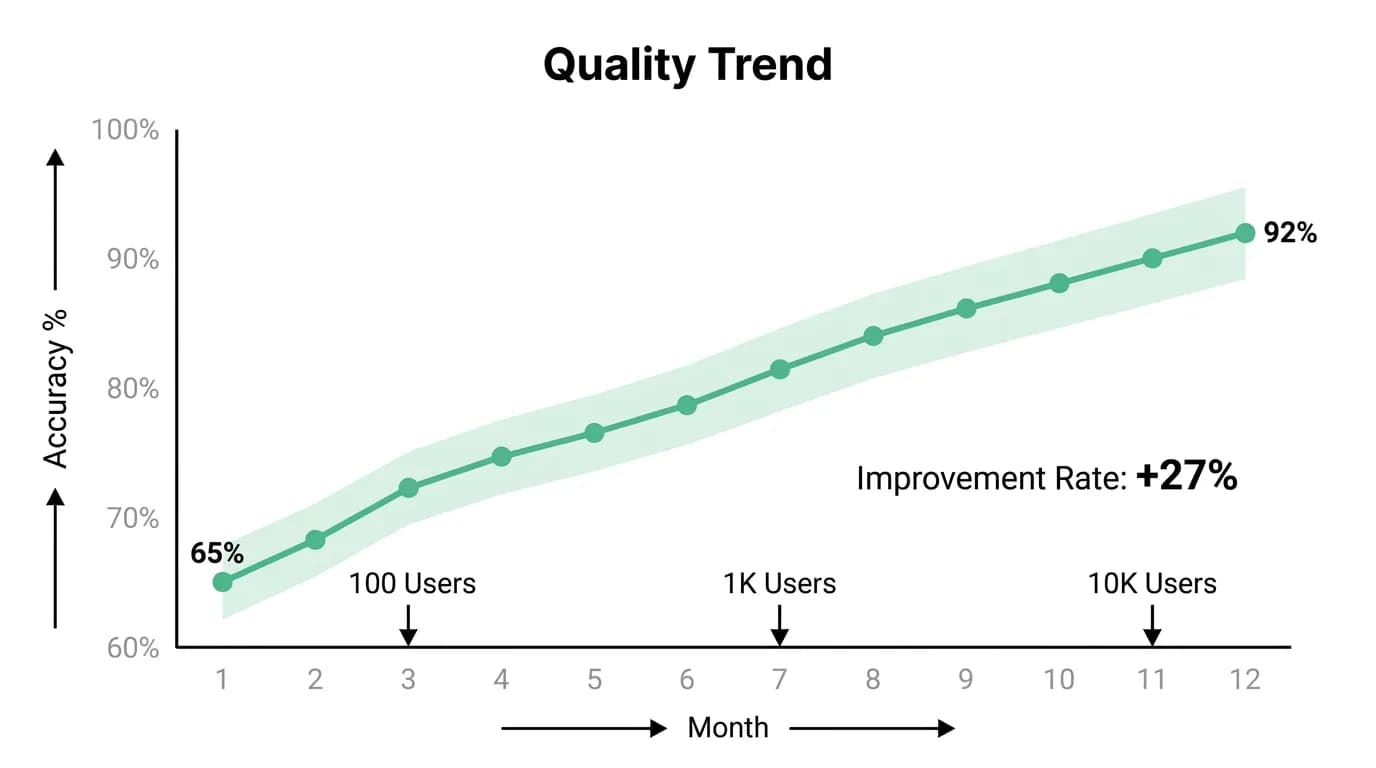
Personalized recommendations drive 2-3x higher booking completion. That multiplier is the output of hundreds of feedback loop iterations, each one tightening the alignment between what travelers want and what the AI recommends.
Share your post-trip feedback with Nowah to make future recommendations better. The loop only works if it closes.
Nowah is an AI travel agent that searches and books real flights and hotels through conversation — no filters, no thirty open tabs. Plan your next trip.