The Feedback Loop: How Post-Trip Data Improves AI
The learning cycle does not end at booking. Satisfaction ratings, conversational feedback, and rebooking patterns feed back to make future trips better.
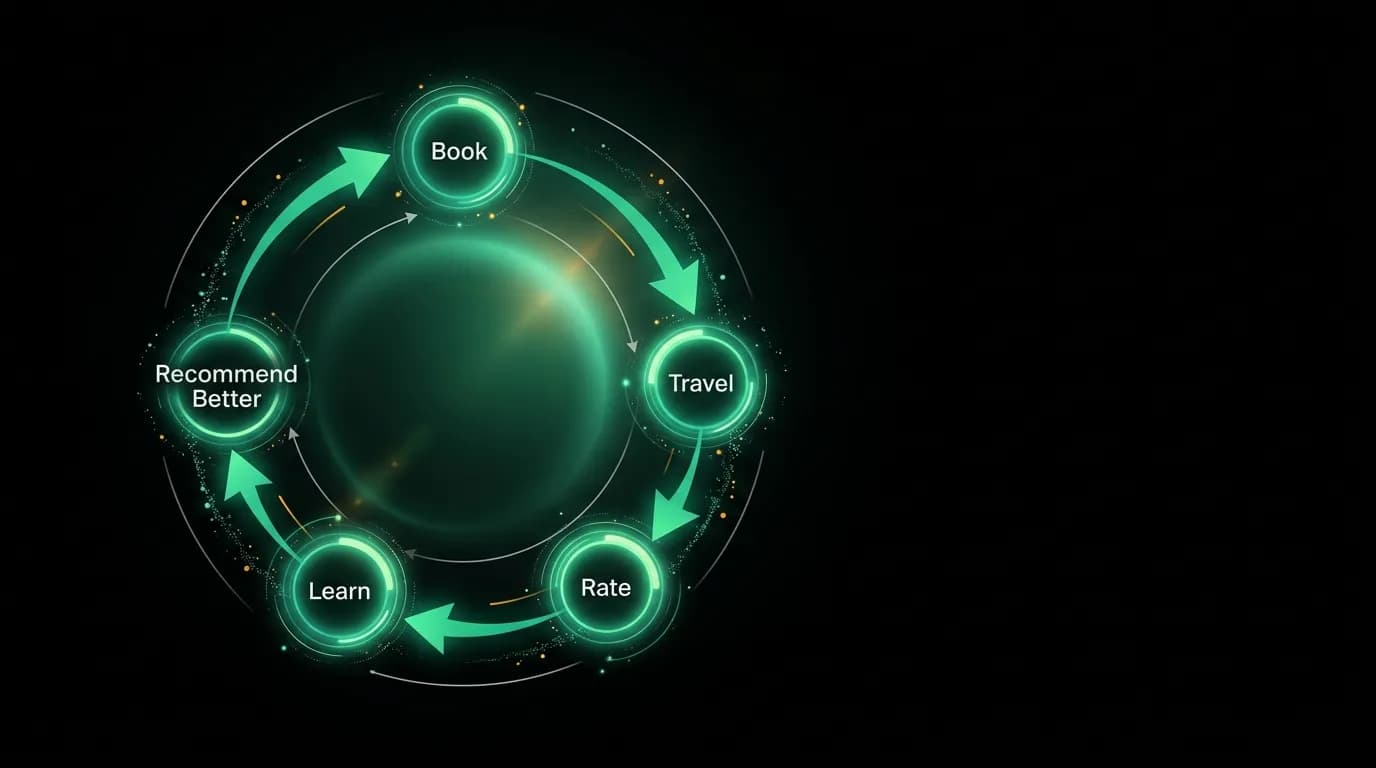
The most important data point in the entire recommendation cycle happens after you land, check into your hotel, eat dinner at the restaurant you found, and come home. It is not the search query. It is not the booking confirmation. It is the answer to a simple question: was the trip actually good?
Most travel platforms stop caring about you the moment the booking is confirmed. Their funnel is complete. Revenue is captured. What happens on the trip is between you and the airline or hotel. But for an AI travel agent that is supposed to get smarter over time, post-trip data is not an afterthought. It is the signal that closes the learning loop and makes the next recommendation better than the last.
What post-trip signals look like
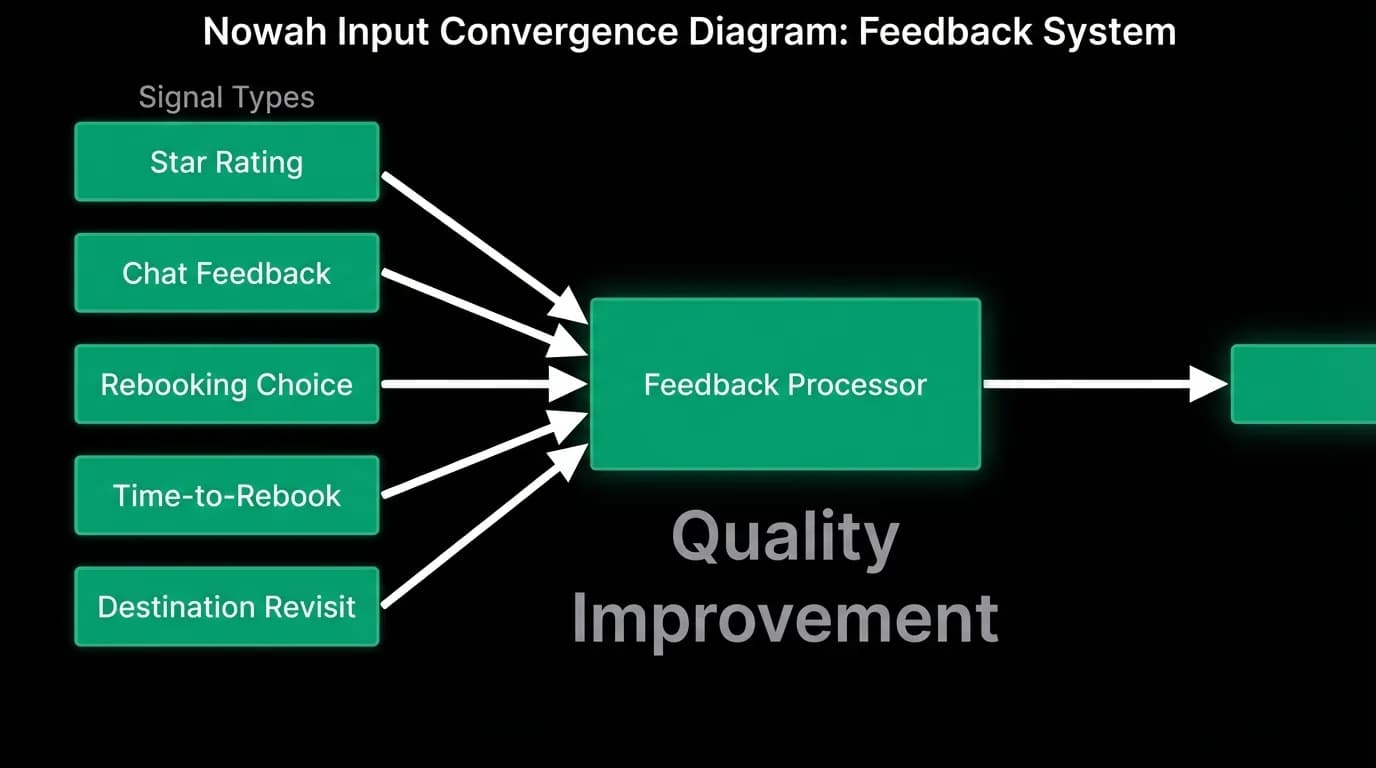
Post-trip feedback comes in several forms, and the richest signals are often the ones the traveler provides without thinking about it.
Explicit ratings are the most direct. When you tell the AI that the hotel was a 4 out of 5 or that the flight experience was poor, that is clean, structured data the system can immediately use. But explicit ratings are also the bluntest instrument. A 4 out of 5 does not tell the system what was good and what was lacking.
Conversational feedback is far richer. When you tell the AI "the hotel was great but the neighborhood felt sketchy at night" or "the flight was fine but I wish I had booked an aisle seat," those natural-language signals contain specific, actionable information. The AI extracts preferences from these statements and stores them in memory for future trips. "Neighborhood safety matters to this traveler" becomes a weighted factor. "Aisle seat preference" gets reinforced.
Rebooking patterns reveal preference validation or drift. If you visited a destination and then booked a return trip within a year, that is a strong positive signal about the destination. If you tried a new airline and then went back to your usual carrier on the next trip, that suggests the experiment did not satisfy. These behavioral signals speak louder than any rating because they reflect actual decisions, not reported preferences.
The difference between booking success and trip success
This distinction matters more than most people realize. A "successful" booking in traditional analytics means the traveler completed the purchase. Conversion happened. But conversion is a leading indicator — it measures whether the traveler was persuaded to buy, not whether the purchase was good.
Trip success is the lagging indicator that actually measures recommendation quality. A flight that looked great on paper but had a terrible on-time record. A hotel that photographed well but had paper-thin walls. A destination that was beautiful but happened to be in monsoon season during the visit. All of these represent bookings that converted successfully but trips that disappointed.
The gap between booking success and trip success is where recommendation quality lives. A system optimized purely for conversion will learn to show options that people buy. A system that incorporates post-trip feedback will learn to show options that people enjoy. Those are not always the same thing, and the difference compounds over time.
How satisfaction data feeds back into personalization
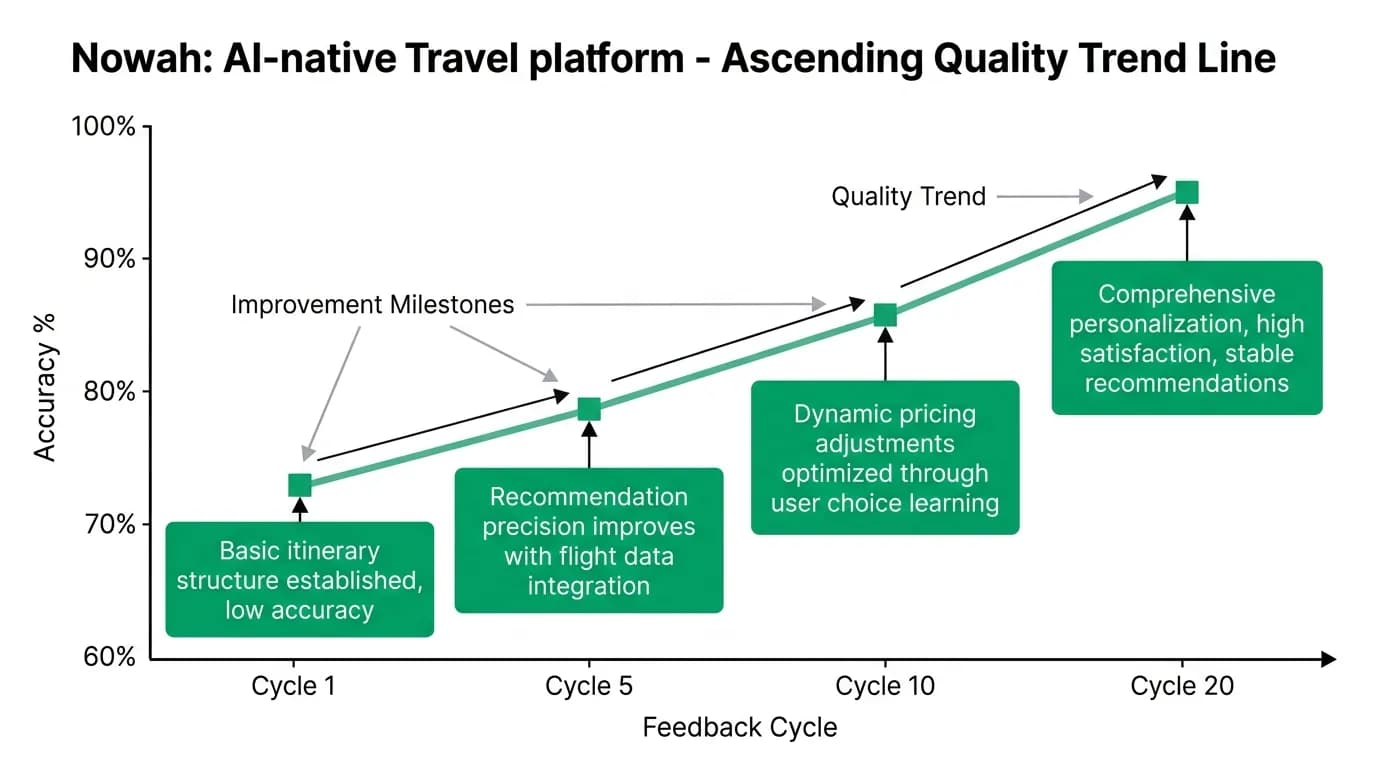
When post-trip feedback enters the system, it updates the traveler's preference profile in several ways. Positive feedback reinforces existing preference weights. If you said you prefer boutique hotels and then rated a boutique hotel highly, the preference gets stronger. Negative feedback creates corrective signals. If a hotel recommendation missed the mark, the system examines why — was it the location, the amenity set, the price-value ratio? — and adjusts the relevant scoring dimensions.
The feedback also contributes to aggregate intelligence. Your individual experience at a specific hotel informs the system's understanding of that property for all travelers. If multiple travelers report that a hotel's listed amenities do not match reality, or that a particular flight route has consistent delay problems, those aggregate signals improve recommendations for everyone.
This dual feedback path — individual personalization and collective intelligence — is what makes the learning loop genuinely powerful. Each traveler's experience makes the AI smarter for that specific traveler and incrementally smarter for everyone.
Building the virtuous cycle
The virtuous cycle works like this. Better data produces better recommendations. Better recommendations produce more bookings. More bookings produce more post-trip data. More post-trip data produces better data. Each revolution of the cycle improves recommendation quality.
The cycle has a cold-start challenge — the AI needs some data before it can make good recommendations, and it needs good recommendations before travelers will provide data. This is solved through a combination of onboarding preferences (explicit signals from the start), aggregate intelligence from the broader user base, and a rapid learning curve where even a single completed trip provides meaningful feedback.
After several trips, the system has enough data to make recommendations that feel genuinely personal. After many trips, it has enough to anticipate preferences the traveler has not even articulated. That progression from "pretty good guess" to "knows me better than I expected" is the feedback loop in action.
Share your trip experience with Nowah. Every piece of feedback — a rating, a comment, even a rebooking decision — makes the AI smarter for your next trip and for every traveler who follows.
Nowah is an AI travel agent that searches and books real flights and hotels through conversation — no filters, no thirty open tabs. Plan your next trip.