Voice-First Travel Booking: Why Talking to Book Will Replace Typing to Search
Voice recognition exceeds 97% accuracy. Speaking your trip while driving, walking, or packing is faster than any search form. The future of booking is vocal.
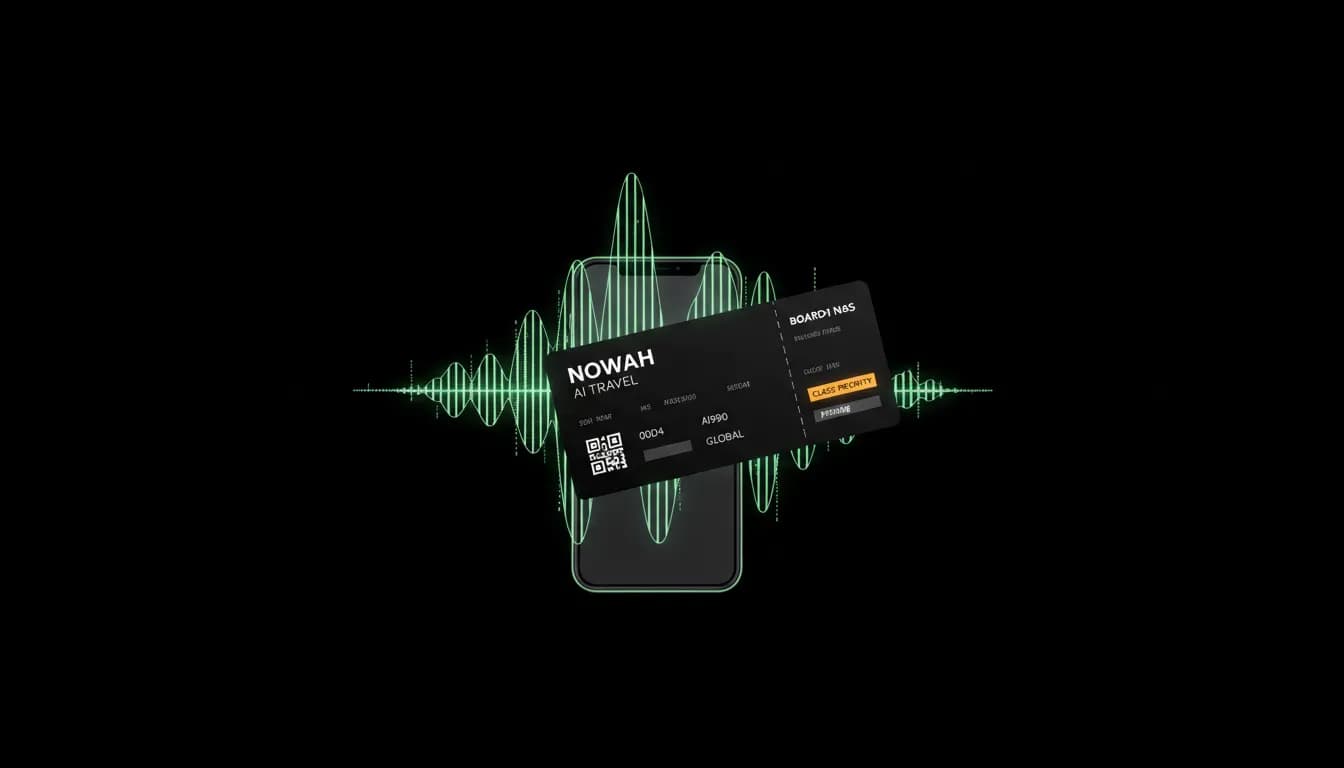
"Book me a flight to Chicago next Tuesday, aisle seat, Delta if possible, arriving before noon."
Spoken while packing a suitcase. Total time: 6 seconds. The AI agent processes the request, searches flights matching all four constraints, and responds with options before the suitcase is zipped.
Now try the same request on a traditional booking platform. Open the website. Select origin. Select destination. Choose the date. Click search. Wait for results. Filter by airline. Sort by arrival time. Scan for aisle seats. Click through to fare details. Total time: 3 to 5 minutes. And you need both hands free and your eyes on a screen.
Voice-first travel booking is not a gimmick. It is the natural evolution of how humans interact with complex systems. We have always communicated complex requests through speech. The only reason travel booking used forms and buttons was that computers could not understand natural language. Now they can — with 97 percent or higher accuracy in major languages. The form-based paradigm is a relic of technological limitation, not a design choice.
The accuracy tipping point
Voice recognition crossed the usability threshold several years ago, but 2026 marks the point where accuracy is high enough for transactional applications. There is a significant difference between voice that works well enough for music requests and voice that works well enough for booking a $1,200 flight.
At 97 percent accuracy for major languages, voice recognition handles the specifics that travel booking requires: city names, dates, airline names, airport codes, hotel names, and numerical constraints like budgets and times. The remaining 3 percent error rate is handled by confirmation: "I found a Delta flight to Chicago O'Hare arriving at 11:15 AM on Tuesday. Aisle seat available in row 14. $287. Shall I book it?"
This confirmation step makes voice booking functionally error-free. The agent transcribes, processes, searches, and confirms. If anything was misheard, the confirmation catches it before any money changes hands.
When voice wins
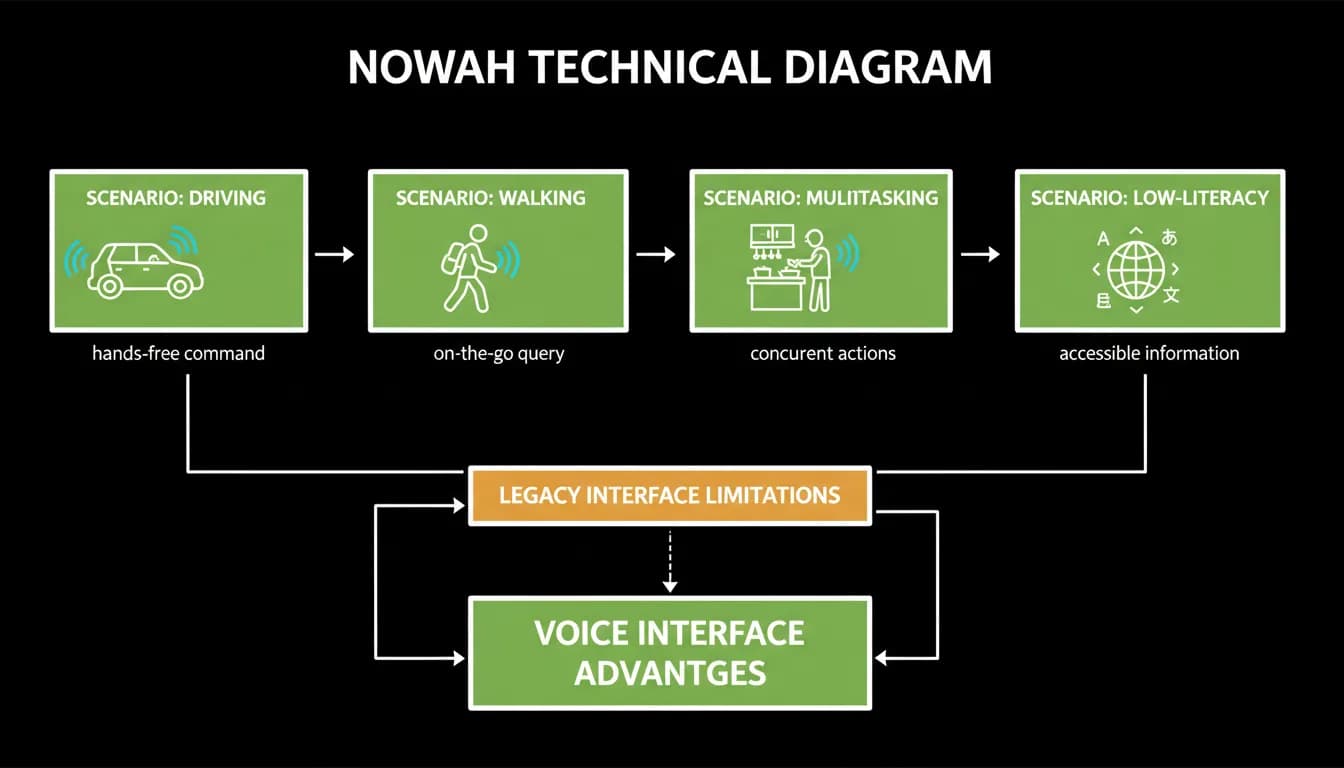
Voice booking is not better than typing in every context. It is dramatically better in specific, common contexts that together represent the majority of booking interactions.
Driving. You are in the car heading to work when you realize you need to book a flight for next week. Typing on a phone while driving is dangerous and illegal in most jurisdictions. Voice is the only safe option. "Find me round-trip flights from Atlanta to Denver, leaving Friday, returning Sunday, under $400." The agent searches and reads back options. You confirm. Booked while driving safely.
Multitasking. You are cooking dinner when your partner mentions a weekend trip idea. You do not need to stop what you are doing, wash your hands, dry them, pick up your phone, and navigate to a booking app. You just speak. "What would flights and a hotel in Savannah cost for this Saturday and Sunday?" The agent provides a quick estimate. The conversation continues. Travel planning happens in the gaps between other activities.
Walking. You are walking between meetings when you realize you need to change your hotel reservation. Typing on a phone while walking is awkward and slow. Voice is natural. "Can you change my hotel in Boston from the 15th to the 16th? Same hotel." Done.
Packing. You are packing for a trip and realize you forgot to book a rental car. Both hands are occupied. "Add a rental car to my Austin trip, picking up Wednesday afternoon at the airport, dropping off Saturday morning." Seventy-three percent of last-minute bookings happen on mobile — and many of those happen when the traveler's hands and eyes are occupied with other tasks.
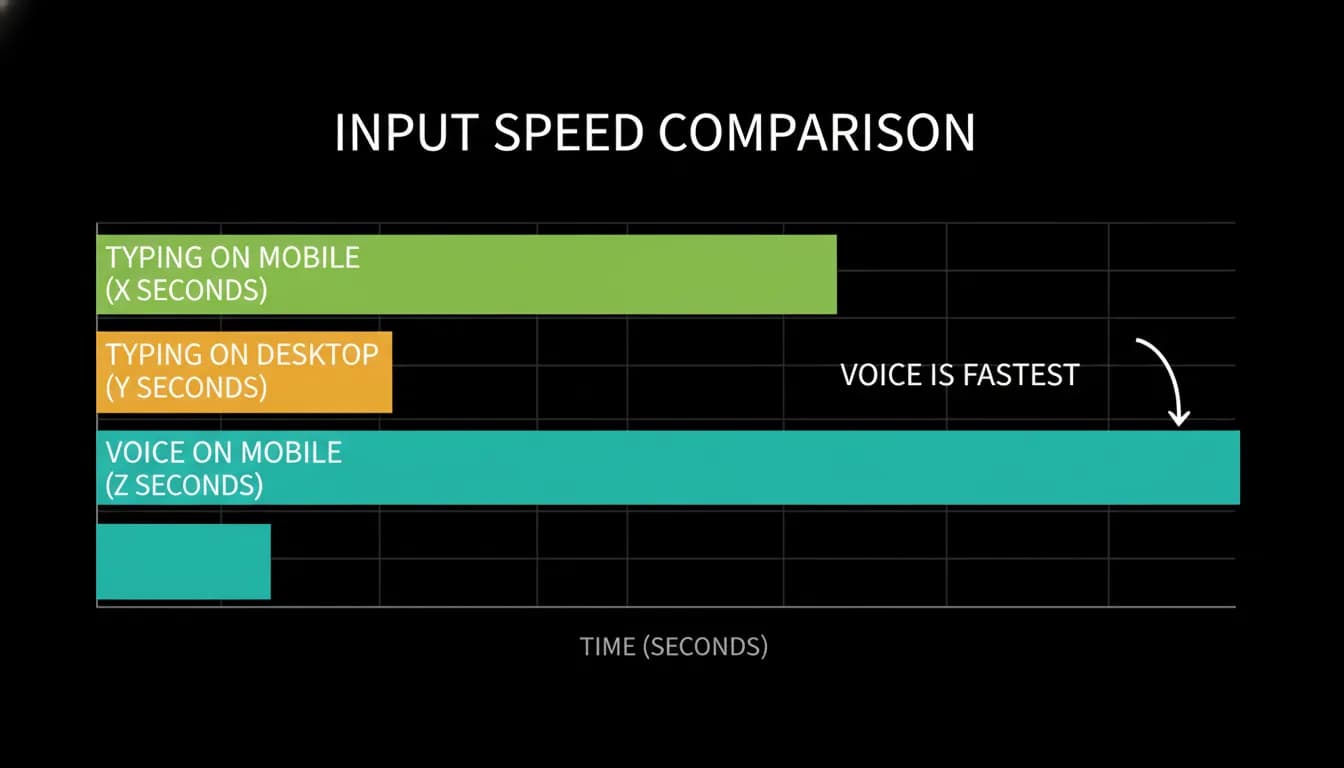
Voice booking reduces input time by 40 percent compared to typing on mobile. This is not a marginal improvement. It is the kind of speed gain that changes behavior.
Beyond dictation
The most common misconception about voice booking is that it is just dictation — speaking what you would otherwise type. It is not. Voice enables a fundamentally different interaction pattern.
When you type on a booking platform, you are constrained by the form. Origin field. Destination field. Date field. Number of passengers field. Each field is atomic. Your request is decomposed into pieces that you enter one at a time.
When you speak, you express a complete thought. "I need to get four people from Boston to Miami the week after Christmas, flexible on exact dates, prefer nonstop but will take one stop if it saves more than $100 per person." That single sentence contains eight constraints. Entering them through a form requires navigating multiple screens and dropdowns. Speaking them requires one breath.
This is not just faster. It is more natural. It matches how you actually think about travel. You do not think: "Origin: Boston. Destination: Miami. Passengers: 4. Dates: flexible. Stops: prefer nonstop." You think about the trip as a whole, with multiple interrelated requirements expressed together.
AI agents that process voice input handle this holistic expression natively. They extract all constraints from the natural language, apply them simultaneously, and return results that satisfy the complete request. The voice interface and the AI processing are complementary — voice provides the natural input, AI provides the natural processing.
Voice plus memory
Voice booking becomes even more powerful when combined with agentic memory. The AI agent already knows your preferences, so voice requests can be abbreviated.
"Book the usual for Chicago next week." The agent knows "the usual" means your preferred airline, aisle seat, morning departure, and the hotel near your office. The entire booking — flights and hotel — can be executed with a five-word voice command.
"Same as the Denver trip but make it Portland." The agent recalls your Denver trip configuration and applies it to Portland — similar hotel category, same car rental preference, same activity style. You describe what you want by reference to past trips rather than by specifying every parameter.
This combination of voice speed and memory depth creates an interaction model that is faster than any visual interface can ever be. You cannot click buttons faster than you can speak a sentence. And when the sentence leverages accumulated memory, a single sentence does the work of dozens of clicks.
Multilingual voice
In markets with multiple languages and complex scripts, voice-first booking is not a convenience feature. It is an accessibility feature.
India has 22 officially recognized languages and dozens of scripts. Typing in Hindi, Tamil, Bengali, or Kannada on a standard smartphone keyboard is significantly slower than typing in English — and significantly slower than speaking. For 800 million or more potential travelers in India and Southeast Asia who prefer voice over text input, voice-first booking is the difference between an accessible product and an unusable one.
Forty-five percent of Gen Z prefers voice input for search queries globally. In mobile-first markets where data is expensive and screens are small, the percentage is even higher. The booking platform that handles voice across languages will capture markets that form-based platforms structurally cannot reach.
Try it
The next time you need to book a flight, try speaking instead of typing. Use an AI agent that supports voice input. Say your complete request in one sentence — destination, dates, preferences, constraints, everything. Notice how much faster it feels compared to navigating fields and dropdowns.
Then try it while doing something else — walking, cooking, packing. Notice how voice booking fits into your life in ways that screen-based booking cannot.
The form-based booking paradigm lasted 25 years because computers could not understand speech. They can now. The transition from typing to talking is not a question of if. It is a question of how soon.
Nowah is an AI travel agent that searches and books real flights and hotels through conversation — no filters, no thirty open tabs. Plan your next trip.