The Next 10 Features on the Roadmap (and Why)
A transparent roadmap — upcoming launches, the reasoning behind prioritization, and how we balance traveler requests with strategic direction. Your input welcome.
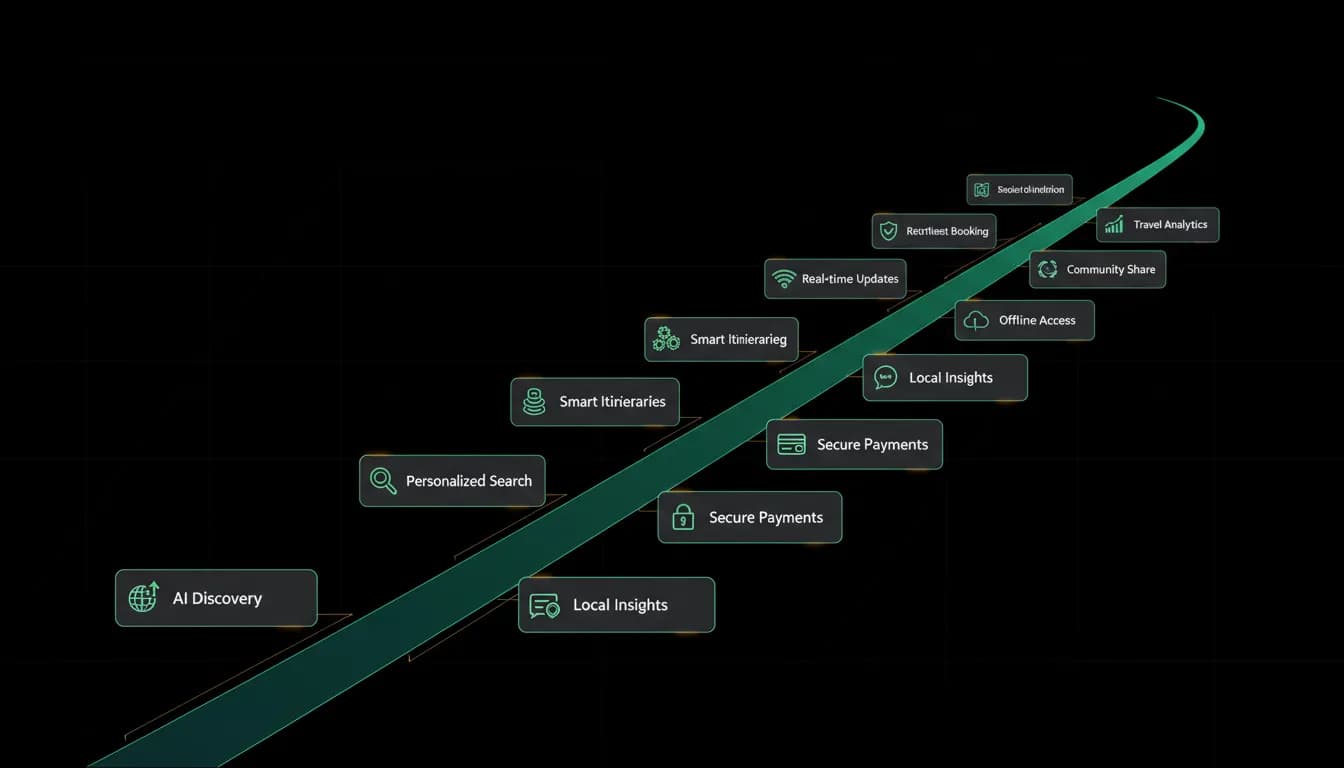
We are publishing our roadmap for a reason most companies avoid: accountability. Once you tell your travelers what you are building, they expect you to build it. That pressure is exactly what we want. It keeps us honest about priorities and forces us to justify every item on the list.
Here are the next ten features we are launching, ranked by priority, with the reasoning behind each one.
Why we are telling you before it ships
Most product teams guard their roadmaps. The reasoning is understandable: plans change, timelines slip, and published commitments become liabilities. We publish anyway because the benefits outweigh the risks.
Transparency builds trust. Travelers who see a feature they requested on the roadmap know they are being heard. Travelers who see a feature they did not expect get excited about the product's direction. And travelers who disagree with the prioritization tell us, which is the most valuable feedback of all.
We publish quarterly roadmaps with monthly progress updates. If a feature slips, we explain why. If a feature gets reprioritized, we explain the reasoning. The goal is not to never change the plan. It is to always explain the changes.
Prioritization framework
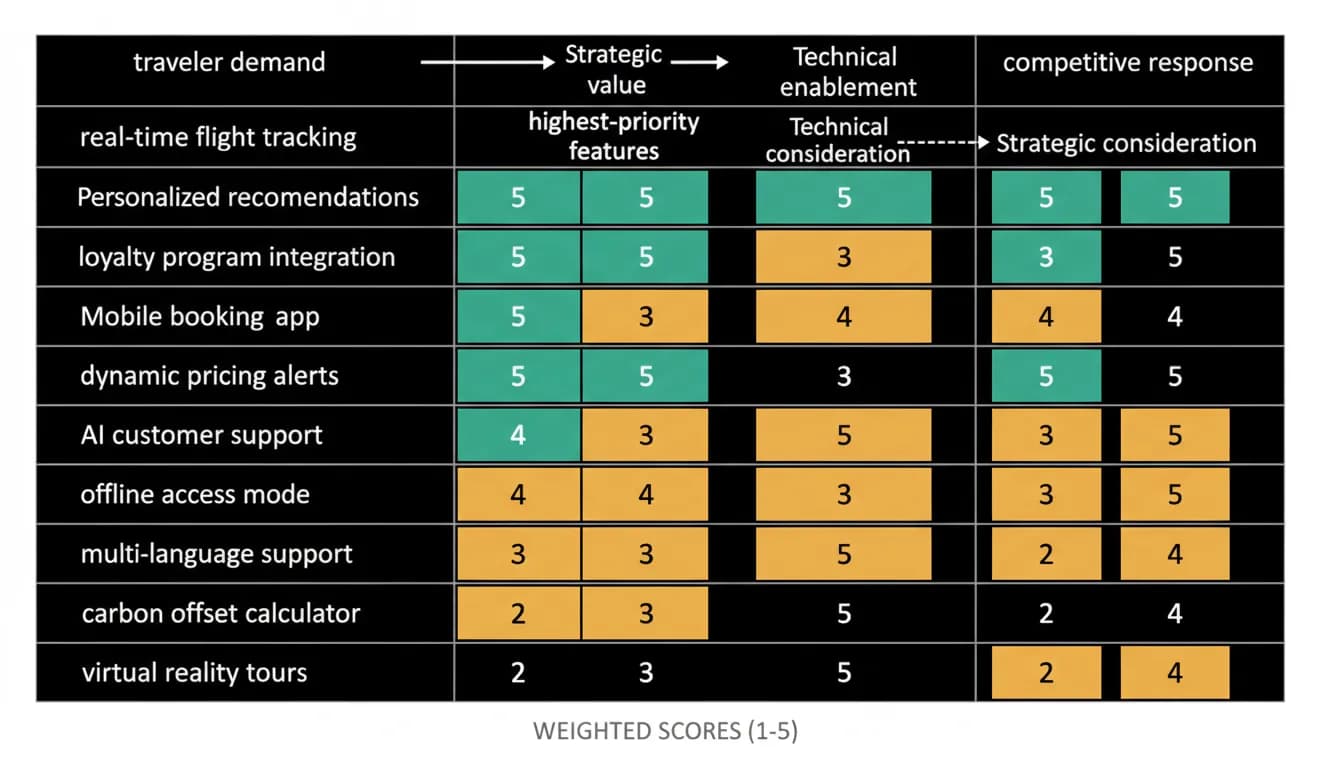
Every feature on this list was scored against four criteria.
Traveler demand accounts for 40 percent of the score. This comes from in-app feedback, App Store reviews, social media requests, and beta program input. Demand is measured by frequency of request and intensity of expressed need.
Strategic value accounts for 30 percent. This includes market positioning, competitive differentiation, and long-term platform capabilities. Some features are not heavily requested but are strategically essential for the platform's direction.
Technical enablement accounts for 20 percent. Some features unlock other features. They are valuable not just for what they deliver directly but for what they make possible downstream.
Competitive response accounts for 10 percent. If a competitor ships a capability that travelers expect from us, we adjust priority accordingly. But competitive response is the smallest weight because reactive roadmaps produce mediocre products.
The ten features
One: Group travel coordination. The most requested feature in our feedback channels. Travelers want to plan and book trips with friends and family through a single conversation. The agent will handle preference aggregation across multiple travelers, find flights and hotels that work for everyone, and manage split payments. This feature depends on our existing multi-city and trip management capabilities, which is why it comes now rather than earlier.
Two: [Proactive trip management](/blog/launching-proactive-trip-management-ai-acts-alone). The agent will monitor booked trips and take action without being asked. Flight delayed? The agent finds alternatives and notifies you with options. Price drop on a watched route? The agent alerts you and can rebook if you have opted in. Weather disruption at your destination? The agent suggests itinerary adjustments. This feature represents the shift from reactive to ambient AI.
Three: Enhanced voice interaction. Voice is already supported for input, but we are expanding it to full voice-driven booking conversations. The agent will speak responses, handle multi-turn voice dialogue, and support hands-free trip management. This is particularly valuable for travelers who are driving, walking through airports, or simply prefer talking over typing.
Four: [International expansion](/blog/launching-new-markets-international-expansion) to three new markets. Each new market requires payment localization, language support, and cultural adaptation of the agent's communication style. We are prioritizing markets based on travel volume, payment infrastructure readiness, and the strength of our local partner ecosystem.
Five: Enterprise travel policy engine. Business travelers have been using the platform with personal accounts. The enterprise feature adds corporate policy enforcement: budget limits, preferred vendor rules, and approval workflows. The same AI agent handles the booking with an additional policy layer that ensures compliance without adding friction.
Six: Offline itinerary access. Travelers in areas with poor connectivity need access to their trip details without an internet connection. Offline mode will cache itineraries, boarding passes, hotel confirmations, and essential trip information locally on the device.
Seven: Advanced loyalty and rewards integration. Travelers want the agent to consider their airline and hotel loyalty programs when making recommendations. The agent will factor in loyalty status, point balances, and program-specific benefits when ranking options.
Eight: Travel journal and trip history. A feature for documenting trips with photos, notes, and ratings. The journal integrates with the trip timeline so travelers can build a record of their travel experiences over time. This feature emerged from beta feedback as an unexpectedly passionate request.
Nine: Real-time translation assistance. The agent will provide real-time translation support during trips, helping travelers communicate in unfamiliar languages through the chat interface. This extends the agent's utility beyond booking into the travel experience itself.
Ten: Public API and developer tools expansion. Expanding the developer platform with new endpoints, better documentation, webhooks for integration partners, and sandbox environments for testing. The developer community is growing, and the platform infrastructure needs to scale with it.
What did not make the list
Several features were seriously considered and deferred. A full social travel network was proposed and deprioritized because it would dilute focus from the core booking experience. A travel insurance integration was considered but deferred until our booking volume justifies the partnership investment. A carbon offset calculator was prototyped but needs more data partnerships before it can provide accurate estimates.
Deferred does not mean rejected. These features are on the extended roadmap and will be revisited in future prioritization cycles.
How traveler feedback shaped this list
Group travel and proactive trip management are the top two items because travelers asked for them most frequently and most passionately. The travel journal feature jumped from outside the top ten to number eight after private testers expressed strong enthusiasm. Enterprise capabilities moved up after multiple business travelers contacted us directly to ask about corporate support.
The feedback channels that influenced this list include in-app feedback submissions, App Store and Play Store reviews, social media conversations, and direct communication from private test community members. Every channel contributes signal, but the most actionable feedback comes from travelers who describe specific use cases rather than abstract wishes.
Feature dependencies
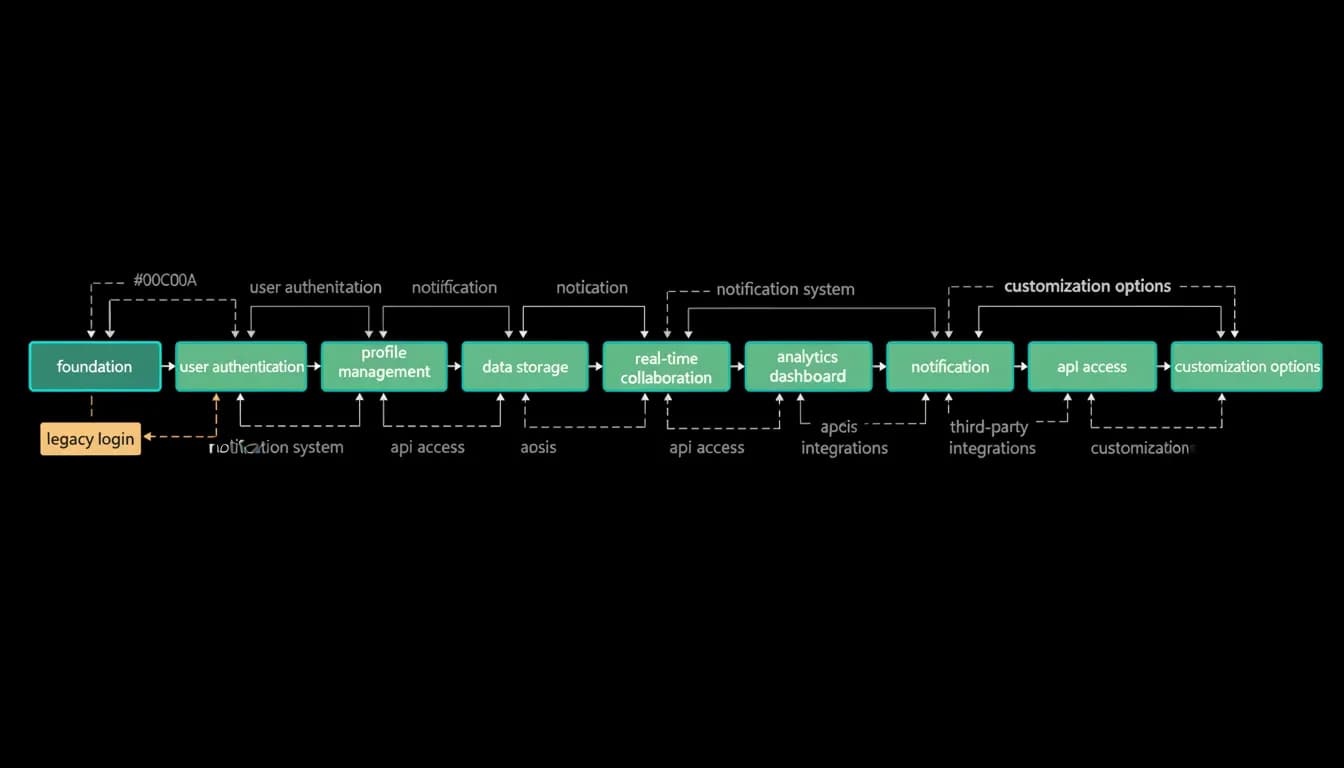
The features are ordered partly by dependency relationships. Group travel depends on the existing multi-city search and trip management features being stable and mature. Proactive trip management depends on the background monitoring infrastructure that we have been building over the past several months. Enterprise policy enforcement depends on the booking review flow being extensible.
These dependencies mean that the order is not purely a priority ranking. Some features could theoretically be higher priority but cannot be built until prerequisite capabilities are in place.
How to influence the roadmap
We actively seek feedback on this roadmap. The features, their priority, and their timing are all subject to change based on what travelers tell us.
You can influence the roadmap through in-app feedback, which routes directly to our product team. Through App Store and Play Store reviews, which we read and categorize daily. Through our private test program, which gives you early access to upcoming features and a direct feedback channel to the engineering team. And through social media, where we monitor conversations about AI travel and engage with travelers who share their experiences and requests.
The roadmap is a living document. What you see here is our current best understanding of what to build next. Your input makes it better.
Nowah is an AI travel agent that searches and books real flights and hotels through conversation — no filters, no thirty open tabs. Plan your next trip.