Preparing for Product Hunt: A Pre-Launch Playbook for AI Travel
A pre-launch Product Hunt plan — preparation timeline, community engagement, vote dynamics to expect, and mistakes we are designing against.
Product Hunt days are operational, not vibes. Timing, maker comments, asset quality, and support readiness matter more than a clever tagline. We have not run the public PH day yet — this is the playbook we are executing against so launch day is boring for engineering and loud for distribution.
The 30-day preparation
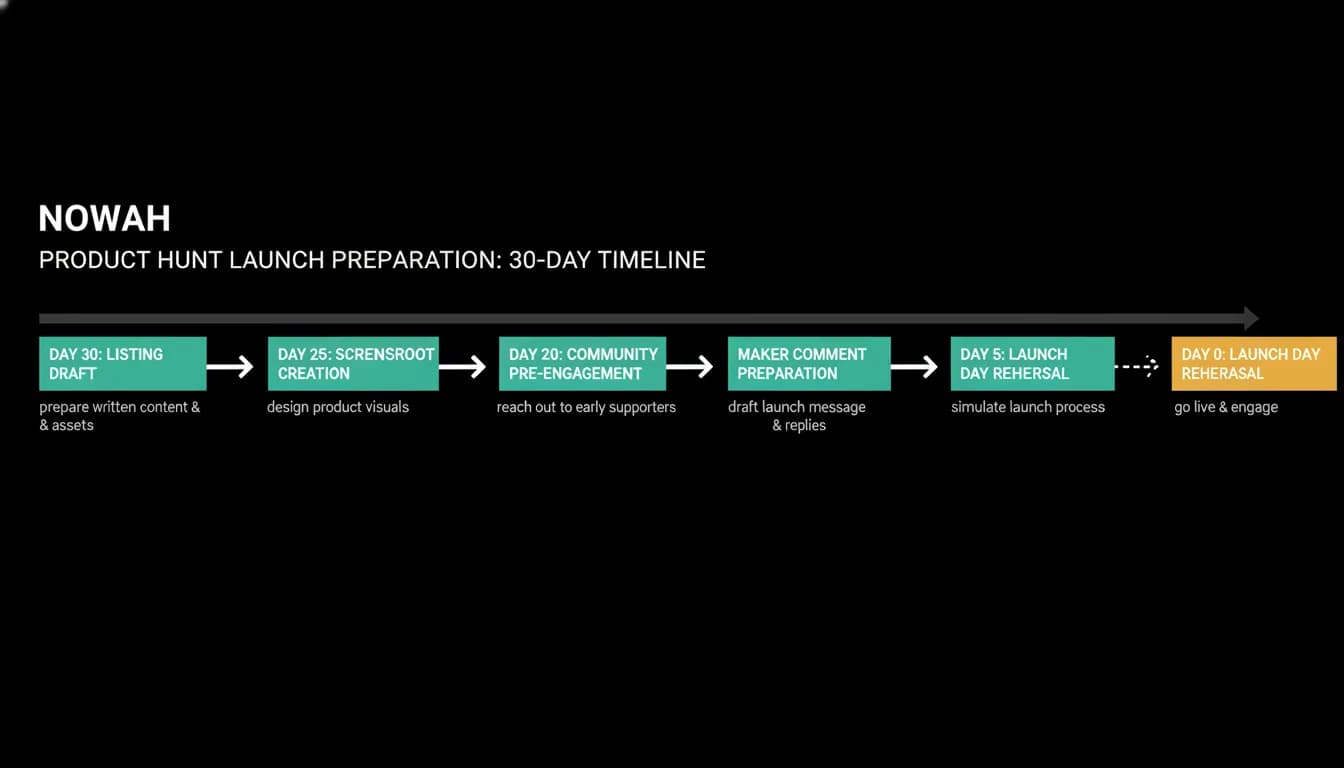
Our preparation started a month before launch day. The first two weeks focused on the listing itself: crafting the tagline, writing the description, creating screenshots and a demo video, and preparing the maker comment that would be our first interaction with the Product Hunt community.
The tagline went through eleven iterations. We started with something clever and ended with something clear. "AI travel agent that actually books flights" won over "your personal travel concierge" because specificity outperformed aspiration. Product Hunt users are sophisticated enough to recognize vague positioning and skeptical enough to dismiss it.
The last two weeks focused on community preparation. We reached out to private testers and asked them to share their genuine experiences on launch day. We prepared answers to the questions we anticipated. We created demo videos for specific use cases so we could respond to comments with relevant content instead of generic links.
What drove engagement
Demo videos in the comments drove three times more upvotes than text responses. When someone asked "can it handle multi-city trips?" we replied with a 30-second screen recording showing the agent building a Paris-Rome-Barcelona itinerary. That single comment thread generated more engagement than our entire description.
Responding to every comment mattered more than we expected. Product Hunt rewards active makers, and the community notices when makers are present and engaged. We responded to every question, every suggestion, and every piece of feedback within minutes during the launch window.
Real-time metrics sharing was surprisingly effective. We posted our live user count and first booking from a Product Hunt visitor, and the community loved the transparency. People root for launches that feel honest.
Traffic patterns and conversion
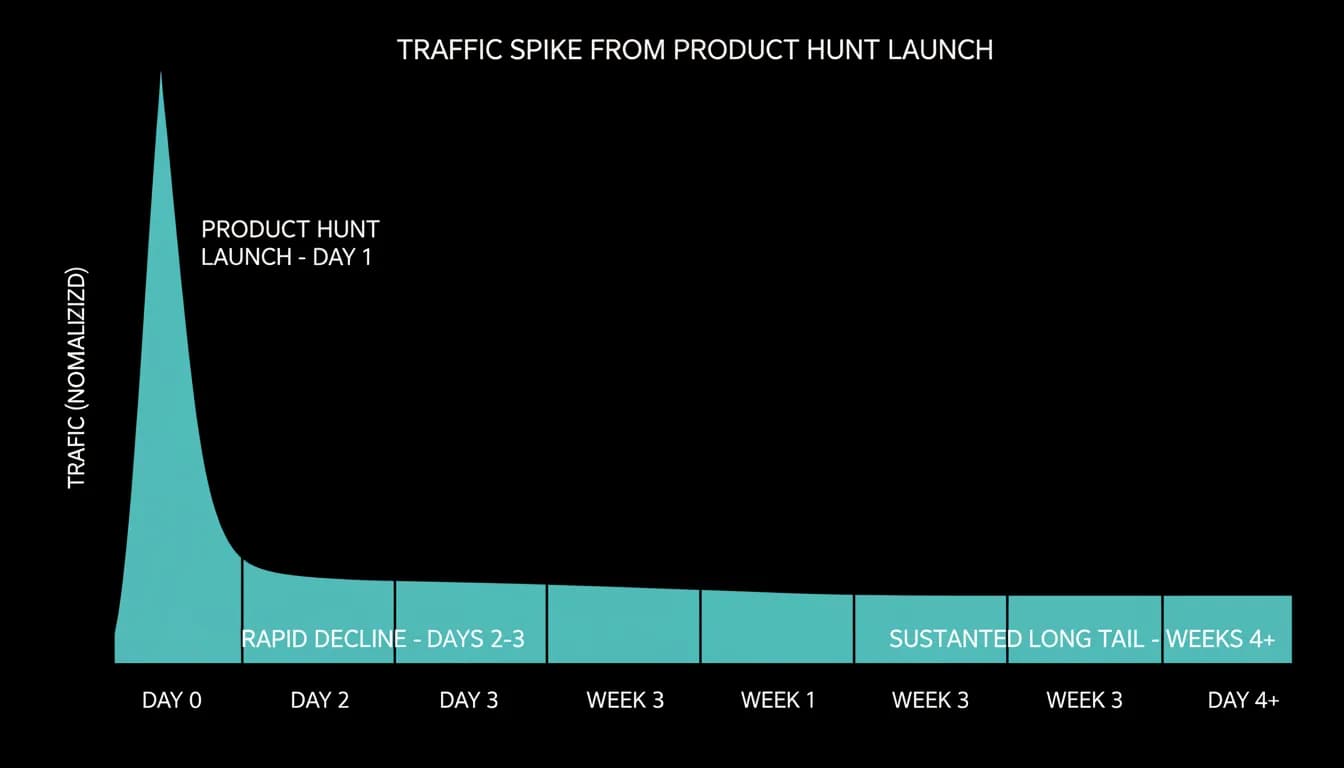
Product Hunt traffic follows a predictable pattern: a massive spike on day one, a sharp decline on days two and three, and then a sustained long tail that lasted weeks in our case. The day-one spike stress-tested our infrastructure. Our rate limits held, but just barely, and we adjusted the burst allowances after the launch based on what we observed.
The traffic from Product Hunt was developer-heavy. These users were more technically curious, more likely to explore the agent's capabilities beyond basic booking, and more likely to provide detailed feedback. They were also harder to convert to actual bookings because many were evaluating the product professionally rather than planning personal travel.
Our onboarding completion rate from Product Hunt traffic was lower than organic App Store traffic but higher than social media campaigns. Product Hunt users expected a polished product and were less tolerant of friction in the onboarding flow.
Five things we would change
First, we would prepare more demo videos in advance. We spent launch day recording screen captures in response to questions when we should have had a library ready.
Second, we would coordinate the Product Hunt launch with a complementary blog post that went deeper on the technical architecture. The developer-heavy audience wanted more depth than the Product Hunt listing could provide.
Third, we would start community engagement on Product Hunt earlier, commenting on and supporting other launches in the weeks before our own.
Fourth, we would set more realistic expectations for day-one conversion to actual bookings. Product Hunt drives awareness and sign-ups, not immediate purchase behavior.
Fifth, we would plan the post-launch content calendar before launch day instead of scrambling to maintain momentum in the days that followed. The long tail of Product Hunt traffic is valuable, but only if you have content to sustain it.
Nowah is an AI travel agent that searches and books real flights and hotels through conversation — no filters, no thirty open tabs. Plan your next trip.