The Quiet Revolution: How AI Changes Travel Distribution
Airlines and hotels spent decades building distribution systems. AI agents are about to make most of them irrelevant. Here is the new value chain.

The travel distribution system is one of the most complex supply chains in consumer commerce. It was built over decades, layer by layer, each intermediary adding cost. AI agents are about to collapse it.
How distribution works today
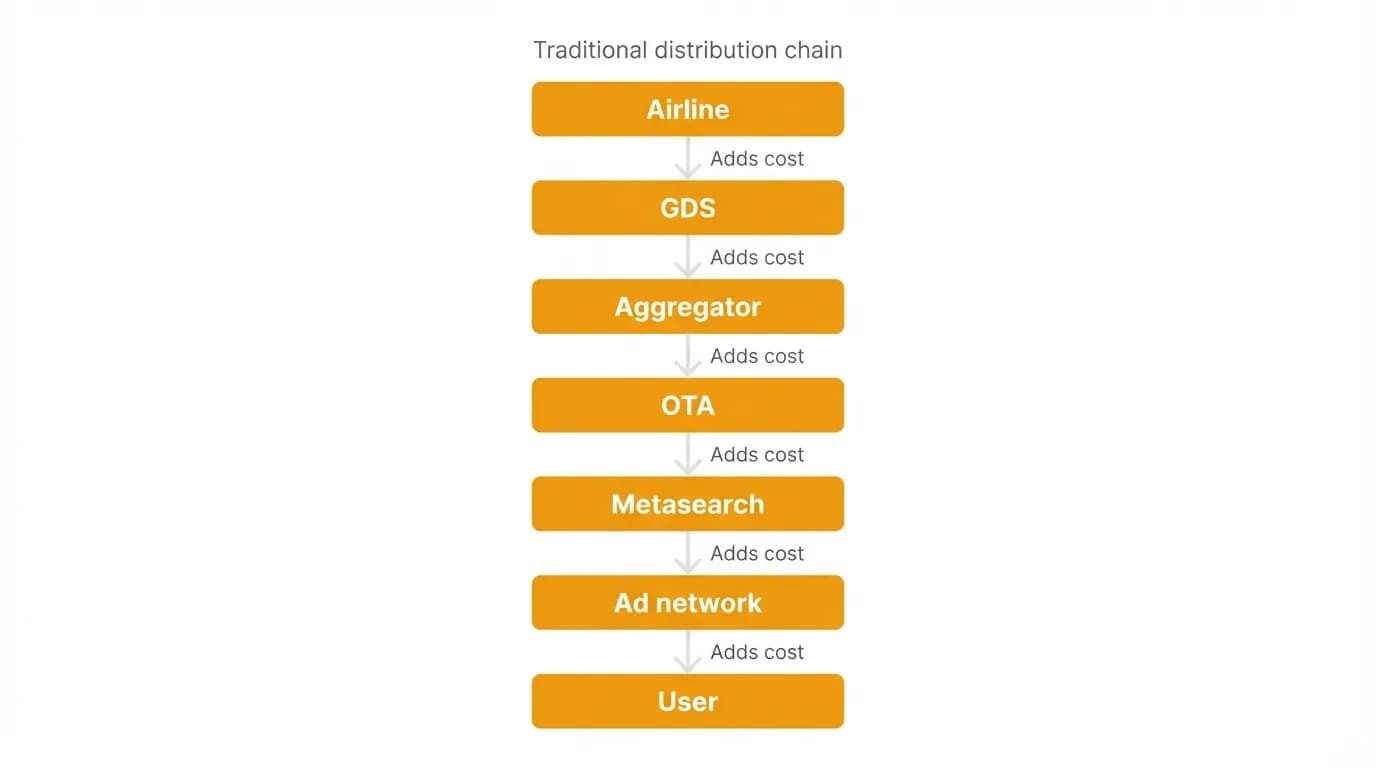
When you book a flight today, the transaction typically passes through five to seven intermediaries between the airline and you.
The airline puts inventory into a global distribution system. The GDS makes it available to online travel agencies. The OTAs display it on their websites. Metasearch engines aggregate across OTAs. You find it through a search engine that links to the metasearch, which links to the OTA, which connects through the GDS to the airline.
Each layer adds cost. GDS fees. OTA commissions. Metasearch click costs. Search advertising. By the time you buy a three-hundred-dollar flight, a meaningful percentage has been consumed by intermediaries who provided distribution, not value.
What AI does to this chain
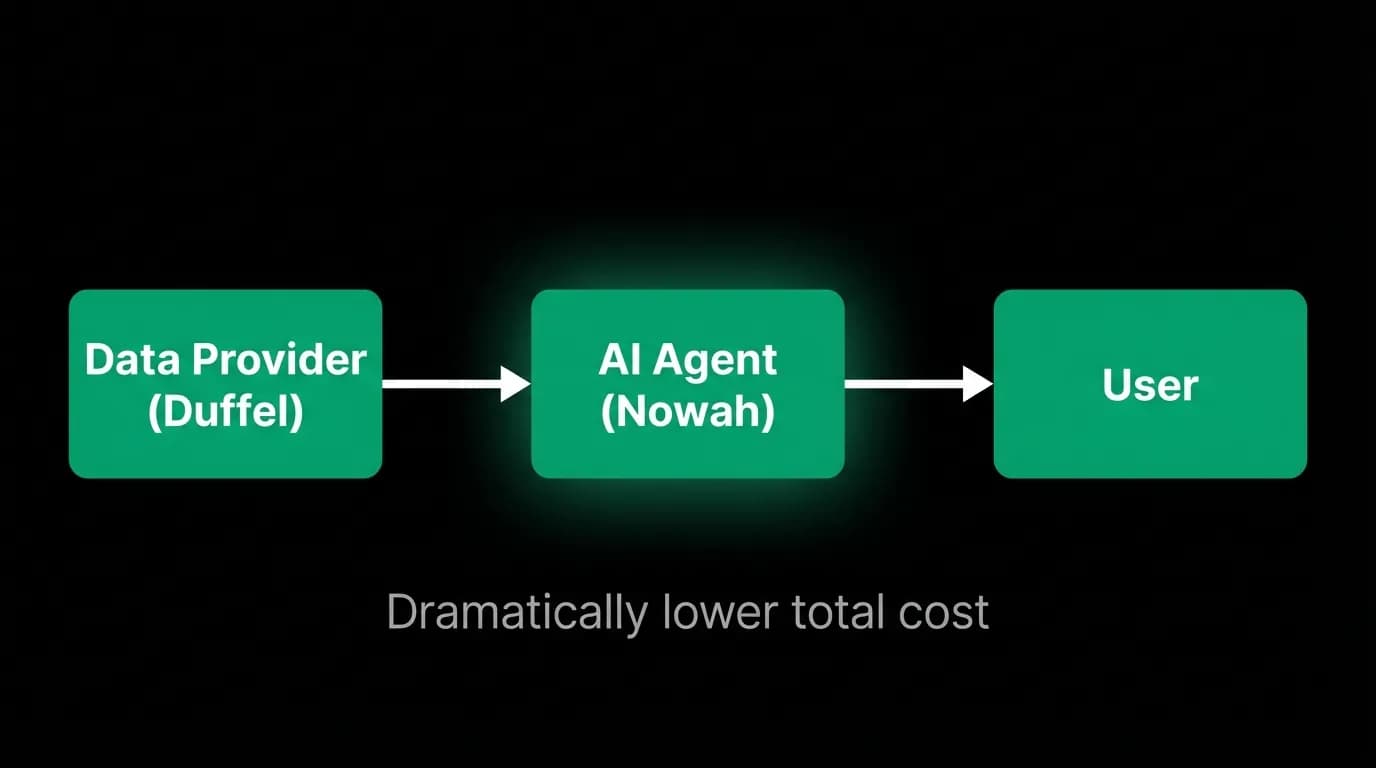
AI agents collapse the chain from five to seven layers to two or three.
The agent connects directly to data providers that aggregate airline and hotel inventory through modern APIs. These APIs bypass the traditional GDS layer and much of the OTA intermediation. The agent searches, the data provider returns inventory, the user decides, and the booking executes directly.
Data provider to AI agent to user. Three layers. The cost savings are enormous, and they ultimately benefit the traveler through better prices or the platform through better unit economics, or both.
Why airlines and hotels should embrace this
The counterintuitive argument: AI agents are better for airlines and hotels than the existing distribution chain.
Higher conversion rates. AI agents convert at higher rates than traditional OTA funnels because conversation reduces the dropout that plagues form-based booking. Higher conversion means more bookings per impression.
Lower distribution cost. Paying a data provider API fee and an agent commission is cheaper than the layered fees of the current distribution chain.
Better customer matching. AI agents recommend based on genuine fit, not on who paid for top placement. This means airlines and hotels reach customers who actually want their product, leading to higher satisfaction and fewer cancellations.
Airlines are already investing in new distribution capabilities for direct API access. The industry recognizes that the traditional chain is due for disruption. AI agents are the mechanism.
Winners and losers
Winners: travelers (better experience, potentially lower prices), data aggregators (essential infrastructure layer), and AI agents (the new intermediary with the thinnest margin but highest value).
Losers: legacy intermediaries whose value was distribution access, not intelligence. If an AI agent can search all inventory directly, the metasearch engine, the comparison site, and parts of the OTA model become redundant.
The signals
The revolution is already underway. Airlines investing in modern distribution APIs. Data aggregators growing rapidly. AI travel products launching monthly. The traditional GDS operators diversifying into new technology. OTAs adding AI features to stay relevant.
These are not predictions. They are events happening now. The distribution chain that took decades to build is being restructured in years. The businesses that recognize this early and adapt will thrive. Those that do not will find themselves on the wrong side of a structural shift.
Nowah is an AI travel agent that searches and books real flights and hotels through conversation — no filters, no thirty open tabs. Plan your next trip.