What Travelers Actually Want (It Is Not What You Think)
Ask travelers what they want and they say 'cheap flights.' Watch what they actually do and the story is completely different. Conversation reveals the truth.

Ask travelers what they want and they will tell you: cheap flights. Low prices. The best deal.
Watch what they actually choose when presented with options, and the story is completely different.
Stated versus revealed preferences
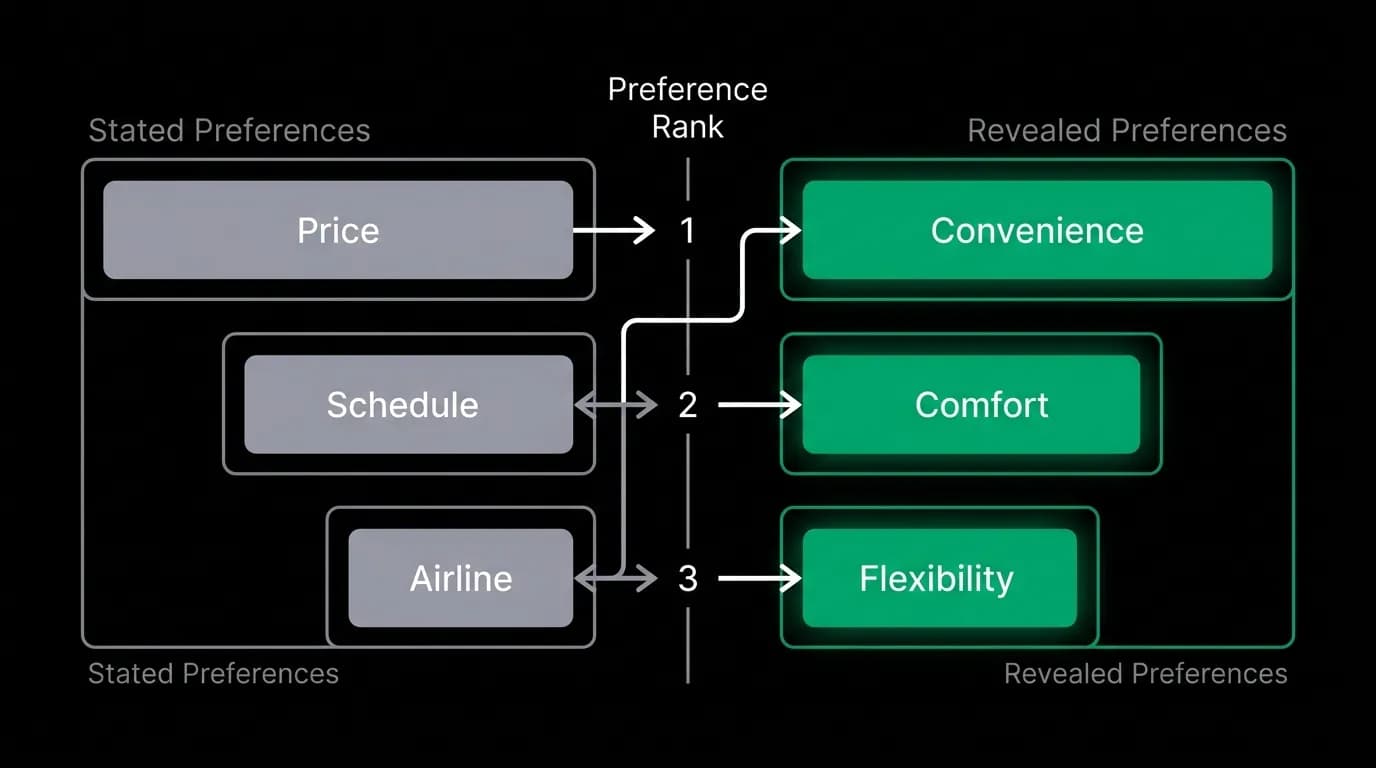
The gap between what people say they want and what they actually choose is one of the most important insights from our data. Users who explicitly ask for "the cheapest flight" select mid-range options over sixty percent of the time when the agent explains the trade-offs.
"The cheapest option saves you eighty dollars but adds a six-hour layover in a connecting airport. The direct flight costs eighty more and gets you there by dinner." Most users pick the direct flight.
"Cheap" does not mean cheapest. It means "I do not want to waste money." Users want value, which is a much more nuanced concept than lowest price. Value incorporates convenience, time, comfort, and peace of mind alongside cost.
What conversation reveals
Forms and surveys cannot capture this nuance. When a form asks "What is your budget?" the user types a number. When a conversation explores what matters, the truth emerges.
"I want something not too expensive" leads to a follow-up: "What matters most to you, price or convenience?" The answer is almost always some version of "I want both, but I guess convenience." The form captured a price constraint. The conversation captured a genuine preference.
Conversations also reveal unstated constraints. "Actually, I need to be near the conference venue." "Come to think of it, my partner is vegetarian so restaurant options matter." "I get anxious in really crowded tourist areas." These are preferences that no form would think to ask about, but they dramatically affect trip quality.
Common patterns
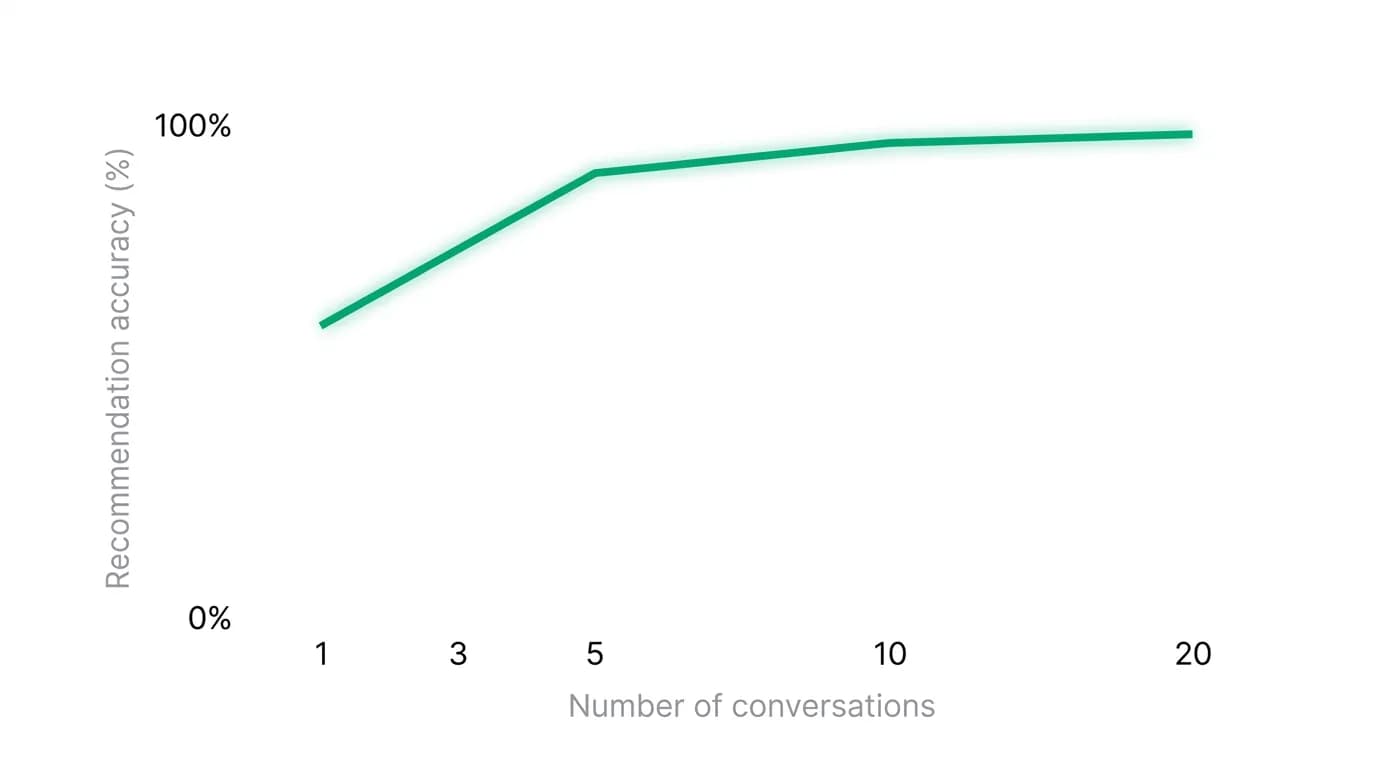
After thousands of conversations, clear patterns emerge.
Convenience beats price in most revealed decisions. Direct flights, walkable hotels, and easy transportation win over cheaper but less convenient alternatives.
Preference patterns stabilize after three to five conversations per user. By the fifth interaction, the agent has a reliable model of what the user actually wants, not just what they say they want.
Stated: "I want the cheapest flight." Revealed: "I want a direct morning flight under five hundred dollars." The revealed preference is specific, nuanced, and much more useful for making good recommendations.
How the agent learns
Our agent does not learn from what users say in isolation. It learns from the combination of what they say and what they choose. When a user asks for "cheap" and then picks the mid-range option three times in a row, the agent recalibrates.
This is learning through observation, not interrogation. Nobody wants a quiz about their preferences. They want an agent that figures it out naturally, the way a good human travel agent would.
After a few conversations, the agent knows. And the recommendations get dramatically better. Try describing your ideal trip and see what the agent finds. You might discover that what you actually want is different from what you think you want.
Nowah is an AI travel agent that searches and books real flights and hotels through conversation — no filters, no thirty open tabs. Plan your next trip.