The Travel Agent Came Back (as an AI): Why Human Expertise in Digital Form Wins
The return of the travel agent — not behind a desk, but as an AI combining human expertise with software speed. Why the best travel app thinks like a person.
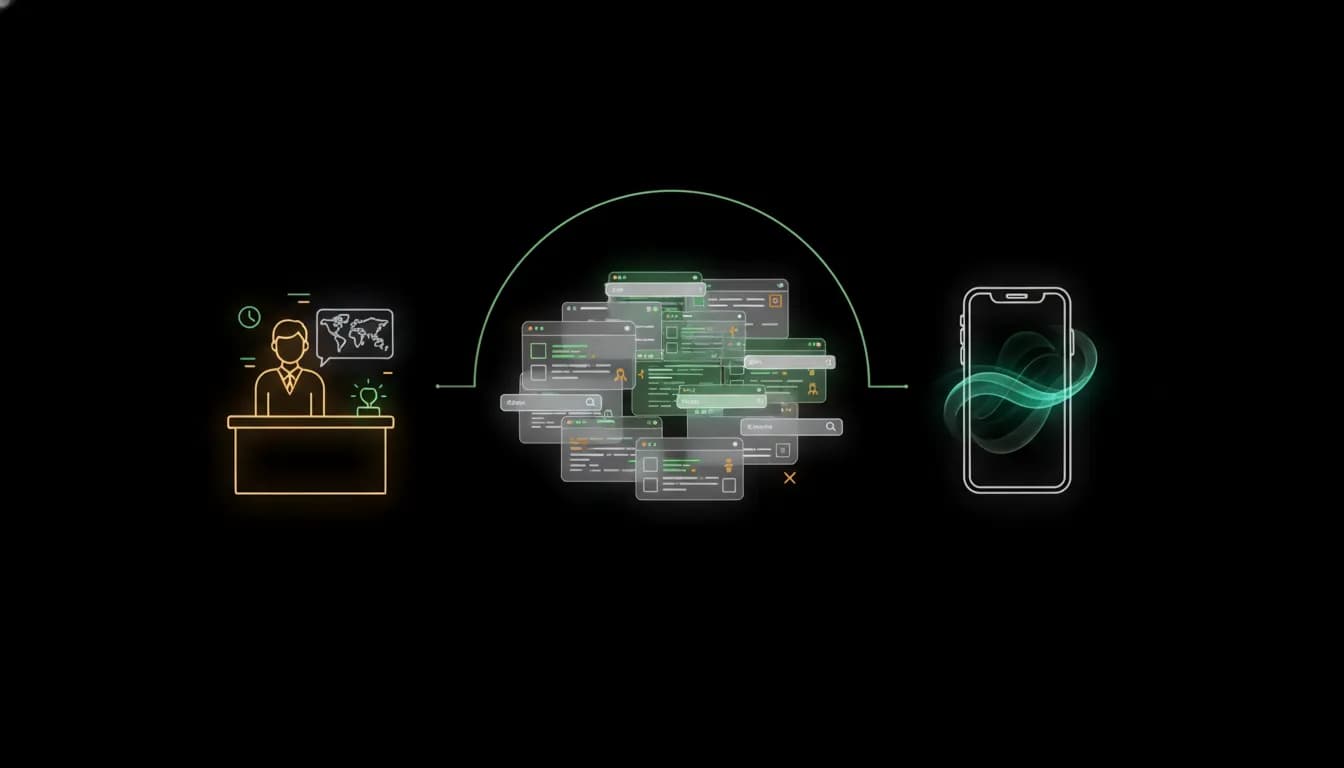
Your parents had a travel agent. A real person they called, sometimes visited, who knew their preferences, remembered their past trips, and handled everything from flights to hotels to restaurant reservations. The travel agent knew that your mother preferred window seats and your father could not sleep on red-eye flights. They remembered the hotel in Rome that your parents loved and the one in Paris they hated. Each trip was better than the last because the agent learned from every one.
Then the internet arrived, and the travel agent disappeared. Self-service booking sites made information free. Anyone could search flights-layer-ai-agent-search-flights), compare hotels, and book directly. The travel agent's role as information gatekeeper was obsolete.
But something was lost. The expertise. The memory. The judgment. The relationship. The internet gave travelers access to information but replaced a trusted advisor with a search bar. Twenty-five years later, seventy percent of travelers say they find travel planning stressful. The information is free. Making sense of it is exhausting.
The travel agent is coming back. Not behind a desk. Inside a phone.
What made human travel agents great
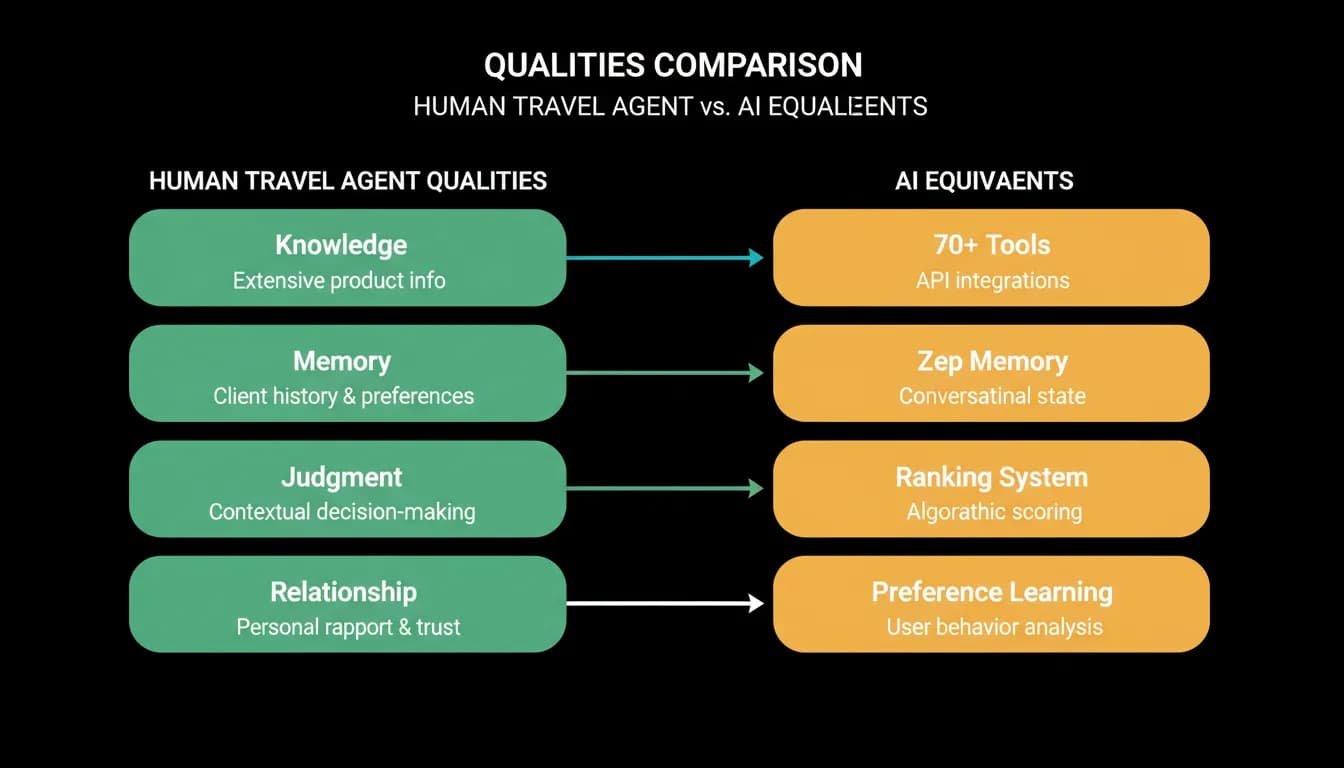
Human travel agents provided four things that no website has replicated: knowledge, memory, judgment, and a relationship.
Knowledge meant understanding the travel industry at a depth that casual travelers could not. Which airlines had the best reliability on specific routes. Which hotels matched which types of travelers. Which connections were too tight and which had comfortable buffers. This knowledge came from years of experience and industry access.
Memory meant remembering you. Not your username and password. You. Your preferences, your patterns, your past experiences, your budget sensitivity, your tolerance for inconvenience. A good travel agent knew things about your travel style that you had never explicitly stated because they had observed it over dozens of trips.
Judgment meant weighing tradeoffs on your behalf. Not showing you twenty options and asking you to pick. Showing you three options that they had already evaluated against your specific needs and explaining why each one might work. Judgment is what transforms information into recommendation.
The relationship was the sum of knowledge, memory, and judgment applied over time. Each trip deepened the agent's understanding. Each interaction refined their ability to serve you. The relationship was the product, and it got better with age.
What killed them
The internet did not kill travel agents by being better at their job. It killed them by being free and instant. When anyone could search flights on a website, the value of calling someone to search for you seemed to disappear. Why pay a travel agent when you can search yourself?
The answer, which took two decades to become clear, is that searching is not the hard part. Deciding is the hard part. The internet gave travelers unlimited information and no help making sense of it. The average traveler now visits dozens of websites before booking. They spend an hour per session across multiple sessions. They compare options in spreadsheets. They read hundreds of reviews. They do all the work that a travel agent used to do, except they do it less efficiently because they lack the agent's expertise, memory, and judgment.
Travel agent employment peaked in the 1990s and declined by over 60 percent with the rise of internet booking. The industry assumed that self-service was the future. It was, for a while. But self-service imposed a hidden cost: the traveler's time and mental energy. That cost was accepted because there was no alternative. Now there is.
What AI restores
An AI travel agent combines the four qualities of a great human agent with the scale and availability of software.
Knowledge: the agent has access to comprehensive travel data through seventy-plus specialized tools. It can search flights, hotels, and ground transportation simultaneously. It knows connection times, airline reliability patterns, hotel proximity to landmarks, and visa requirements. This knowledge is not limited to one agent's personal experience. It is the aggregated intelligence of the entire travel data ecosystem.
Memory: the agent remembers preferences, past bookings, and conversation patterns across sessions and across trips. The memory system stores not just what the traveler explicitly stated but what their behavior implies. A traveler who consistently books boutique hotels under 50 rooms has a preference even if they never articulated it. The agent detects and applies these implicit preferences.
Judgment: the ranking system evaluates options the way an experienced human agent would. It does not just sort by price. It weighs price against convenience, comfort, reliability, and the specific traveler's priorities. A slightly more expensive flight that arrives two hours earlier and avoids a problematic connection is ranked higher for the business traveler who has an early meeting, and lower for the leisure traveler who prioritizes savings.
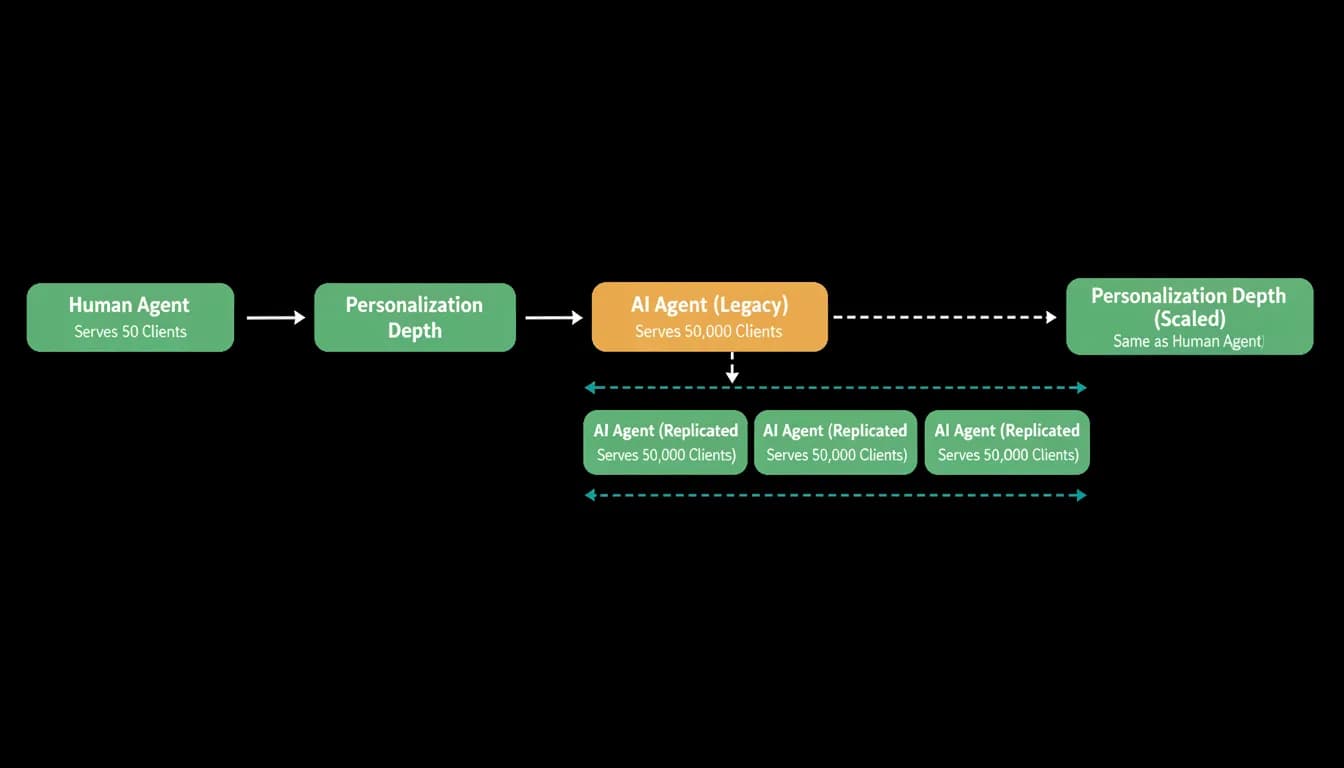
Availability: unlike a human agent who works business hours and serves fifty clients, the AI agent is available around the clock and serves thousands of travelers simultaneously. Each traveler receives the same depth of attention and personalization. The quality of service does not degrade with scale because the agent's capacity is not limited by human bandwidth.
Memory as relationship
The relationship between a traveler and a human travel agent was built on shared history. Each trip added context. Each interaction refined the agent's understanding. After ten trips, the agent knew you better than you knew yourself as a traveler.
The AI memory system replicates this relationship-building process. After ten trips, the agent has accumulated extensive preference data: airline preferences, seat selections, hotel styles, budget patterns, meal requirements, neighborhood preferences, and timing preferences. This accumulated context means the eleventh trip starts with a rich understanding of what the traveler wants, just as it would with a human agent who had served you for years.
The difference is that AI memory is more precise and more complete than human memory. A human agent might forget that you mentioned preferring late check-out three trips ago. The AI remembers. A human agent might misremember your hotel preference from a year ago. The AI does not. The digital memory is exhaustive where human memory is selective.
This precision creates trust. When the agent remembers a preference you mentioned months ago and applies it without being asked, the traveler feels known. That feeling of being known, of not having to repeat yourself, of receiving recommendations calibrated to your specific preferences, is the emotional foundation of the travel agent relationship. The AI recreates it at scale.
Judgment at scale
A great human travel agent could serve maybe fifty clients with the depth of attention each deserved. Beyond that, quality degraded. The agent had to choose between serving more clients superficially or fewer clients deeply.
AI judgment scales without this tradeoff. The ranking system that evaluates flights for one traveler applies the same sophistication to every traveler simultaneously. Every search receives comprehensive evaluation. Every recommendation considers the full context. The judgment does not get tired at 4 PM or distracted before a holiday.
Scaling judgment is the key capability that makes the AI travel agent fundamentally different from both the human travel agent and the self-service booking site. The human agent had judgment but could not scale. The booking site scaled but had no judgment. The AI agent has both.
The best travel app thinks like a person
This is the vision that drives everything we build. Not a better search engine. Not a fancier booking form. An AI that thinks about your trip the way a great human travel agent would: considering your preferences, weighing tradeoffs, remembering your history, and making recommendations with genuine judgment.
The technology stack is complex: language models for reasoning, tool-calling for capability, memory systems for personalization, ranking algorithms for judgment, background workers for proactive management. But the output is simple. A conversation with someone who knows you and helps you travel better.
Forty percent of consumers say they would let an AI book travel on their behalf with confirmation. The trust is ready. The technology is ready. The demand is clear.
The travel agent your parents relied on was limited by human constraints: working hours, client capacity, geographic knowledge, and memory. The AI travel agent inherits all of their strengths and none of their limitations. The expertise is digital. The memory is permanent. The judgment scales infinitely. And the relationship gets better with every trip.
The travel agent came back. They are smarter, faster, and always available. And they remember everything.
Nowah is an AI travel agent that searches and books real flights and hotels through conversation — no filters, no thirty open tabs. Plan your next trip.