Travel in 2030: What Booking Looks Like When AI Does the Work
Close your eyes. It is 2030. You have not opened a travel website in years. Your AI agent planned, booked, and organized everything while you slept.

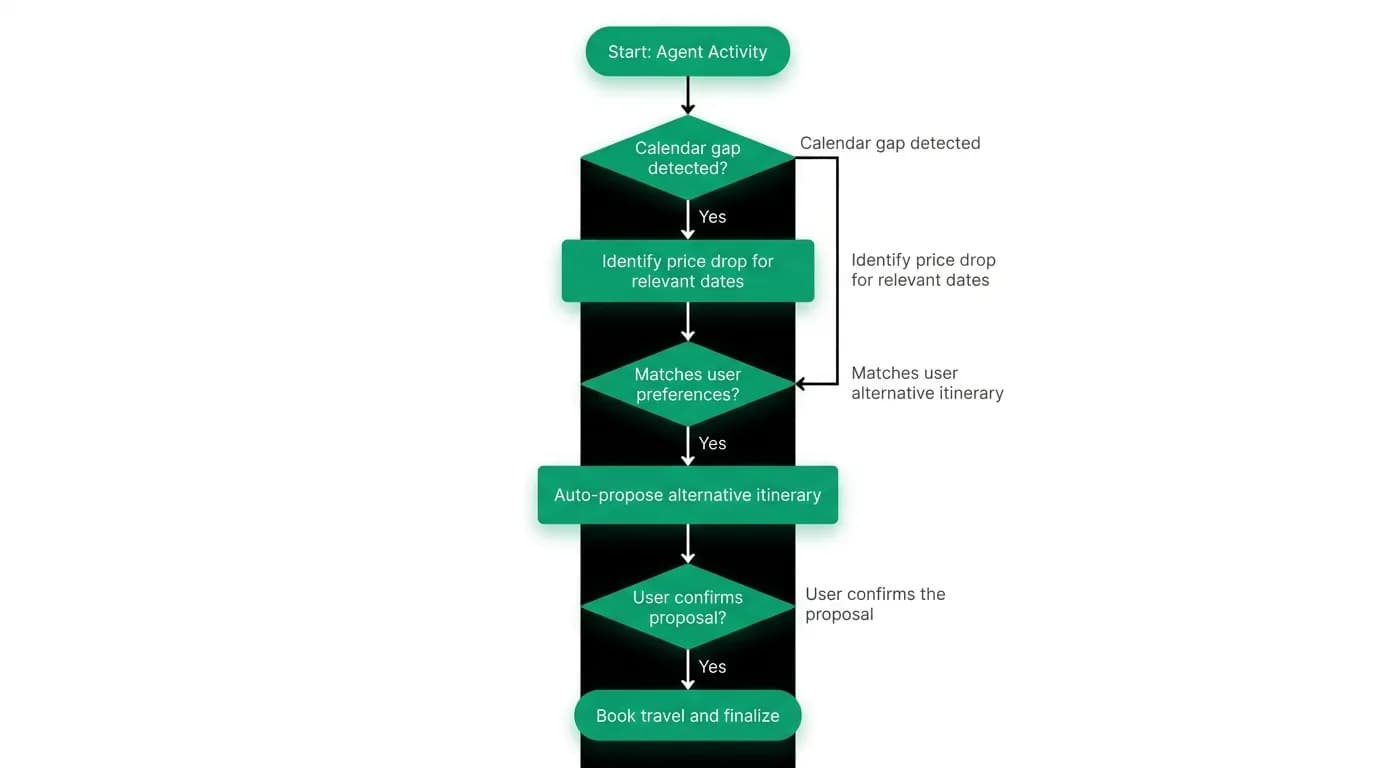
Close your eyes. It is 2030. You wake up on a Saturday morning and check your phone. There is a notification from your travel agent: "I noticed you have a free week in October and fares to Lisbon dropped 40% overnight. Based on your preference for southern European cities and your love of that Alfama neighborhood restaurant from 2028, I have assembled three trip options. Want to review them?"
You did not search for anything. You did not open a browser. You did not compare prices. Your AI agent noticed the opportunity, matched it against everything it knows about you, and presented options before you even thought about traveling.
This is not science fiction. Every component of this scenario either exists today or is in active development.
Proactive planning
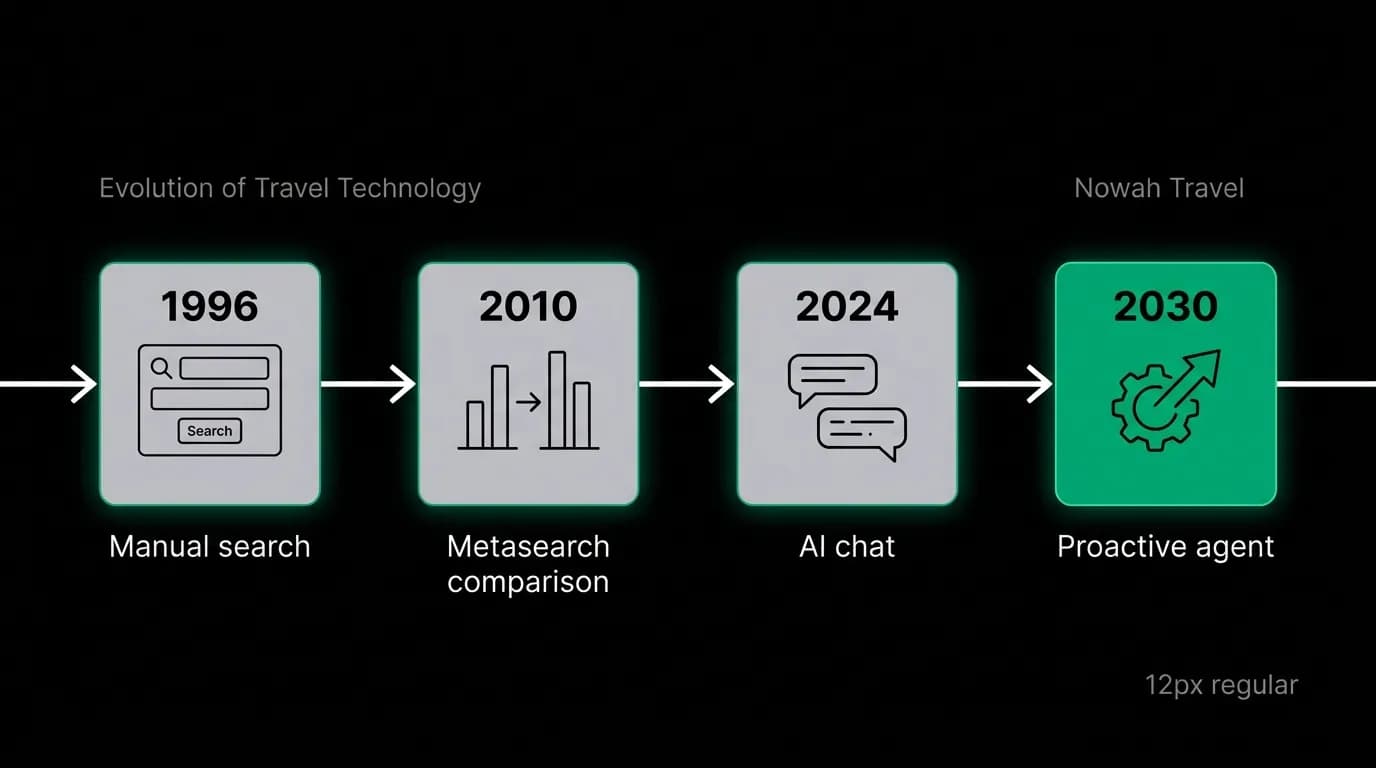
Today, every travel app is reactive. You initiate the search. You decide the destination. You pick the dates. The app responds to your inputs.
By 2030, the best travel agents will be proactive. They will monitor your calendar for open windows. They will track prices on destinations you have expressed interest in. They will know your travel patterns well enough to suggest trips that match your preferences before you articulate them.
The shift from reactive to proactive is the difference between a search engine and a personal assistant. A search engine waits for your query. A personal assistant anticipates your needs.
Price optimization without human browsing
One of the most time-consuming aspects of travel booking is timing. When should you buy? Prices fluctuate constantly. The conventional wisdom is contradictory and usually wrong.
In 2030, the AI handles this entirely. It monitors price movements on routes and destinations it knows you care about. It understands the patterns. It books at the optimal moment based on historical data and real-time signals. You never refresh a price page again.
Today, average trip planning-trip-planning-ai-shines) takes over five hours of active research. In 2030, the target is zero active planning for routine trips. You express a desire. The agent handles the rest.
Autonomous disruption handling
Your flight gets cancelled at midnight. Today, you wake up to chaos: rebooking hotlines, long hold times, frantically searching for alternatives on your phone.
In 2030, the agent handles this before you wake up. It detected the cancellation in real time. It searched alternative flights. It found one that matches your preferences and still gets you to your destination in time for your dinner reservation. It rebooked you, updated your itinerary, and sent a notification: "Your original flight was cancelled. I rebooked you on a direct alternative arriving 90 minutes later. Your hotel and dinner reservation are unaffected."
You slept through the crisis. The agent resolved it.
The disappearance of search-and-compare
The 38-website, 45-day research marathon will seem as quaint as using a paper map. Not because the information is less complex, but because the AI handles the complexity on your behalf.
The workflow of 2030: describe a trip in natural language, review a curated set of options, confirm, and go. The agent handles search, comparison, optimization, booking, payment, documentation, and post-booking management. Your role shifts from researcher and project manager to decision-maker.
Multi-modal travel planning, flights plus hotels plus activities plus ground transportation, is already live in Nowah. By 2030, the optimization across all these components will be seamless and automatic.
What this means for the industry
For airlines and hotels, the distribution model changes completely. Today, they optimize for human eyeballs: search engine placement, OTA partnerships, loyalty program marketing. In the agent era, they optimize for agent selection: structured data, transparent pricing, and API accessibility.
For OTAs, the aggregation model is under threat. If an AI agent can search all inventory directly through data providers, the OTA's role as intermediary becomes less valuable. The ones that survive will transform into intelligence layers, not just inventory display.
For travelers, the future is unambiguously better. Less time planning. Better-matched trips. Lower prices through optimal timing. Seamless disruption handling. The frustrating parts of travel, the logistics, the comparison shopping, the scattered confirmations, all handled by an agent that gets better at helping you with every trip.
What is live today
I am speculating about 2030, but the foundation is already being built. Today, Nowah handles conversational trip planning, live flight and hotel search, booking execution, trip management, voice input, and cross-session memory. Each of these capabilities is a building block for the proactive, autonomous future I described.
Dynamic pricing awareness is technically feasible with current travel data APIs. Calendar-based proactive suggestions require memory and scheduling infrastructure, both of which are in development. Autonomous disruption handling requires real-time monitoring and a level of trust that the product earns incrementally.
The path from here to there is engineering execution, not fundamental research. Every piece of the 2030 vision is either built or buildable with technology that exists right now.
We are building the first pieces of that future today. And every conversation with every user brings us one step closer.
Nowah is an AI travel agent that searches and books real flights and hotels through conversation — no filters, no thirty open tabs. Plan your next trip.