Latest
Fresh fromthe journal.
Page 105 of 156

Product
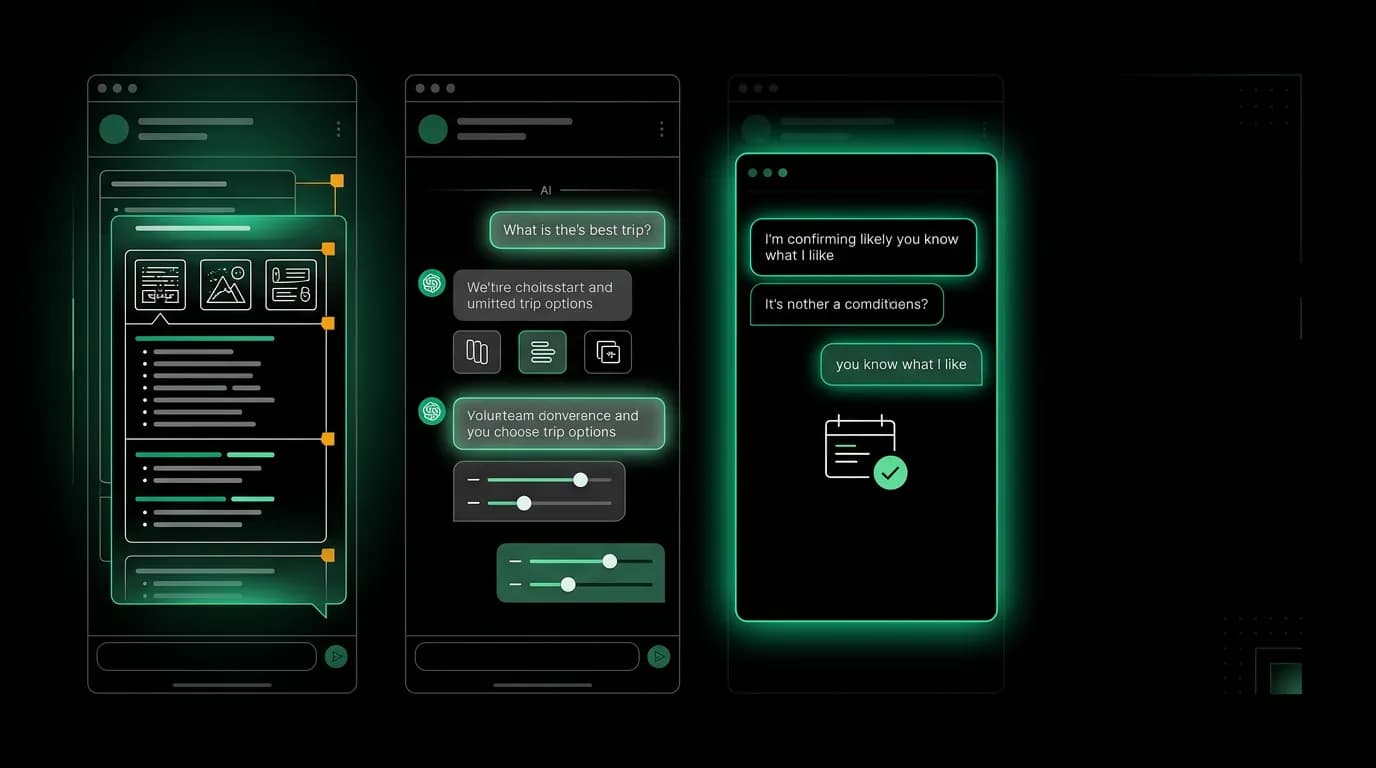
The Post-Booking Experience: Why It Shouldn't End at Payment
Most travel apps send a confirmation email and disappear. AI-powered post-booking — itineraries, updates, local tips — turns transactions into retention.
Product
The \\\"Just Do It For Me\\\" Moment: When Users Start Delegating
New users micromanage every search parameter. Experienced users say \\\"book me something for London — you know what I like.\\\" That shift is the product goal.
Product
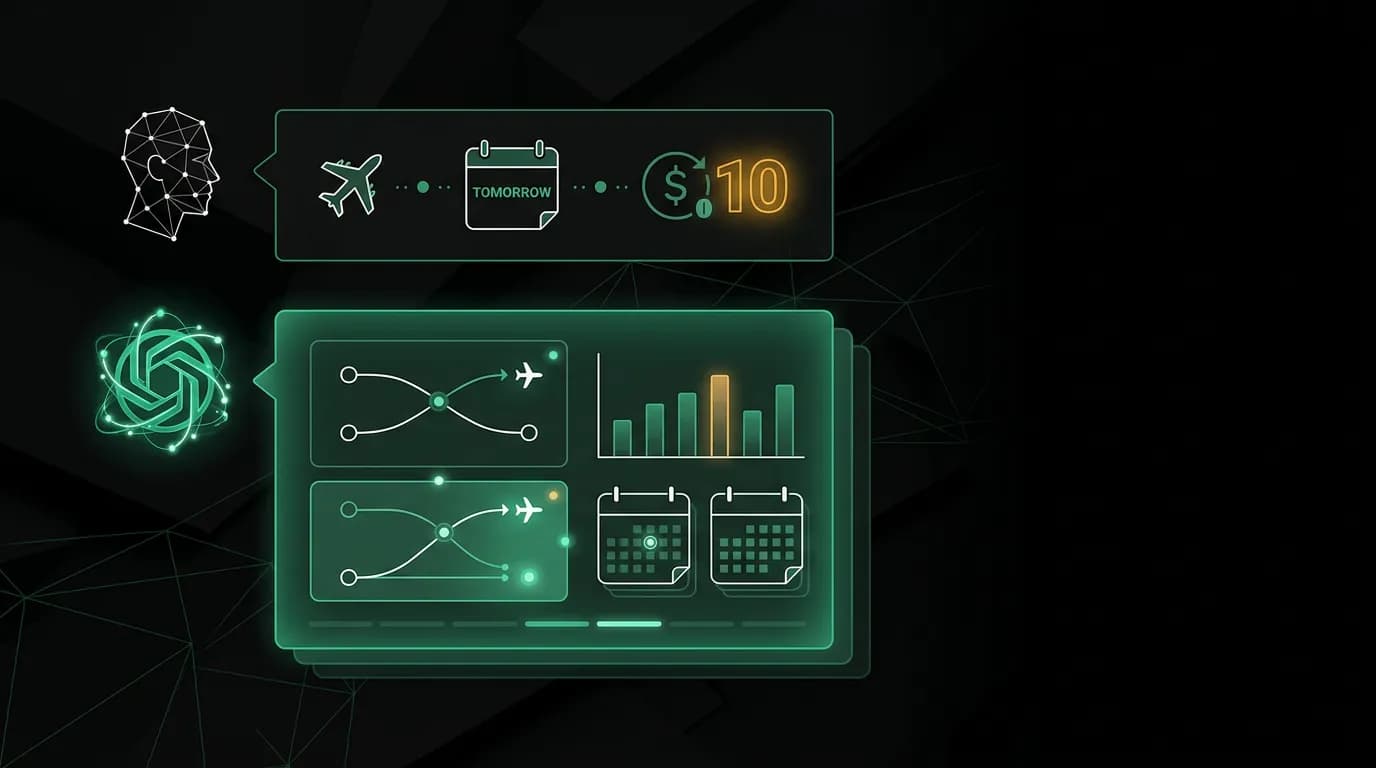
When Users Test the AI: Edge Cases That Make or Break Trust
Users deliberately probe with impossible requests and trick questions. How the agent handles \\\"$50 flights to Tokyo\\\" determines whether trust survives.
Product
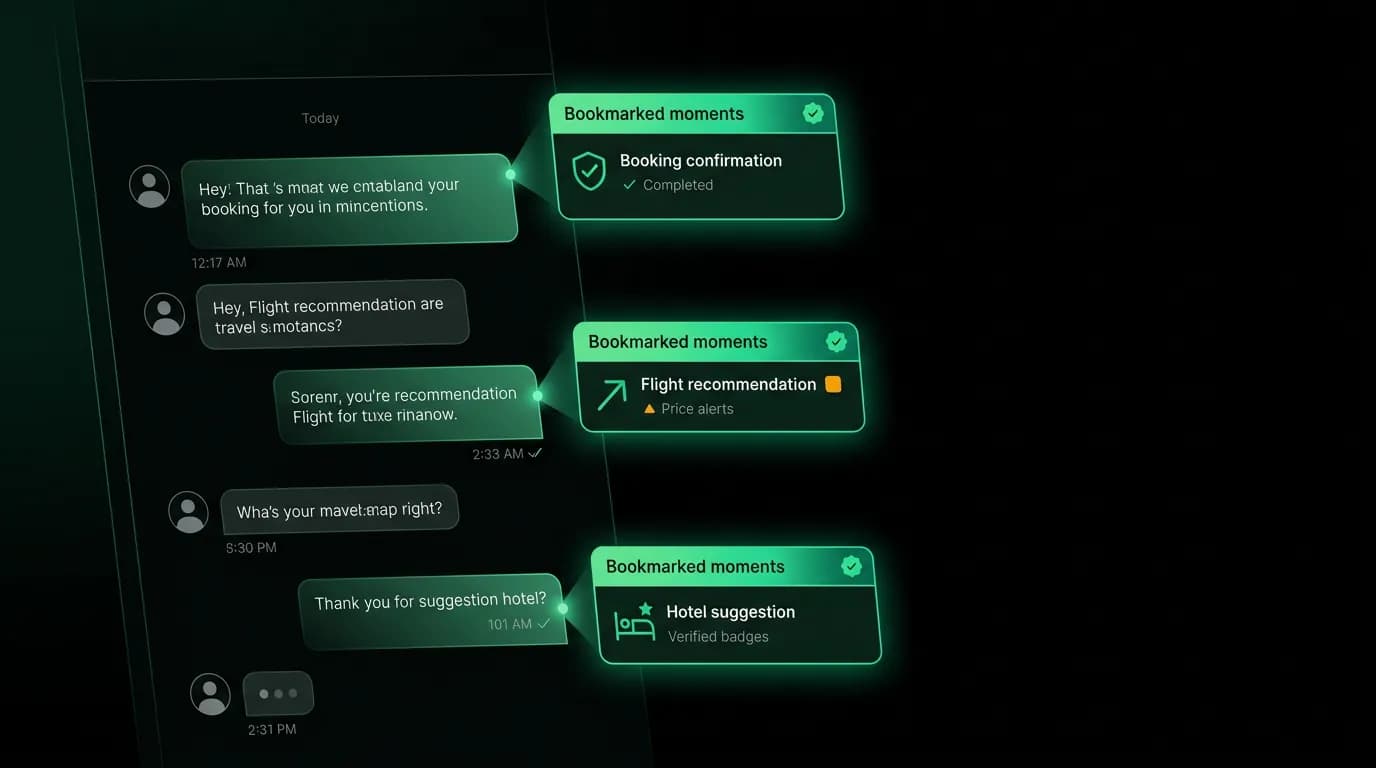
Why Chat History Matters: Revisiting Past AI Conversations
Users return to past chats for booking details, old recommendations, and trip context. Designing navigable, searchable chat history is an overlooked challenge.

Engineering
Why Legacy OTAs Will Struggle to Add AI
Expedia, Booking.com, and Google built around search-results pages. Adding AI on top does not fix the architecture. Here is why AI-native wins.
Engineering
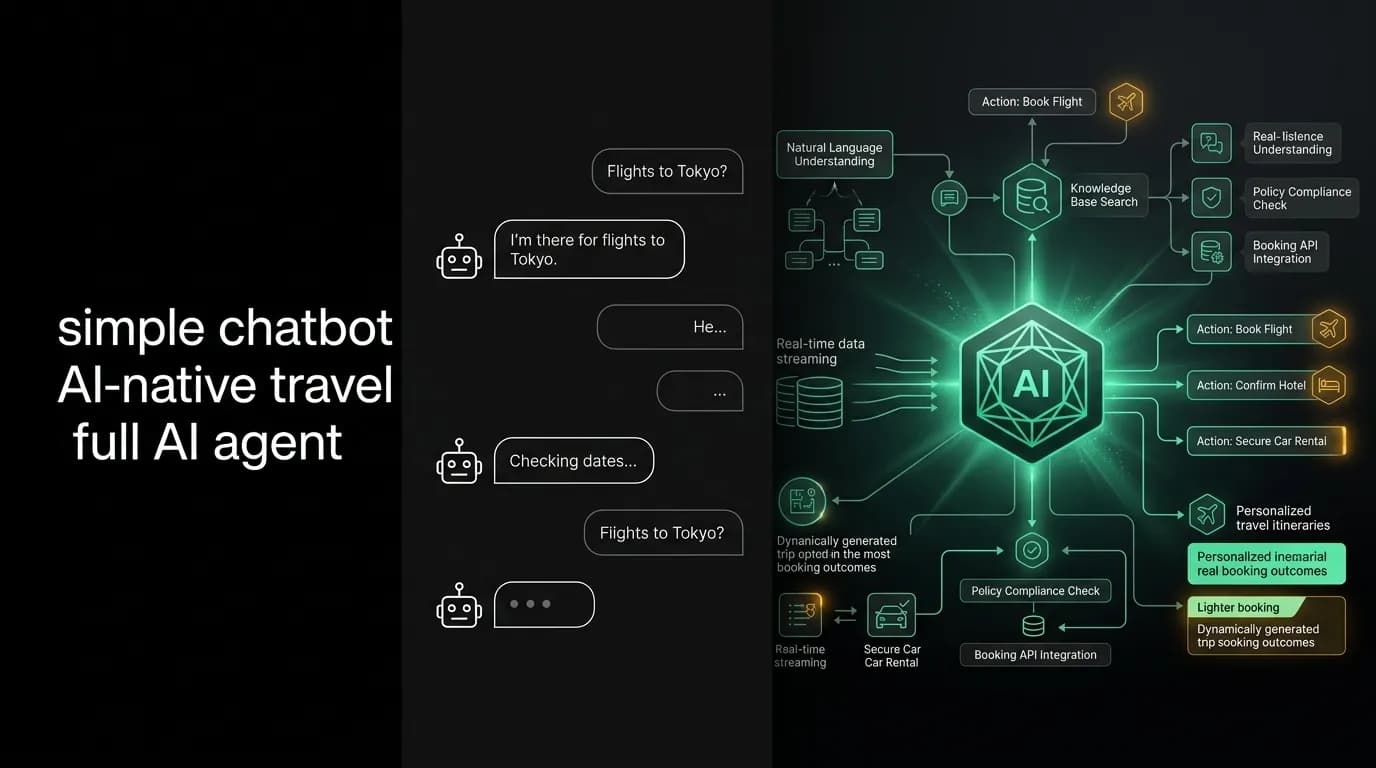
AI Agents vs. Chatbots: Why the Distinction Matters
Chatbots answer questions. Agents take actions and handle outcomes. For travel booking, only agents work. Here is the technical difference.

Engineering
The Great Unbundling of Travel: AI Recomposes Booking
Travel was bundled into OTAs. AI is unbundling it into personalized, agent-driven experiences. Here is the history and where it is heading.

Engineering
How Google, Expedia, and Booking.com Will Respond to AI
Each incumbent is approaching AI differently and each is constrained by existing revenue models. Here is our analysis of their strategies and limits.

Engineering
The Economics of AI Travel Booking: New Business Models
AI does not just change the UX. It changes the cost structure, conversion rates, and retention economics of travel booking fundamentally.