The AI Travel Agent vs. the OTA: A Data Comparison
Side-by-side: information density, decision quality, time-to-booking, and personalization depth between traditional OTA search and AI-native booking.
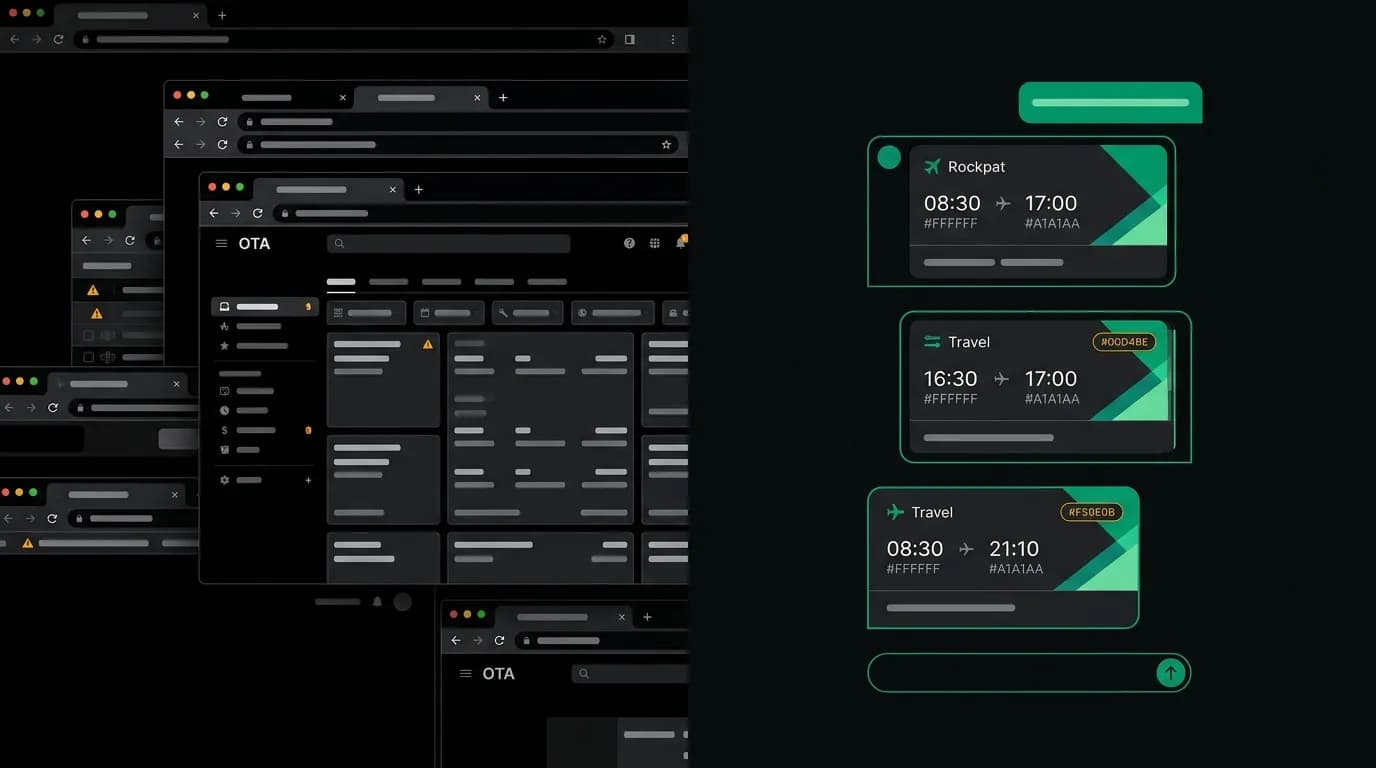
The average OTA trip takes dozens of websites and 45 sessions over 30-45 days. An AI-native trip takes one conversation. That compression sounds like marketing, so let me back it up with data across the dimensions that actually matter: information density, decision quality, personalization depth, and time-to-booking.
Data flow: form-fill search vs. natural-language intent
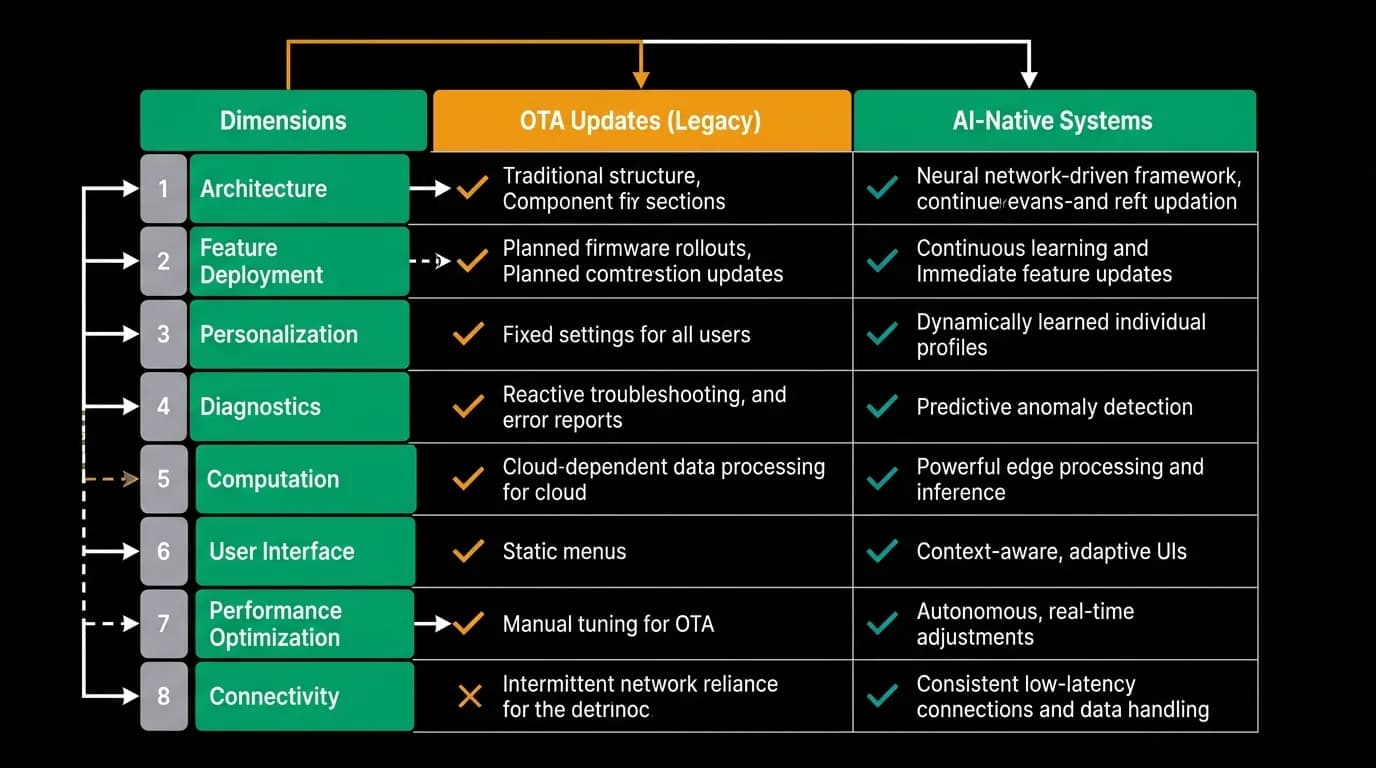
Traditional OTA search starts with a form. Origin, destination, dates, passengers. These are structured inputs that constrain the search before it begins. If you do not know your exact dates, the form cannot help you. If you are flexible on destination, the form has no field for that. If you want to express a nuanced preference like "not too touristy but walkable," there is nowhere to type it.
AI-native search starts with natural language. "I want to go somewhere warm in March, maybe Southeast Asia, budget around $1,500, and I prefer morning arrivals." That single sentence contains six constraint signals. A form would need six fields to capture the same information, and it still would not capture "not too touristy."
Conversational interfaces generate richer intent data because natural language expresses things that structured forms cannot. Every conversation gives the AI more signal about what you actually want, which feeds directly into recommendation quality.
Results presentation: 200 sorted vs. 3 curated
The OTA model shows you every result that matches your search criteria, sorted by price or some blend of price and "relevance" that usually means sponsored placement. You see 200 results and scroll through them, manually comparing details that change from one listing to the next.
The AI model evaluates those same 200 results (or more), scores them against your personal preference profile, enforces a diversity guarantee, and presents three curated picks with explanations. Each pick occupies a distinct position in the price-comfort space.
Industry UX research consistently finds that small, well-explained choice sets convert better than long uncurated result lists. The reason is not that people are lazy. It is that fewer, better, explained options lead to more confident decisions.
Personalization depth: cookie tracking vs. agentic memory
OTA personalization is typically cookie-based and session-limited. The site might remember your recent searches and show you "deals" on routes you have looked at. That is retargeting, not personalization. It does not know your seat preferences, your airline loyalty, your budget tolerance, your schedule patterns, or any of the nuanced preferences that make a recommendation genuinely personal.
Agentic memory stores structured preference data that persists across sessions and enriches over time. By your fifth trip, the AI knows things about your travel style that no cookie-based system could infer. The recommendations reflect that depth.
Decision quality: manual comparison vs. explained trade-offs
On an OTA, the burden of comparison falls entirely on you. You have to figure out which airline is better, whether the layover is risky, whether the price is good for the season, and whether the hotel reviews suggest the issues you care about. This is a research project.
With AI-native booking, the comparison work is done for you. Each recommendation comes with an explanation of why it scored well, what its trade-offs are, and how it relates to your stated preferences. The decision shifts from "evaluate 200 options" to "choose among three well-explained ones."
Chat-based interfaces consistently report higher satisfaction scores than traditional search. The experience feels less like doing homework and more like having a knowledgeable friend handle the details.
Time-to-booking and conversion
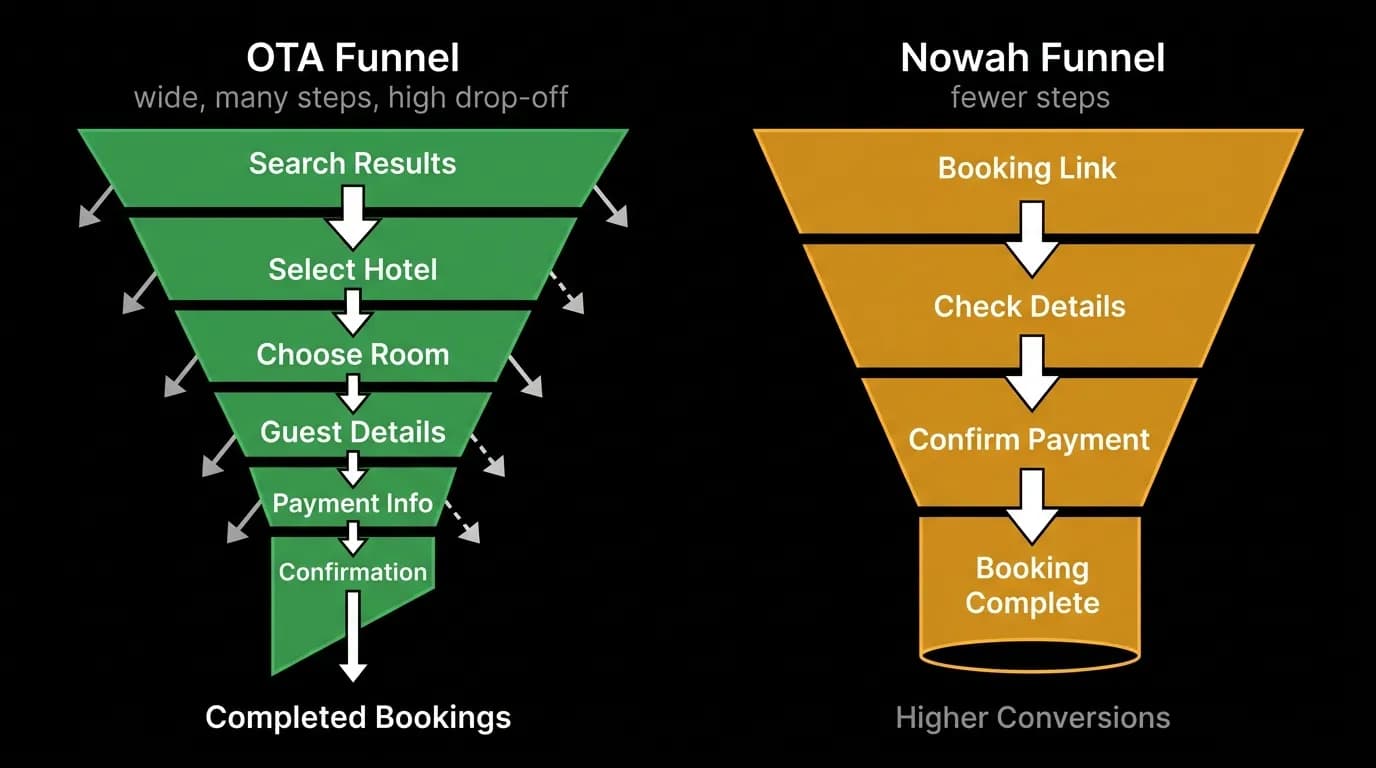
The traditional 30-45 day search-to-booking timeline for international flights reflects the accumulated friction of visiting 38 sites, running the same search multiple times, comparing across platforms, and eventually booking when exhaustion overcomes uncertainty.
AI-native booking compresses this because the friction points are eliminated. You do not visit 38 sites. You have one conversation. You do not manually compare. The AI does it for you. You do not wonder if the price is good. The AI tells you.
The conversion rate difference is the clearest signal. Traditional OTAs convert low-single-digit of visitors. AI-native booking generates richer intent, higher confidence, and shorter decision timelines. When the recommendation matches what you want and the explanation tells you why, the path from "this looks good" to "book it" is short.
Experience the difference. Try an AI-native search on Nowah.
Nowah is an AI travel agent that searches and books real flights and hotels through conversation — no filters, no thirty open tabs. Plan your next trip.