Turn a business-class review into a useful arrival plan with Nowah
Connect a business-class review with a useful Nowah arrival plan using a handoff sheet for local dates, hotel questions and first-day priorities.
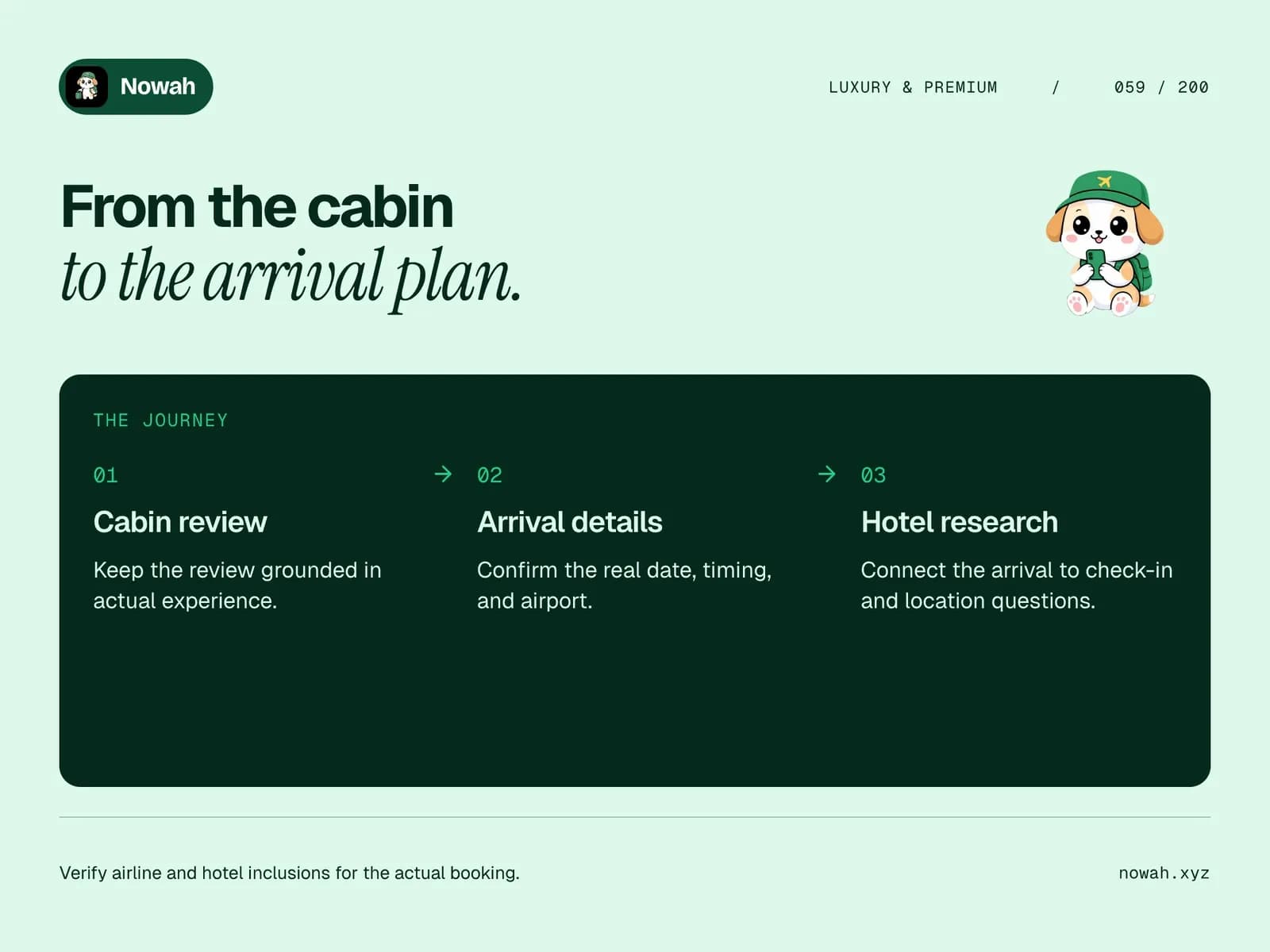
A business-class review can explain an observed cabin experience while leaving the traveller's next question unanswered: what happens after arrival? The actual landing date, hotel arrangements and first day's pace can change how the wider trip works. For premium-flight creators, that transition is a useful place to demonstrate Nowah.
The Nowah Partner Program offers approved creators 35% of Nowah net revenue from qualifying bookings by eligible attributed accounts. Its continuing account attribution gives useful flight and trip-planning content a meaningful earning opportunity without an invented promise of premium benefits or larger commission from an expensive cabin.
This guide provides an arrival-handoff sheet for connecting a cabin review with the hotel and itinerary questions that follow. It keeps actual flight information, supplier arrangements and fictional teaching details separate so the Nowah recommendation has a practical purpose.
Preserve the scope of the cabin review
If you personally took the flight, identify the relevant date and experience accurately. One flight does not establish what every aircraft, route or future service will provide. Keep observed details distinct from current supplier information.
Do not imply that a cabin product shown in a review is available on the reader's actual flight, or that their fare includes every arrangement you experienced. Current carrier and offer conditions need their own checks.
If the review involves a hosted or separate commercial relationship, explain it appropriately. A Nowah partner recommendation is a different connection and should not obscure the circumstances of the original footage.
The first-hand review versus researched example guide helps separate actual travel experience from supplier facts and a fictional arrival-planning demonstration.
Establish the actual arrival information
Before planning the first hotel night or next day, identify the arrival date and timing information relevant to the traveller's actual journey. Do not assume a departure date or a cabin review's route supplies the correct arrival details for someone else's booking.
Keep local dates and overnight changes clear where they matter. A fictional example can state an assumed evening arrival for teaching, but it should not be presented as a current flight schedule or a guaranteed operational outcome.
The useful creator task is to show which information shapes the next question. An actual flight's timing and any changes require appropriate current evidence. A polished itinerary should not conceal uncertainty about the arrival it is built around.
The existing flight-ranking discussion provides broader context for thinking about flight criteria, while actual supplier information remains necessary for the specific journey.
Connect arrival with the hotel question
An arrival time can raise questions about the relevant hotel night, check-in arrangements and what the traveller should confirm with the provider. Do not assume early access to a room, a guaranteed late arrangement or another benefit simply because the flight is in a premium cabin.
The rooming, dates and actual offer conditions still matter. A cabin experience and a hotel arrangement are separate parts of the trip. A creator should explain the connection without transferring a special benefit from one into the other.
This is a natural Nowah demonstration: organize the brief, identify the arrival constraint and show which hotel questions need current verification. A plan or map can support that reasoning without certifying provider availability or a particular arrangement.
The late-arrival luxury-stay guide offers a focused follow-up when the first hotel night becomes the main task.
Work through a fictional premium-flight example
Imagine a creator preparing a planning segment after a cabin review. The teaching brief uses two fictional adults arriving in the evening for a four-night city stay. The example contains no actual airline schedule, hotel quote or creator earning result.
The creator explains how the assumed arrival affects the first night and a manageable first morning. In Nowah, the segment organizes the trip question and identifies the supplier information still needed for actual arrangements.
The example does not promise a chauffeur, lounge access, an upgrade or hotel benefits. Those would need appropriate current evidence under the traveller's actual offer. The cabin review supplies context, not a universal set of entitlements.
The useful output is a clear handoff from flight inspiration to wider trip investigation. The viewer can see why a Nowah recommendation belongs in the discussion rather than appearing as an unrelated promotional ending.
Build the arrival-handoff sheet
Use fields for actual or hypothetical arrival information, relevant local date, party and rooming questions, hotel-night research, provider arrangements to verify and the intended first-day pace. Add the source and checked date for material facts.
Keep fictional inputs labelled. If actual travel information is incomplete, mark it unresolved rather than inventing a time or supplier response. Do not publish unnecessary private traveller details in an educational example.
Then record the question the Nowah segment should answer. It might concern the first hotel night, a location priority or a lighter opening day. Choose one main task rather than turning the video into an unverified full-trip promise.
The one-question demonstration guide helps narrow the practical lesson. A focused handoff can be more useful than a long list of generic arrival tips.
Check the transition in the edit
A viewer may assume the itinerary shown immediately after a flight review describes that exact journey. Add a clear transition explaining when the content moves from the observed cabin experience to a fictional planning brief. Preserve the assumed date and arrival context in the caption or narration rather than relying on a visual change alone.
Then review any shorter extract you intend to share. It should retain enough context to avoid implying a confirmed hotel arrangement or a universal cabin benefit. This makes the planning lesson understandable even when the viewer does not watch the complete review.
Review the first full day as part of the trip
A creator can explain why an assumed arrival changes the planning discussion without making a medical or universal comfort claim. Ask the fictional traveller's preferred pace and fixed commitments rather than assuming everyone wants the same first-day schedule.
If the brief changes, show what you would investigate or revise. A new arrival window might change the hotel question or the sequence of activities. The demonstration should explain the reasoning, not present every generated suggestion as confirmed.
The premium cabin versus wider trip-budget guide provides a useful companion when the decision concerns how the cabin preference fits the rest of the journey.
Keep supplier availability, actual transport and opening information subject to current verification. A plan is a useful starting structure, not evidence that every part of the day has been tested.
Separate premium spending from the earning base
Approved Nowah partners earn 35% of Nowah net revenue from qualifying bookings by eligible attributed accounts. The current terms define permitted direct deductions and exclude general overhead, salaries and general marketing from that list. The traveller's retail fare or whole-trip budget is not the base.
For hypothetical arithmetic, a qualifying booking producing $60 of Nowah net revenue would generate a $21 partner share. This does not predict the earning value of a business-class fare or the fictional arrival example.
A more expensive cabin does not automatically establish a higher net-revenue amount. The recommendation should follow the traveller's actual requirements and evidence, not the appearance of a larger commission opportunity.
The independent-judgement guide helps keep that distinction visible when a premium product is visually compelling.
Explain the account relationship accurately
The arrival-planning content does not itself establish attribution. The eligible new traveller needs the active partner route, successful tracking and a new account created within 30 days of the valid introduction. Existing accounts, self-referrals and artificial accounts do not qualify.
Established attribution continues for that traveller account's lifetime and can apply to later qualifying hotel, flight and paid eSIM bookings. This continuity is a meaningful Nowah strength for useful evergreen flight and wider-trip content, without guaranteed repeat income.
Actual earnings require completion, supplier settlement, the hold after the later event and relevant payout conditions. A pending amount is not money already received. Keep these stages distinct if you later discuss the review's commercial results.
Make the recommendation easy to follow
Disclose the partner relationship alongside the Nowah segment and check the actual link route supported by the channel. A creator-facing guide can point to the program application; an approved traveller recommendation needs the appropriate active partner route.
Review the video and article as a first-time viewer. Can they distinguish the observed cabin experience, assumed arrival brief and actual supplier questions? Does the destination help them continue the task described beside it?
Nowah gives premium-flight creators a compelling opportunity when useful travel explanations introduce eligible new accounts and qualifying bookings follow. Choose one arrival question, complete the handoff sheet and apply to Nowah Partners if the model fits your audience. Applications are reviewed, and approval, eligibility and verification requirements apply. Let the cabin review inspire interest, then make the next part of the trip clear enough to investigate responsibly.




