Luxury vs budget travel content: the same Nowah earning definition applies
Compare luxury and budget creator content while applying Nowah’s same net-revenue share, with distinct briefs and an audience-evidence worksheet.
An expensive-looking trip does not automatically create a larger creator commission. A lower-cost trip is not automatically less commercially relevant. For Nowah partners, the earning definition applies to qualifying bookings by eligible attributed accounts, rather than to a luxury or budget label attached to the content.
The Nowah Partner Program offers approved partners 35% of Nowah net revenue from qualifying hotel, flight and paid eSIM bookings. Its continuing account attribution can make useful introductions relevant to later qualifying travel across different trip types.
That gives creators a strong reason to focus on the audience decision they can help with. Luxury and budget content need different practical examples, but neither should be built around an invented relationship between the traveller's retail spending and your earnings. This guide shows how to prepare both kinds of content while keeping the same commercial definition clear.
Separate audience priorities from the commission base
Luxury and budget are broad descriptions, not complete traveller briefs. Someone seeking a premium stay may prioritise location, rooming or a particular pace. A budget-conscious traveller may value flexibility, a compact route or clarity about what their stated budget includes.
Do not infer those priorities from appearance or assume every person in a category wants the same thing. Ask what decision the content is meant to support and which facts are known. A useful recommendation begins with actual requirements, not a stereotype about spending.
Nowah's earning base is a separate question. The current terms define net revenue as revenue actually received by Nowah for the booking, less the specified direct deductions. The traveller's total retail price is not the amount to which the partner percentage applies.
That distinction should remain visible in both a luxury resort article and a practical lower-cost city guide.
Use the same arithmetic without claiming equal real margins
For a hypothetical qualifying booking producing $60 of Nowah net revenue, the 35% partner share is $21. The formula does not change because the content is labelled luxury or budget.
This does not mean actual bookings in the two categories generate identical net revenue. It means the illustrative input is held constant to explain the same rule. The retail price, room category or appearance of the destination does not reveal the actual net-revenue amount.
Do not calculate a creator share by multiplying the traveller's whole holiday budget by 35%. Do not assume a larger booking total establishes a larger partner earning. Use actual relevant records when they exist and clearly labelled hypothetical inputs when teaching the formula.
The net-revenue versus booking-price guide provides a focused explanation. It is a useful next link when a reader needs the commercial base clarified before considering content strategy.
Build a luxury example around concrete tradeoffs
Consider a fictional couple planning a four-night celebration trip. They prefer one main base and want to investigate whether location or on-site facilities should shape the hotel choice. The example does not include invented VIP benefits or guaranteed upgrades.
A Nowah demonstration can show how you would organize that brief, explain the competing priorities and identify the supplier facts requiring current verification. Room occupancy, inclusions, availability and cancellation conditions should be checked for the actual offer.
The creator's useful contribution is the reasoning. A beautiful room tour may inspire the trip, but the planning segment helps someone understand what to investigate for their own dates and party. That gives the Nowah recommendation a practical purpose.
For a more detailed luxury workflow, see luxury content that answers booking questions. The earning definition remains the same even when the traveller's priorities are premium.
Build a budget example around scope and priorities
Now consider a separate fictional traveller preparing a short break with a clearly defined spending scope. They want to understand which costs belong in the plan, how much movement the itinerary requires and which conditions they need to compare before buying.
A useful Nowah demonstration can organize those questions without promising the lowest price or universal savings. Explain what the budget includes and excludes. Keep current supplier prices and conditions subject to verification rather than placing invented fares in a polished example.
This is a different editorial task from the luxury example. The reader may need a cost-scope checklist and a compact trip structure, rather than an explanation of resort facilities or celebration requirements. The creator should change the useful output, not merely replace the word luxury with budget.
The budget creators' total-cost guide develops that practical task. A clear scope helps a reader compare options without assuming every visible price covers the same things.
Use an audience-and-evidence worksheet
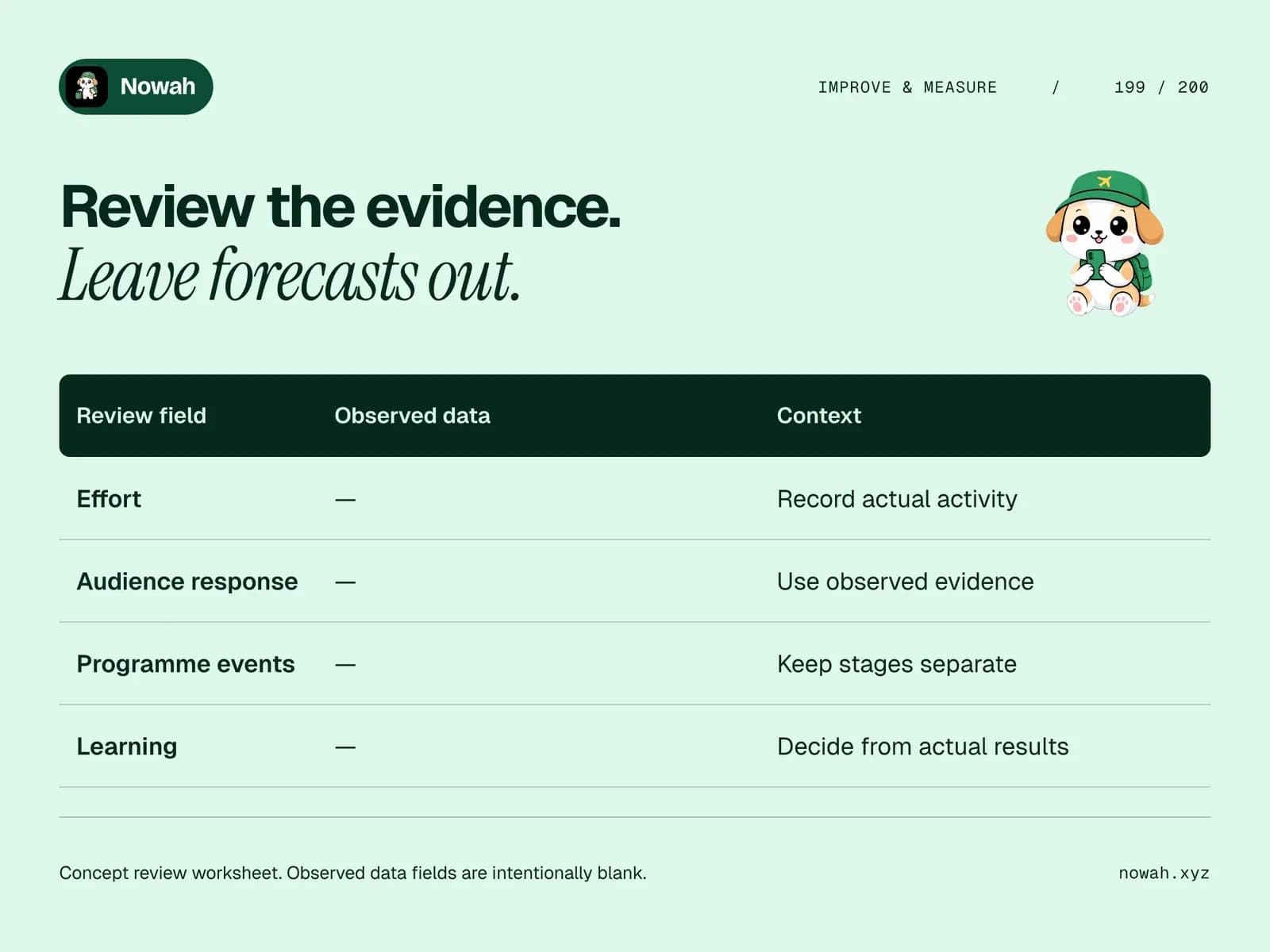
Create a worksheet with one row for each content idea. Record the actual audience question, relevant traveller requirements, useful Nowah demonstration, supplier facts requiring checks and appropriate commercial destination.
Add a separate section for earning information. Name the eligible product, the net-revenue base, the applicable 35% share and the evidence status. Leave an unknown real net-revenue amount unknown instead of deriving it from the holiday's retail budget.
For a teaching example, label all fictional inputs. For a real performance review, use the actual program evidence available to you and preserve the distinction between a pending amount and received money. Do not treat the audience category as evidence for a margin or conversion assumption.
The worksheet should produce a practical editorial decision. For example, the luxury piece may need an inclusion-comparison card, while the budget piece needs a cost-scope checklist. Both can make a useful Nowah recommendation without promising an earning outcome.
Before drafting, compare the proposed outputs side by side. If both pieces contain the same checklist with different price adjectives, the distinction is too thin. Change the question, example and practical resource so that each reader gains something specific. The commercial explanation can remain consistent because the program definition does not change with the editorial theme.
Explain the eligible account relationship consistently
An eligible new traveller must follow your active Nowah partner link and create a new account within 30 days of the valid introduction. Tracking must successfully reach Nowah. Existing accounts, self-referrals and artificial accounts do not qualify.
Once established, the account attribution continues for the traveller account's lifetime and can apply to later qualifying bookings. That continuity is a meaningful strength for creators who publish useful advice across different kinds of travel.
A person may encounter you through a budget trip and later investigate a premium stay, or the reverse. The relevant question is whether the account and booking conditions are met, not whether the later trip has the same editorial label as the original post. Do not turn that possibility into a forecast of repeat income.
The repeat account-attribution guide explains how a continuing relationship differs from the evidence for one purchase.
Keep product scope and suitability clear
Nowah's listed partner categories are qualifying hotels, flights and paid eSIMs. Restaurant spending, independent tours or a complimentary flight-perk eSIM do not become eligible simply because they appear in a luxury or budget itinerary.
Suitability also remains independent of commission. A more expensive option should not be recommended merely because it looks commercially attractive, and a lower-cost option should not be presented as universally right for a budget-conscious audience. Explain the actual tradeoff and the evidence needed for the decision.
The full travel-decision guide is useful when your content needs to bring rooming, dates, location and conditions back into focus. A good recommendation gives the traveller information they can use rather than reducing the trip to a price label.
Review payment conditions separately from content positioning
Actual Nowah earnings require booking completion and verified supplier settlement. A 30-day hold begins after the later event. Eligible monthly processing also depends on the separate currency threshold, verification and other current conditions.
Refunds, disputes and revised supplier statements can affect earnings. A pending share is not a bank receipt, whether the content concerns a high-end resort or a modest city stay. Preserve that distinction in your records and public examples.
The existing hotel review and star-rating discussion provides useful background for looking beyond a simple category or score. The same care belongs in the commercial explanation: identify the relevant fact rather than relying on an attractive label.
Make Nowah useful to the traveller in front of you
Nowah gives creators a compelling way to connect practical travel advice with eligible new accounts and qualifying bookings over a continuing relationship. The earning definition stays consistent while the content task should respond to the traveller's actual priorities.
Choose one luxury or budget question you can answer well, complete the worksheet and build a labelled demonstration with a genuinely useful output. If the model fits your audience, apply to Nowah Partners. Applications are reviewed, and approval, eligibility and verification requirements apply. Explain why Nowah helps the specific trip decision, keep the net-revenue base visible and assess actual earnings through the relevant events and evidence.