Nowah vs Airalo affiliate earnings: compare the calculation, not just the percentage
Compare Nowah and Airalo affiliate earning bases, with honest arithmetic examples and a connectivity-content decision worksheet.
A connectivity guide can be an effective earning asset because it addresses a practical travel question. Readers want to understand what they need before departure and what to investigate for their destination. For creators comparing Nowah and Airalo, the commercial question is how a qualifying purchase translates into an earned share.
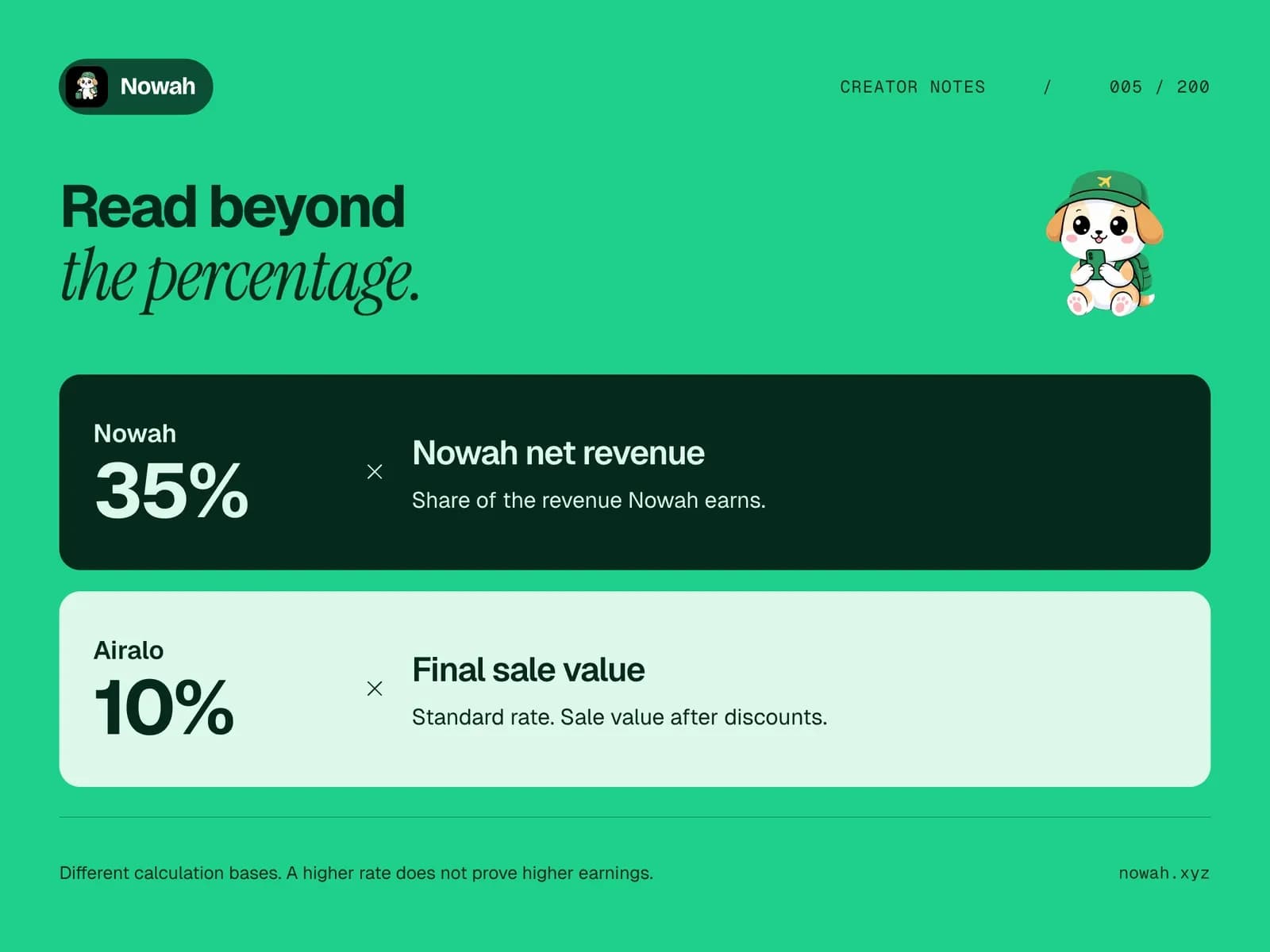
The Nowah Partner Program offers approved partners 35% of Nowah net revenue from qualifying hotel, flight and paid eSIM bookings by eligible attributed accounts. Airalo's official affiliate page states a standard commission of 10% of final sale value after discounts, with possible variation by method. These are different bases, so a comparison built around “35 is bigger than 10” would mislead readers.
Nowah makes a strong case for creators whose connectivity content naturally connects with the rest of a trip. Its continuing account attribution can extend beyond the initial paid eSIM to later qualifying bookings. The value deserves a clear explanation, supported by the current Nowah program terms.
Write the full earning formula
For Nowah, your starting formula is a 35% partner share multiplied by Nowah net revenue for the qualifying booking. The base is revenue actually received by Nowah, less the direct deductions named in the terms. It is not the total amount the traveller paid for their trip.
For Airalo, begin with the final sale value after discounts and the applicable affiliate rate. The public page describes a standard 10%, but you should check the actual method and conditions attached to your arrangement. Do not turn a standard public description into a promise about every purchase.
Place the base and any qualifications beside each percentage whenever you publish a comparison. If the image shows large numbers while the explanation hides the bases in a footnote, readers may still take away the wrong conclusion.
The focused commission-base communication guide is useful for reviewing an infographic, newsletter callout or spoken explanation before distribution.
Compare two independent examples honestly
Use simple hypothetical arithmetic to demonstrate each formula. If a qualifying Nowah booking produces $60 of Nowah net revenue, a 35% partner share is $21. If an eligible Airalo sale has a final value of $20 after discounts and a 10% rate applies, the commission would be $2.
Those examples use different assumed inputs. They explain how multiplication works; they do not establish what either program would pay for the same traveller, product or trip. Do not place the two outputs in a “winner” chart without making that limitation unmistakable.
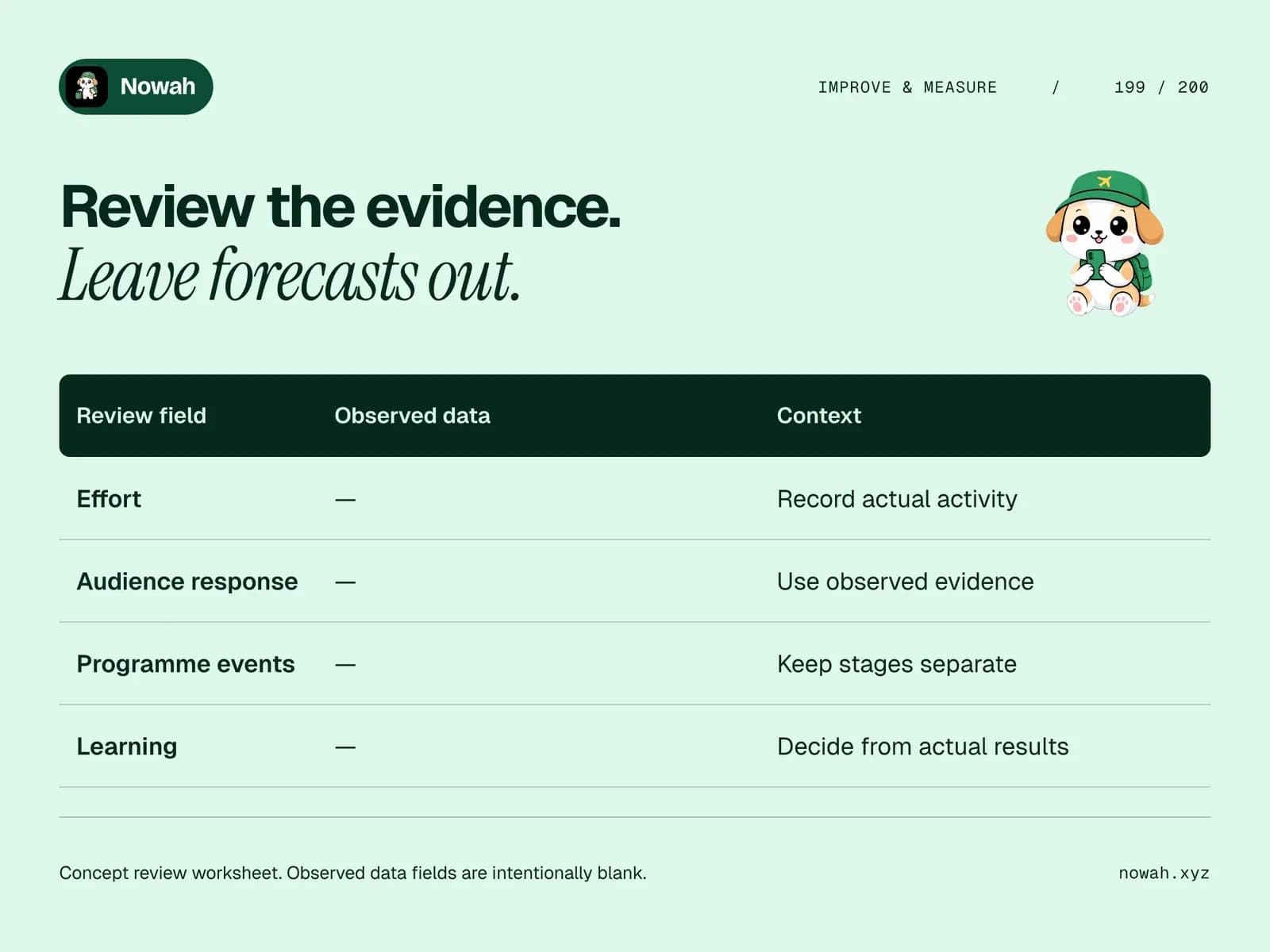
An even clearer teaching approach is to leave the inputs blank on a worksheet. Label one field “Nowah net revenue” and the other “eligible final sale value after discounts.” A creator completing the sheet must then identify which amount they actually know.
Never fill the Nowah net-revenue field with the retail price of an eSIM or flight. Likewise, do not use a pre-discount amount for an example explicitly based on final sale value after discounts. Small wording errors can change the entire commercial meaning.
Decide whether the guide is about connectivity or the whole trip
A narrow eSIM article might answer a question about preparing connectivity for one destination. Its useful output could be a requirements checklist: destination, travel dates, device compatibility to verify, expected usage and the current offer conditions the traveller needs to inspect.
A broader travel-tech guide may connect those questions with flight arrival, hotel research and an itinerary. That is where Nowah's wider eligible product scope becomes commercially relevant. You can explain a useful trip workflow rather than treating connectivity as a disconnected add-on.
The broader scope should follow the reader's needs. Do not force a flight-planning segment into a focused compatibility question merely to mention more commission categories. A useful Nowah recommendation makes a specific task easier to understand and gives an eligible new traveller a reason to continue.
For the editorial decision, see hotel-only content versus whole-trip context. The same principle applies when connectivity is the entry point: add context where it resolves a real unanswered question.
Demonstrate a fictional preparation brief
Suppose you are creating a labelled example for a traveller taking a six-night trip with a late arrival and several days of exploring different areas. You are not claiming these are a real follower's details or reporting a tested connectivity product.
Build a short Nowah planning demonstration around the actual constraints. Explain which details help organize the trip, which connectivity questions remain and which supplier information needs current verification. Use the example to teach a process rather than to invent coverage, speed or device support.
Separate planning convenience from product performance. A trip brief cannot certify that a particular phone is compatible, that a plan will cover every location or that a provider's service will meet every user's needs. Those details belong to the current product evidence.
The resulting content can include a clear recommendation to explore Nowah through your approved partner route. The reason to click is the useful travel task you have demonstrated. A commission claim should never substitute for explaining what the traveller will do next.
Understand what establishes Nowah attribution
Nowah's eligible traveller must follow an active partner link and create a new account within 30 days of the valid introduction. Tracking must successfully reach Nowah. Existing accounts, self-referrals and artificial accounts do not qualify.
Once established, the account attribution persists for the traveller account's lifetime and can include later qualifying bookings. This gives a connectivity-led introduction a potential role in a longer travel relationship. It does not promise that a buyer will return or that all later transactions will be eligible.
Use Airalo's applicable agreement to understand its own attribution conditions. Do not assume that the public earning percentage also answers every tracking or payment question. A comparison should say what has been verified and leave unresolved conditions clearly identified.
Our new accounts versus existing accounts guide explains why an audience member's interest and an eligible new introduction are different things. That distinction is useful when an established travel audience already uses several products.
Keep paid and complimentary eSIMs separate
Nowah's partner-eligible categories include paid eSIM bookings. Complimentary eSIMs supplied as a flight perk are excluded. A creator should not count a free connectivity benefit as if it generated the same earning event as a qualifying paid purchase.
This matters in a travel-preparation article. You may discuss several possible ways a traveller stays connected, but each commercial statement must refer to the relevant product and conditions. A reader should not be encouraged to buy something unnecessary just to fit your earning example.
Create an explicit “paid product or complimentary benefit?” field in your comparison worksheet. It forces you to identify the nature of the offer before discussing revenue. The eligible booking categories guide provides a useful supporting explanation for readers who need the full Nowah product boundary.
Review earnings after the purchase stage
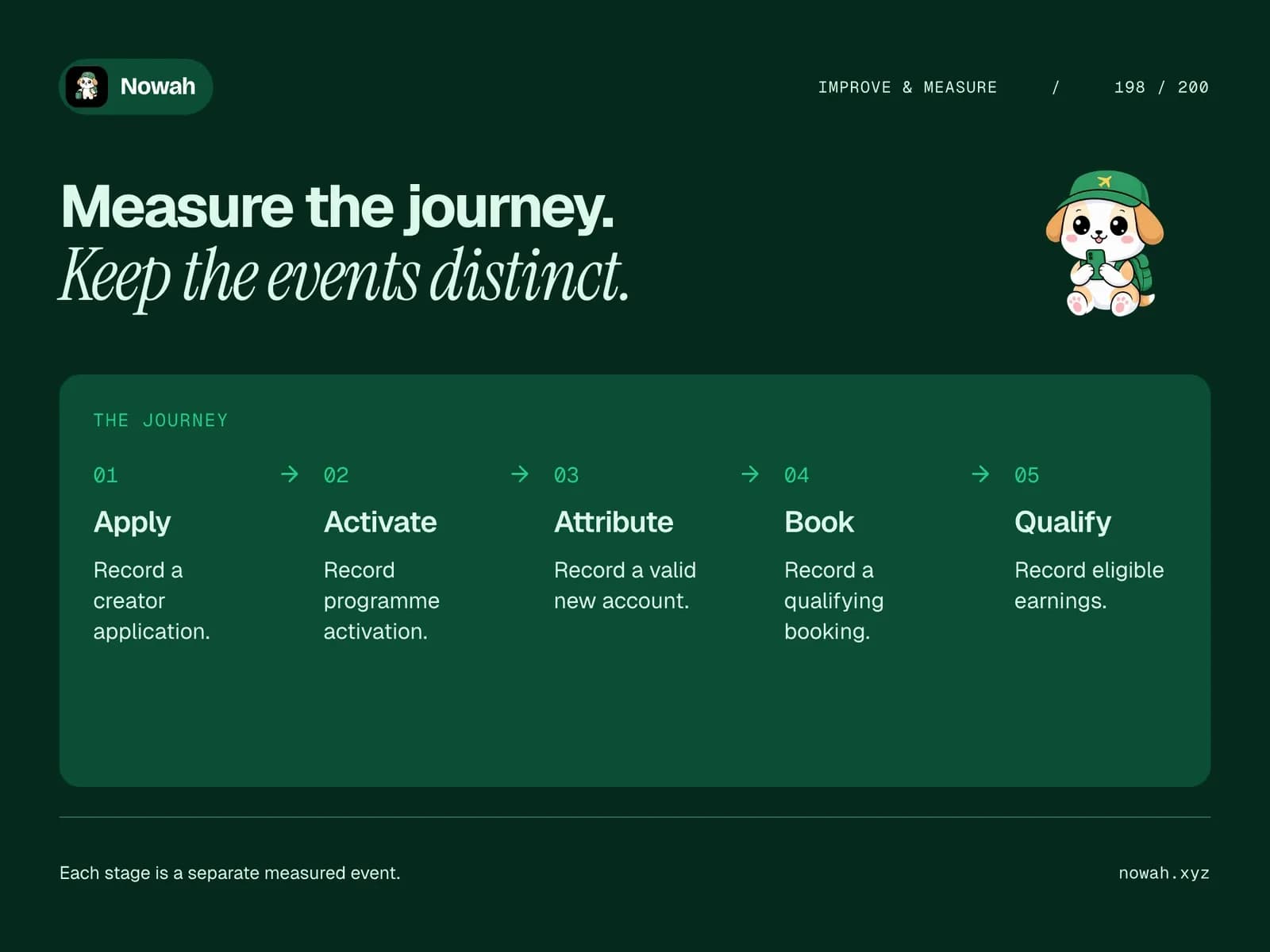
For Nowah, qualifying earnings still require completion and verified supplier settlement. A 30-day hold starts after the later event. Monthly payout eligibility also depends on separate currency thresholds, verification and the other current conditions.
A calculated share is therefore different from a completed bank payout. Refunds, disputes and corrected supplier statements can affect earnings. Your creator records should preserve those distinctions instead of treating every pending amount as money already received.
Read the comparable payment conditions in your Airalo arrangement before building an earnings comparison. You do not need to claim one model is universally better to make a persuasive case for Nowah. You need to explain the workflow, the earning base and the conditions a creator should understand.
Complete the connectivity comparison worksheet
Use one row per proposed recommendation. Record the audience question, relevant product, exact earning base, applicable rate, attribution evidence, eligibility exclusions and checked date. Add a separate field for any current product facts you have not yet verified.
Then read the article as someone unfamiliar with affiliate programs. They should be able to tell what the traveller gains from the recommendation and what creates a possible earning event. Remove rate-only claims and ambiguous “earn on every trip” wording.
Nowah's older 20-tab planning discussion provides useful context for organizing a preparation workflow. Your article should reduce the reader's uncertainty, rather than making them open more unexplained destinations.
Put Nowah's broader value to work
Nowah's 35% net-revenue share and continuing account attribution give travel creators a meaningful model to consider, especially when connectivity content leads naturally into a wider trip. Airalo's final-sale calculation describes a different earning base and should be evaluated on its actual conditions.
Prepare one clear connectivity-led demonstration, disclose your relationship and keep every calculation labelled. If Nowah fits the content you want to create, apply to Nowah Partners. Applications are reviewed; eligibility and verification remain necessary. Start with a useful recommendation, explain the commercial relationship precisely and assess real outcomes only when the relevant events have occurred.