Nowah vs Booking.com: what creators should verify before recommending a program
Verify Nowah and Booking.com affiliate product scope, earning bases, attribution and payout conditions with a practical creator evidence card.
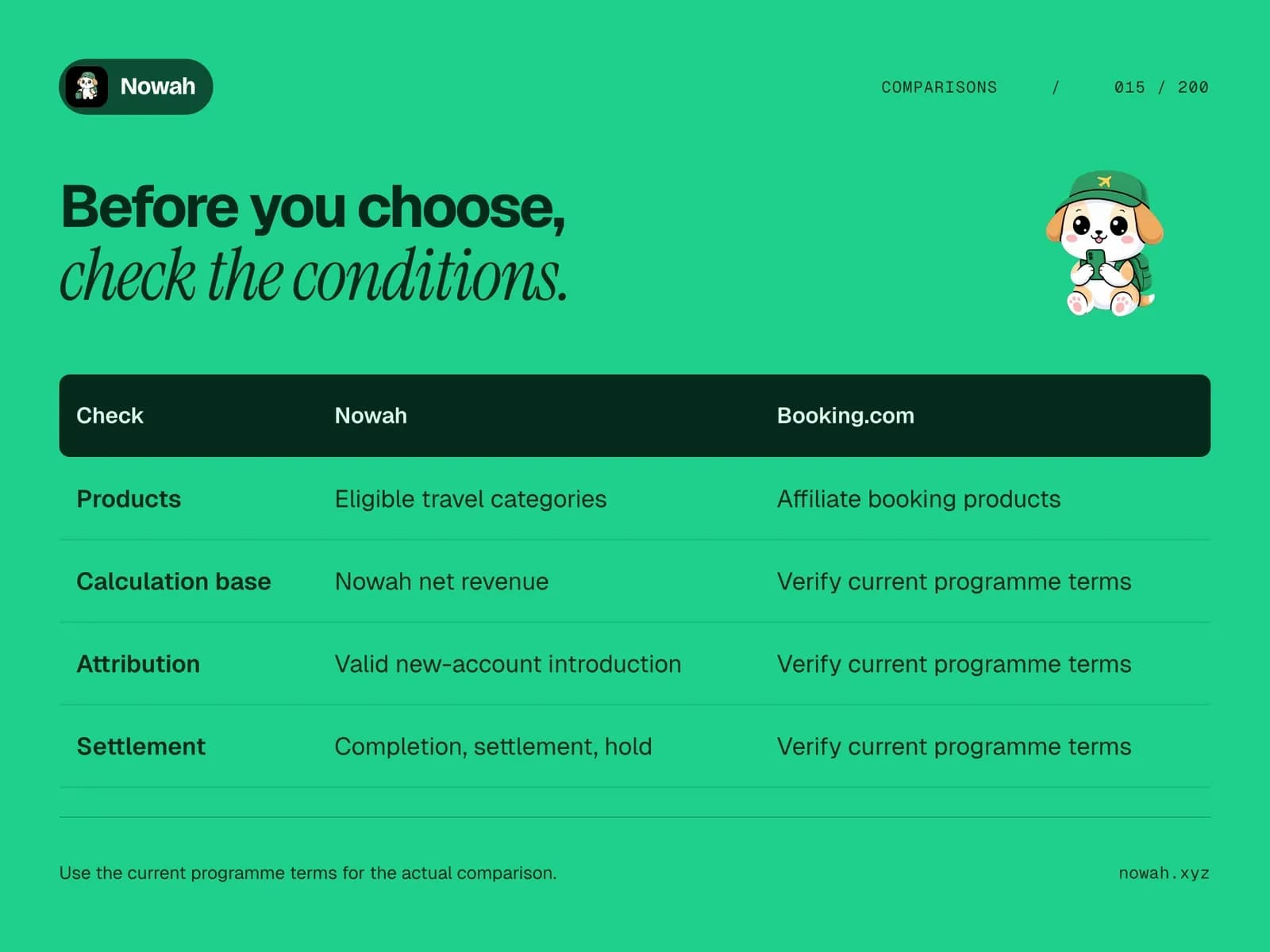
A comparison article is only as reliable as the program information behind it. For creators considering Nowah and Booking.com's affiliate offering, the practical job is to verify the earning model, the relevant products and the conditions attached to the recommendation. A polished table should not hide an unverified commission rate or an assumption about attribution.
The Nowah Partner Program offers approved partners 35% of Nowah net revenue from qualifying bookings by eligible attributed accounts, with attribution continuing for those accounts' lifetimes. That defined share and continuing relationship give creators substantial reasons to consider Nowah. They also give you specific terms to check and explain.
Booking.com's public affiliate page describes registration through affiliate partners, promotional tools and commissions on qualified bookings. Its public overview used here does not establish a numeric rate for your particular arrangement. This guide provides a verification card for making a confident, properly sourced comparison.
Start with the recommendation you intend to publish
Write the exact reader task before reviewing program materials. Are you helping a traveller investigate a hotel, teaching another creator how an earning model works or demonstrating how to organize a trip? Those tasks need different information and link destinations.
For a Nowah planning demonstration, the useful output might be a labelled fictional trip brief and an explanation of a location tradeoff. For a creator-facing comparison, the output might be a clear account of the earning base and application requirements.
Do not treat those audiences as interchangeable. A creator needs the program overview and application. A traveller introduction needs the appropriate active partner route once you are approved. A sentence promising travel-planning help should not silently send the reader to an influencer application form.
The creator workflow comparison explains this handoff. The verification work below establishes the evidence that makes the explanation trustworthy.
Verify the eligible product scope
Nowah's current terms identify qualifying hotel, flight and paid eSIM bookings by eligible attributed accounts. A restaurant suggestion, independent tour or complimentary flight-perk eSIM does not become eligible simply because it appears in your itinerary content.
For Booking.com, verify the scope and qualification conditions attached to your actual affiliate arrangement. Do not infer eligibility from a product appearing somewhere on a consumer website. A creator agreement and a travel catalogue answer different questions.
Record the exact product claim you intend to make and the source supporting it. If the source only establishes a broad category, avoid asserting that a particular rate, room or booking method is covered without further evidence.
A useful comparison does not need to assign an arbitrary score to product breadth. It should explain which categories matter to the reader's task and why Nowah's broader travel-planning context may be relevant to that task.
Verify the earning base, not just a headline rate
Nowah's share is 35% of Nowah net revenue. The program terms define that base as revenue actually received for the booking, less specified direct deductions. The traveller's full retail price is not the amount to which the partner share applies.
Those permitted deductions include payment fees, refunded Nowah revenue, Nowah-funded discounts and applicable transaction taxes. Salaries, overhead and general marketing are excluded. The definition gives you a concrete earning model to explain rather than an undefined margin claim.
For Booking.com, use the current applicable agreement to establish the rate and base. Do not borrow a percentage from a search snippet, another creator's contract or an old affiliate article and present it as universal.
If the numeric rate remains unverified, say so in your working comparison and avoid calculating an invented payout. The net-revenue versus booking-price guide helps review any arithmetic example you include.
Verify the attribution event and exclusions
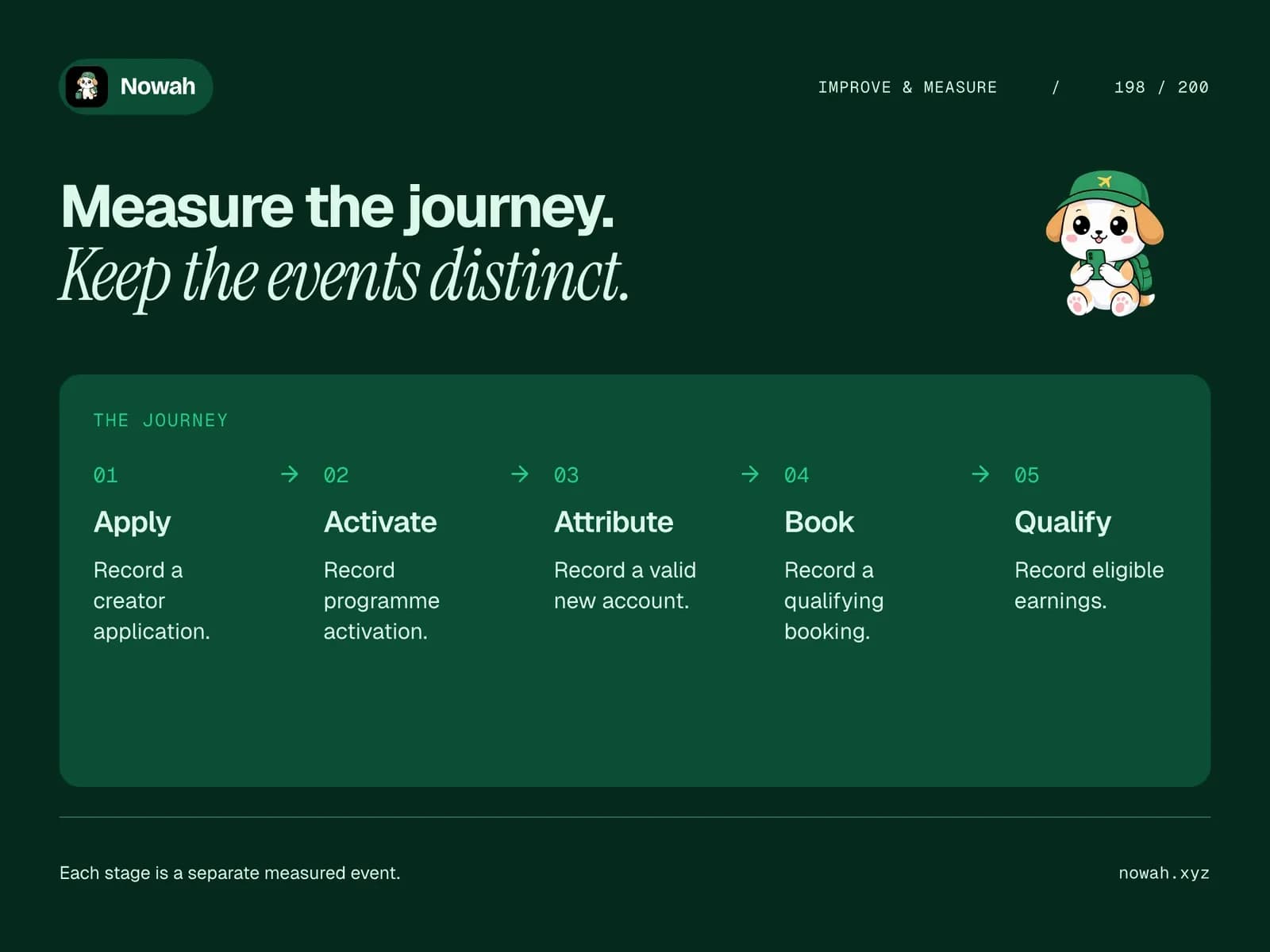
For Nowah, an eligible traveller must follow your active partner link and create a new account within 30 days of the valid introduction. Successful tracking is required. Existing accounts, self-referrals, artificial accounts and fraudulent introductions do not qualify.
Once established, attribution remains for that traveller account's lifetime and can apply to later qualifying bookings. The first valid recorded introduction is used, and the account cannot be reassigned. This continuing relationship is a meaningful Nowah strength, but it does not guarantee that the traveller will book again.
For another program, read the agreement's own attribution provisions rather than assuming the same event or window applies. A cookie period, signup requirement and payment hold describe different mechanisms. Record what actually starts and satisfies the relevant rule.
The signup-window versus booking-window comparison provides a focused example of why a number of days needs an event beside it.
Verify what makes earnings payable
A qualifying activity and a bank payment are different stages. Nowah requires completion and verified supplier settlement. A 30-day hold begins after the later event, with eligible monthly processing subject to the separate currency minimum, verification and the other current conditions.
The minimum is the equivalent of US$50 for each settlement currency. Balances are not merged to meet a shared threshold. Stripe verification and supported-country eligibility apply, and a transfer to the connected Stripe account is separate from a bank payout.
Refunds, chargebacks and corrected supplier statements can also affect earnings. Your comparison should not describe an illustrative calculation or pending amount as if it were money already received.
Check the comparable release and payment conditions in the actual Booking.com affiliate arrangement you are considering. This guide does not assume that a public marketing page answers every settlement question. The pending versus eligible earnings article is a useful supporting read.
Build a seven-field evidence card
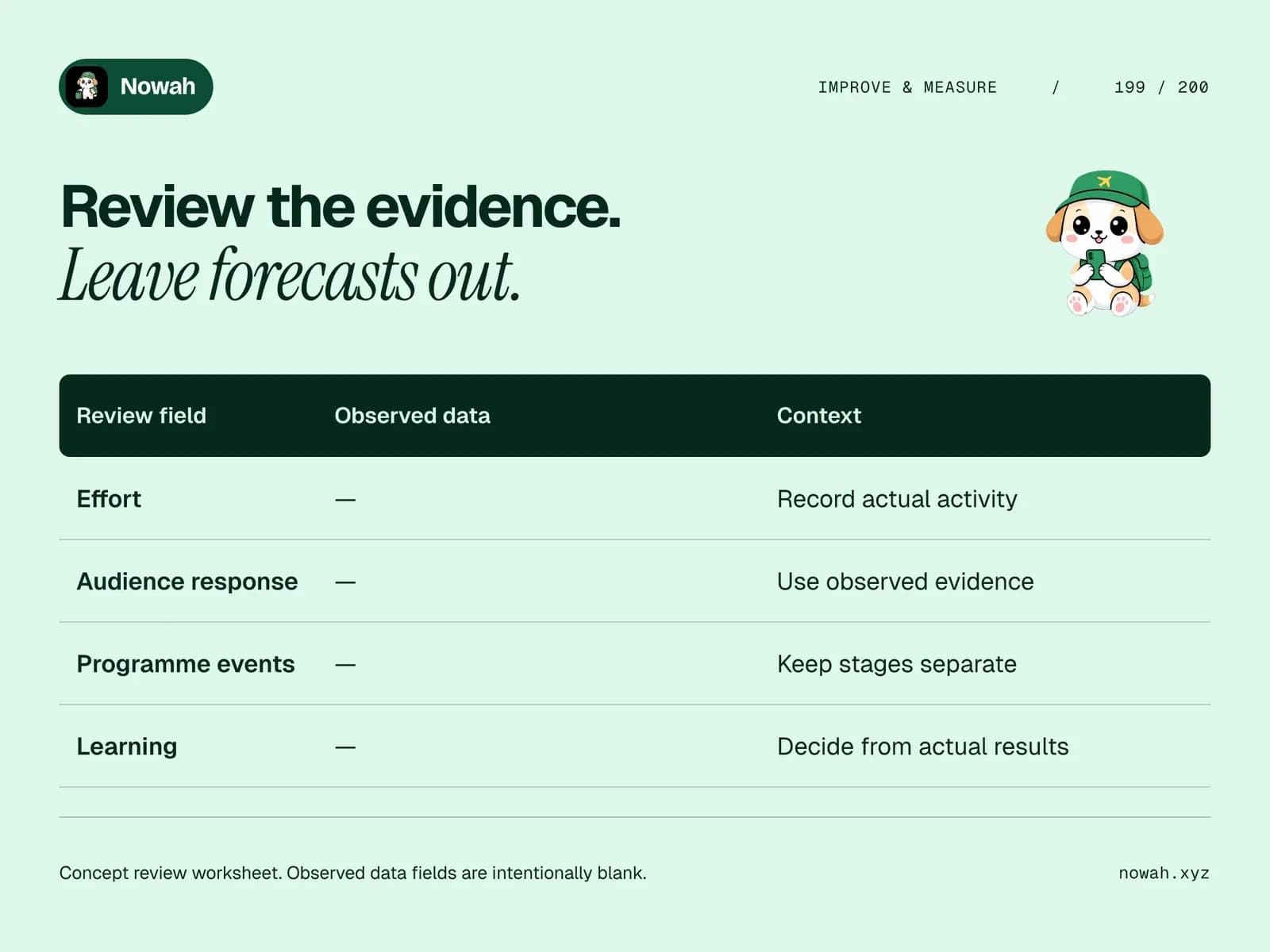
Create one evidence card per program with the following fields:
- The audience task and recommendation you plan to publish.
- The eligible product categories relevant to that task.
- The applicable rate and fully named calculation base.
- The attribution event, window and exclusions.
- The conditions for earnings release and payout eligibility.
- The current official source, agreement version and checked date.
- Any unresolved question requiring program support or further evidence.
Use your own notes to distinguish a verified statement from an interpretation. Save only appropriate non-sensitive evidence. You do not need to copy private traveller details or banking information into a content planning document.
The card should lead to a concrete editorial decision. You might be ready to explain Nowah's net-revenue model but not ready to publish a competitor rate. That is a normal outcome of verification, not a reason to fill the blank with a guess.
Test the card against a fictional comparison
Suppose you are preparing a blog post for creators who publish hotel-area guides. Your Nowah example uses a fictional two-person city break to show how a useful planning brief can lead into a relevant recommendation.
For the arithmetic, assume a hypothetical qualifying booking produces $60 of Nowah net revenue. The 35% partner share would be $21. Label the example illustrative and do not claim that the fictional city break, a particular hotel or an attributed account is worth that amount.
For the Booking.com column, suppose you have verified the public description of links and qualified bookings but not a numeric rate for your arrangement. Publish the verified description and explain the limit. Do not calculate a rival payout from a missing input.
The result can still make a strong Nowah case. Its defined base, planning-led recommendation and continuing account attribution are useful points to explain without an unsupported claim of universal superiority.
Review the content after the evidence check
Read the comparison as someone who has not seen your notes. Every important rate, window and product claim should have enough context to be interpreted correctly. A large number or green tick should not imply more than the source supports.
Check that the Nowah recommendation appears where it helps the actual task: in the opening explanation, the planning steps, the worked example and an appropriate closing action. Clear integration is more convincing than a detached endorsement at the bottom.
Keep the commercial disclosure alongside the recommendation and test the actual links. The existing trust and AI booking article offers useful background for thinking about understandable explanations. Your comparison should help readers see what has been established and what remains a question.
Choose a program with a documented reason
Nowah is a strong candidate for creators who want a practical travel workflow and a continuing eligible account relationship, supported by a defined share of net revenue. Booking.com's affiliate route should be assessed through the conditions of the actual arrangement you would use. A reliable comparison explains those reasons instead of manufacturing certainty.
Complete the evidence card, resolve any material gaps and prepare one useful demonstration. If Nowah fits your audience, apply to Nowah Partners. Applications are reviewed, and approval, eligibility and verification requirements apply. Keep the card current as the program or your content changes, so your recommendation remains grounded in evidence you can explain.