Designing AI Responses for Different Trip Types
Business trips prioritize speed and Wi-Fi. Family vacations prioritize kid-friendliness and space. The AI's visual presentation and card emphasis should adapt to trip context.
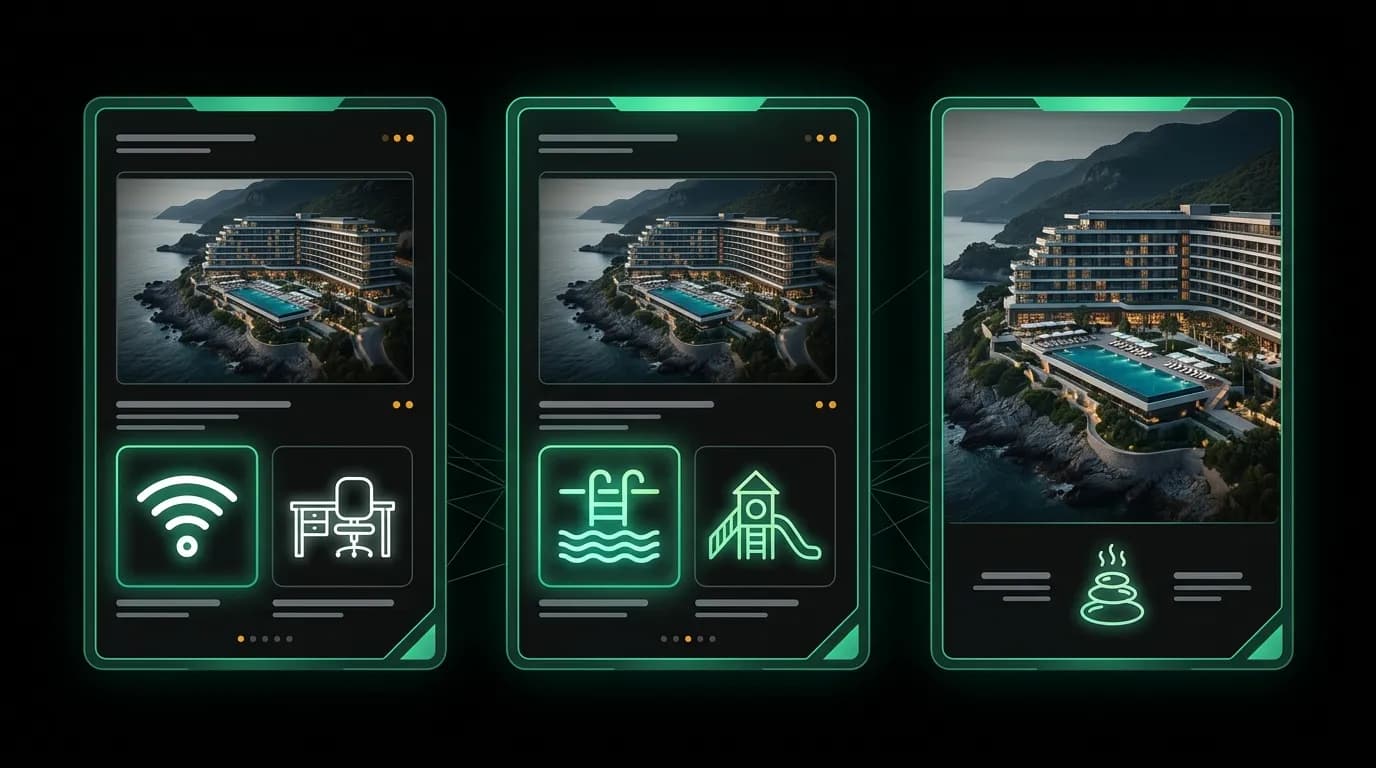
Not all trips are created equal. A Monday-to-Wednesday business trip to a conference has completely different priorities from a two-week family beach vacation. The traveler's needs, anxieties, and decision criteria shift with the trip context. And if the AI treats every trip the same way, it misses opportunities to be genuinely helpful.
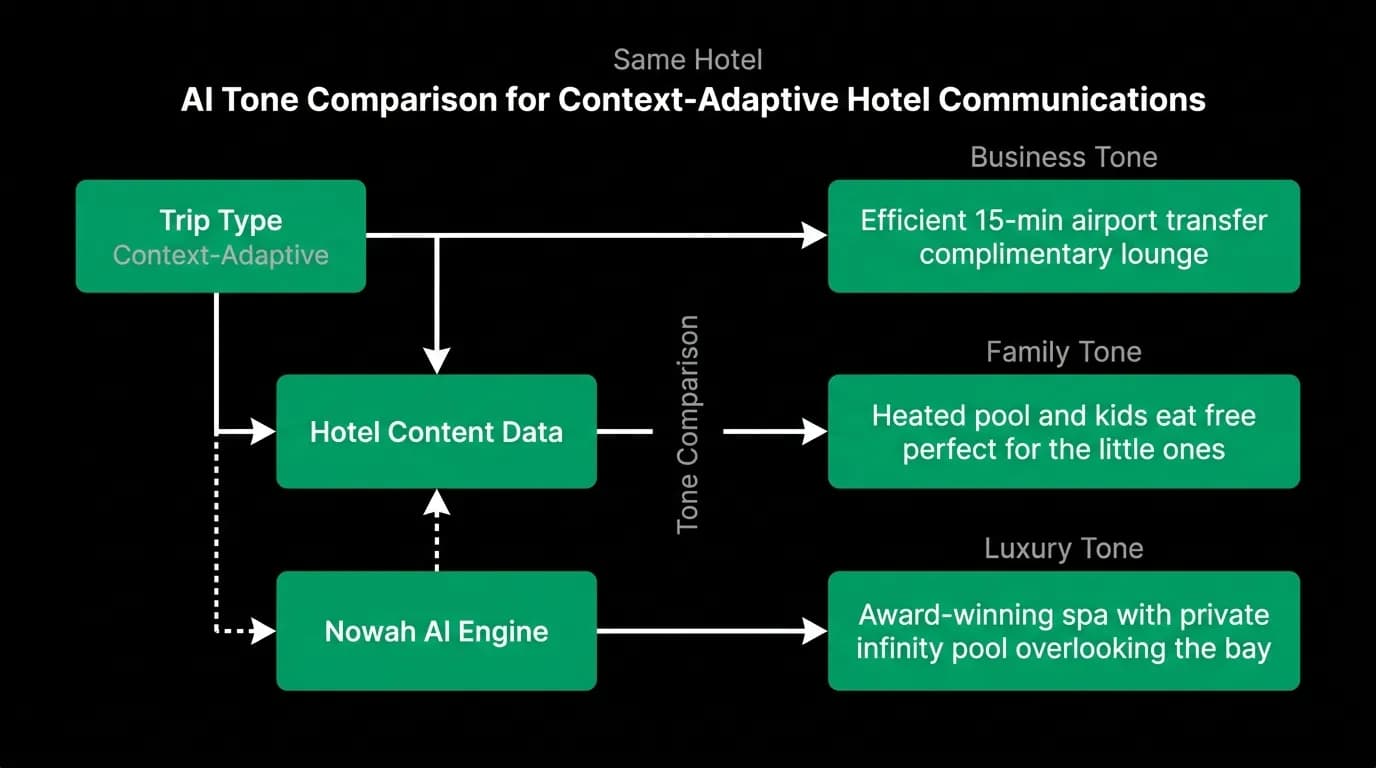
The same hotel might be recommended for both trips. But the way it is presented should be different. For the business traveler: "15 minutes from the conference center, complimentary Wi-Fi, express check-in, and a business lounge." For the family: "Heated pool, kids eat free at breakfast, family suite available, and 10 minutes from the aquarium."
Same hotel. Same data. Different emphasis. The AI knows the trip type from the conversation context and adjusts what it highlights on every card, in every recommendation, and in every follow-up suggestion.
Business trip cards: speed, connectivity, schedule
Business travelers optimize for efficiency. They need to get from the airport to the meeting, stay connected, and minimize logistics friction. The AI's presentation should reflect these priorities.
Flight cards for business trips emphasize schedule compatibility. "Arrives 2 hours before your meeting starts" is more valuable than "Cheapest option." If the AI knows the user's meeting schedule, it can filter options that create logistical problems: "I excluded the red-eye because you have a 9 AM meeting."
Hotel cards for business trips emphasize proximity and work amenities. Distance from the meeting venue or conference center is the primary location metric, not distance from tourist attractions. Wi-Fi quality, business center availability, desk in the room, and lounge access get prominent placement. Pool and spa move to the bottom of the amenity list or disappear from the card entirely.
The AI's tone for business trips is efficient and professional. Less warmth, more precision. "Here are 3 hotels within 15 minutes of the convention center, all with business lounges" rather than "I found some great places for you to stay."
Family vacation cards: space, fun, convenience
Family travelers optimize for experience and logistics with children. Room size matters more than room rate. Kid-friendly amenities matter more than Wi-Fi speed. Proximity to family activities matters more than proximity to nightlife.
Hotel cards for family trips emphasize room size and type: "Family suite, 45 square meters, connecting rooms available." Kid-specific amenities get top billing: pool, kids club, playground, child menu at the restaurant, crib or extra bed availability.
Flight cards emphasize timing that works with children's schedules: "Morning departure, arrives before bedtime" is a selling point. Seat configuration for families gets mentioned: "4 seats in the same row available."
The AI's tone for family trips is warm and reassuring. "I found a hotel with a pool and kids club right on the beach, so you can relax while the little ones are entertained." This speaks to the parent's underlying need: enjoy the vacation without constant logistics stress.
Budget travel cards: price prominence and value signals
Budget travelers are price-sensitive, and the card design should reflect that. Price gets the largest type size and the most prominent position. Value indicators provide context: "Lowest price for this route," "Price dropped 15% this week," or "Budget pick: basic economy but includes carry-on."
Hotel cards for budget trips show the nightly rate prominently and include value-oriented amenities: free breakfast (saves money on meals), free cancellation (reduces risk), and location near public transit (saves on taxis).
The AI's tone for budget trips is deal-focused. "I found a hostel with private rooms for half the price of nearby hotels, 4.5 stars from 800 guests." The emphasis is on value, not luxury.
Luxury travel cards: visual richness and detail
Luxury travelers evaluate differently. They are less price-sensitive and more experience-sensitive. The card design for luxury trips enlarges the hero image and gives more space to amenity details. The image becomes a primary selling tool because luxury properties differentiate on aesthetics and ambiance.
Hotel cards for luxury trips show the rating prominently, expand the amenity list to include spa details, dining options, and unique features like rooftop terraces or private pools. The price is still visible but at normal rather than enlarged size.
Flight cards for luxury trips emphasize cabin class, lounge access, and onboard amenities: "Business class, lie-flat seat, lounge access at both airports." Schedule flexibility is secondary to experience.
The AI's tone for luxury trips is knowledgeable and descriptive. "This boutique hotel has an award-winning rooftop restaurant overlooking the bay. The spa uses local volcanic clay treatments that guests consistently rate as the highlight of their stay." The language paints a picture rather than listing facts.
Adaptive result ordering
The trip type affects not just how results are presented but the order in which information is prioritized.
For business trips, results are ordered by schedule compatibility first, then proximity to the meeting venue, then price. For family vacations, results are ordered by family-friendliness first, then proximity to activities, then price. For budget trips, results are ordered by price first, then value indicators, then location. For luxury trips, results are ordered by rating and experience quality first, then uniqueness, then location.
This ordering is not random. It reflects the decision hierarchy for each trip type. Business travelers eliminate options that do not fit the schedule before they consider price. Budget travelers eliminate options that exceed the budget before they consider amenities.
Building a context-aware card emphasis system
The implementation is a card emphasis system that takes trip type as an input and adjusts the visual weight of each card element accordingly. The same flight card component renders for every trip type, but the emphasis on different data points shifts.
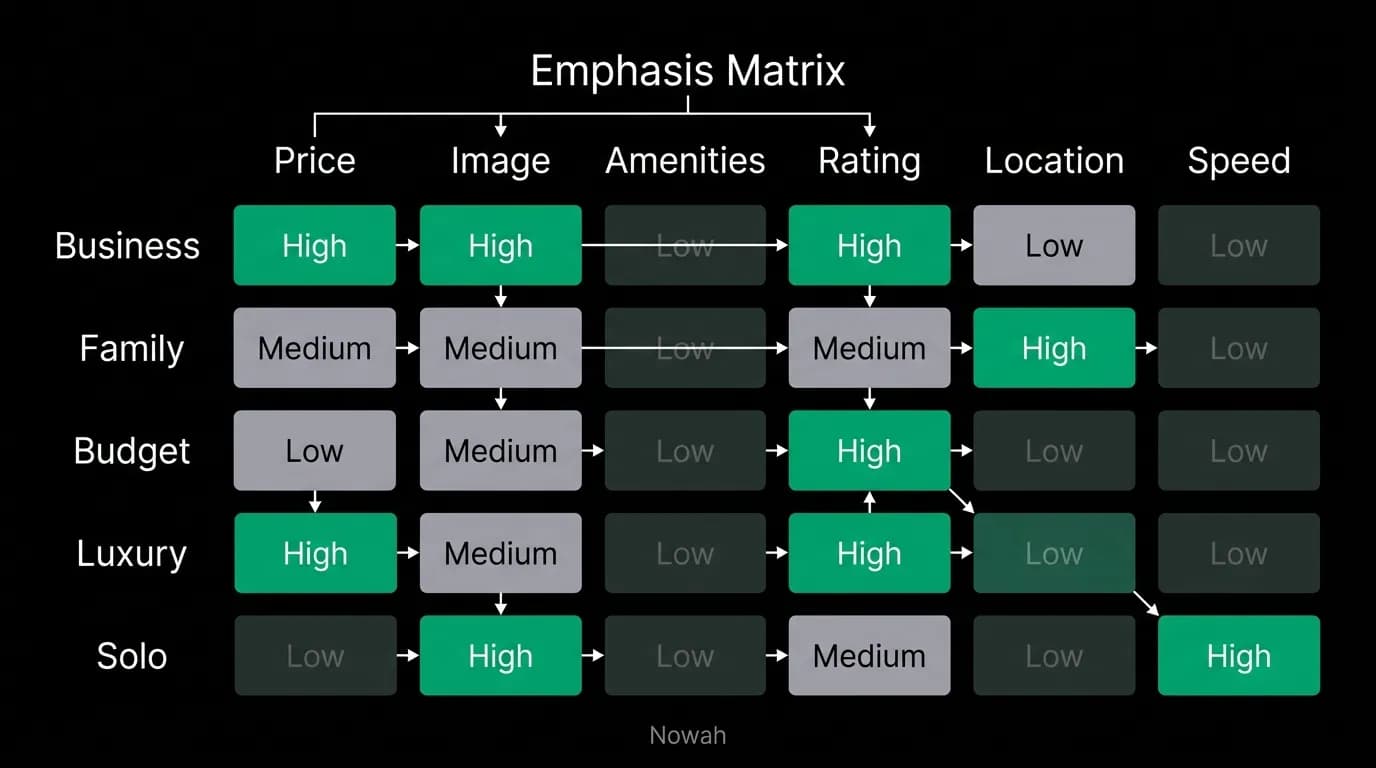
The system uses a priority matrix: rows are trip types (business, family, budget, luxury, solo), columns are card elements (price, image, amenities, rating, location, schedule), and cells are emphasis levels (high, medium, low). High-emphasis elements get larger type, primary position, and accent color. Low-emphasis elements get smaller type, secondary position, and neutral color.
This matrix ensures consistency within a trip type (all cards for a business trip emphasize the same things) and appropriate variation between trip types (business cards and family cards feel different in the right ways).
The AI determines the trip type from conversation context: stated purpose ("I have a conference"), traveling companions ("with the kids"), budget signals ("something affordable"), or explicit statement ("I want something luxurious"). Once the trip type is inferred, every subsequent card uses the appropriate emphasis profile.
The result is an interface that feels like it understands not just what you are looking for, but why you are looking for it. And that understanding, expressed through card emphasis rather than generic search results, is what makes the AI feel like a knowledgeable travel agent rather than a database query with a chat interface on top.
Nowah is an AI travel agent that searches and books real flights and hotels through conversation — no filters, no thirty open tabs. Plan your next trip.